
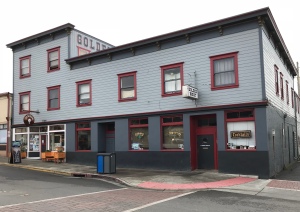
 For over 130 years, the Golden West has stood tall on Redwood Avenue in Fort Bragg. Apartments occupy the top two floors and there’s a retail space at ground level, but the building is most noted for its popular saloon.
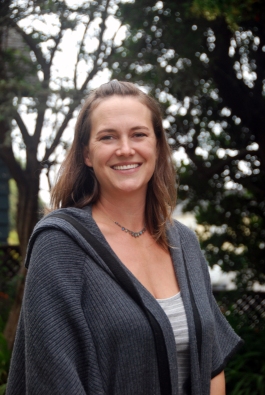
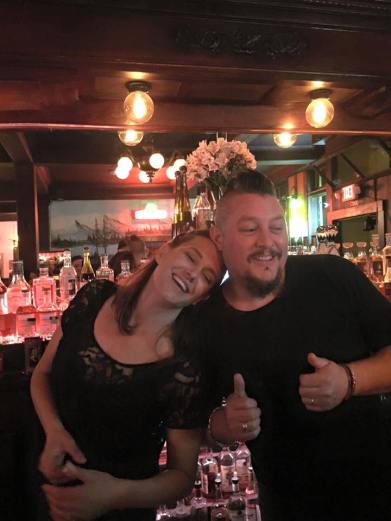
Jessica Morsell-Haye and her husband Mikael have a shared nostalgia for that saloon. In the summer of 2000—in the early years of their friendship which eventually blossomed into romance—they often hung out there, surrounded by the massive oak bar and artifacts from the glory days of logging and fishing that adorn redwood walls. They dreamed how cool it would be to own the place.
“We both loved the gorgeous, unadulterated interior,” Jessica said. “You could feel and see its history when you walked into the room. We also respected the previous owners. It was a point of pride if they tolerated your presence and we felt honored that they welcomed us. Mikael and I both worked in bars over the years and we felt like the Golden West was the ideal combination of beauty and dive bar.”
Fifteen years later, the building went up for sale, giving them a chance to fulfill their dream. There was only one problem—they didn’t have any money.
***
Jessica grew up in a variety of areas along the coast—Mendocino, Albion and Comptche. “I liked Comptche the best. We had no electricity and I loved living off the land. We didn’t have television. My brother and I used our imagination for entertainment.”
She attended Mendocino Community High School and was on the basketball and track teams at Mendocino High. In 1997, she entered UC Santa Cruz and played basketball her first year. She majored in Fine Arts and chose to do her junior year abroad at the Art Academy in Bologna, Italy.
 The following summer, she returned to the coast where became friends with Mikael. “We were together for a year and then broke up for a year. After I graduated from college in 2002, I came back and we got together.”
In 2003, Jessica entered the visual communications program at the Fashion Institute of Design and Merchandise in Los Angeles. “Mikael and I moved on April Fool’s Day, which made us laugh. Our goal was to make it for a year. We ended up staying for ten.”
That same year, Jessica was hired by Marimar Textiles, to organize and file artwork. Marimar is a company that converts artwork to make it production ready for fabric. Six months later, the head designer quit. “The owner asked if I knew how to use Photoshop. I barely did, but said, ‘Sure!’ She hired me as their in-house artist. I jumped in and worked my tail off until I figured it out.”
During their years in LA, Mikael worked as a bartender, an occupation perfectly suited to his warm, gregarious personality.
Jessica finished her program and went on to have a number of jobs in the fashion industry. She dressed celebrities at Giorgio Armani, and was promoted to stylist at Marimar Textiles, coordinating half of the company’s accounts which included Anne Klein, Michael Kohrs, Quicksilver, and Speedo Girls.
Three years later, she was recruited as a textile designer for BCBG Max Azria, a billion-dollar international clothing company. “It was a pressure cooker. Working all day until three in the morning wasn’t unusual. As the director of textile design, I was getting to put three separate lines down the runway each season, which was thrilling and unheard of.”
When the economic crisis hit in 2008, she escaped widespread layoffs. She continued to work long hours until she gave birth to her son Caspar in 2012. She returned from maternity leave and stayed eight more months. “I wasn’t willing to sacrifice time with my son for a company.”
In 2013, they moved to Petaluma. Mikael stayed at home with the baby while Jessica commuted to San Francisco to her job as a fabric designer for the Banana Republic Factory Store. She also did freelance work for the clothing company Tart Collections in Concord. Tart offered her a job in 2014, and she took it.
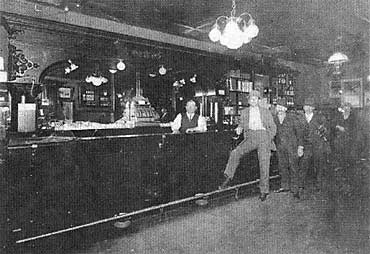 This was when she and Mikael learned that the Golden West was for sale. They lamented they had no money to make their youthful dream of owning it come true. They heard that the Hospitality House was looking to purchase the building to use as a homeless shelter, and felt an urgency to save it and preserve its history.
“History gives a place soul. The old materials and aesthetics were made to last. We love that we can see where an old wall was built to section off the bar during prohibition. Stories come alive when you can see the marks they left on their environment.”
With her typical can -do attitude, Jessica went to work figuring out how to make it happen. “A financial advisor helped me put together a business plan that turned into a three-inch thick document. After pushing hard, it was clear that traditional financing wasn’t an option. The building had 30 years of deferred maintenance. Private investors also turned us down. We made an offer anyway and went into escrow. At the eleventh hour, the sellers agreed to do owner financing and we got it.”
Within the first year, Jessica and Mikael gave the building’s façade a facelift by changing the crumbling yellow paint to a dark charcoal with red trim and replacing the roof. The bar soon became the go-to spot for young people. “We wanted to make it more inviting without changing its essence. We expanded our liquor offerings and found there’s a desire for more variety and top shelf alcohol.”
 The rooms above the saloon were at different times a hotel, boarding house, and brothel. “There are 26 rooms, some of which are used for storage. We have about 16 tenants. When we took over the building I cleaned out a bunch of rooms. It was fascinating—ancient silk curtains, boudoirs, layers of wall paper telling a chronological history.”
Jessica proudly reports that they have not raised the rent on existing tenants. “Once someone is in a home I think it’s critical not to price them out of it.”
For the next three years, Jessica worked for Tart remotely from home, commuting to Concord one day a week. In March 2017, daughter Magnolia was born.
This past spring, they opened the General Store in the building’s retail space. “We wanted an outlet where we could sell things we make as well as items from other artists.” As part of this effort, Jessica and another local designer started The Blue Collective on McPherson Street, offering shared workspace for artists.
In April of this year, Jessica was laid off from Tart, although she continues to do freelance work. “It seems every company in the fashion industry is contracting due to skyrocketing manufacturing costs from China.”
 When she was approached with the idea of running for a seat on the city council, it ignited a passion. “The decisions made in the next four years will affect this town for decades. The future of Fort Bragg is critical to me and my family. It’s important that the town’s growth with the mill site and subsequent expansion of infrastructure be done mindfully, in a forward thinking, responsible manner that keeps the soul of our city intact and leverages its natural and historic beauty.
“One of my main strengths is seeing the big picture and finding the points of connection. As I connect the dots, my focus is on actionable steps that usually lead to alternative solutions. This can be leveraged as we try to create more jobs, housing, industry, a healthier hospital, and tackle problems like homelessness. They’re all related and each decision will affect multiple sectors.
“I love how our windy roads give our area a filter and prevent urban sprawl. Mikael and I decided to buy the Golden West because we feel there’s life in this building, on this street and in this town. It’s an exciting time for Fort Bragg.”
That excitement is due, in large part, to the efforts of young people like Jessica and Mikael who are pumping new life and energy into our beloved area.

 On the morning of January 20th, I was alerted to a fire at what I called the Hoarder House. I’d never witnessed a fire in real time. It was equally fascinating and disturbing (
 Months went by. Winds and rain caused the waterfall of junk to precariously shift. People started asking me why the City hadn’t torn the place down. I’m flattered they have the impression that I’m privy to the goings on around town. I actually know next to nothing, and often stifle an urge to make things up.
 So what you think Nationstar did?
 A few weeks ago, black tarps were draped over the chain link fence and the demolition began. Within a couple days, the dumpsters supplied by Waste Management were filled to capacity and work paused until they could be hauled inland and emptied.





 Heather grew up in Morro Bay where she learned commercial fishing from her dad. “I moved here in 1999, and immediately began a flaming love affair with Mendocino County.” By 2001, she had saved four thousand dollars and bought a small boat, the Julie. “My idea was to have a floating fish market—to sell fish right off the boat.” She admits that running her own boat was a different experience than crewing with her dad.
 Her dad tried to help her, but she was intent on doing things her way. “At one point, he threw his hands up and said, ‘You’re going to kill yourself,’ and went back to Morro Bay. Bless his heart, he must have been so worried. This strained our relationship, but a few years later, we fished together in Alaska.”
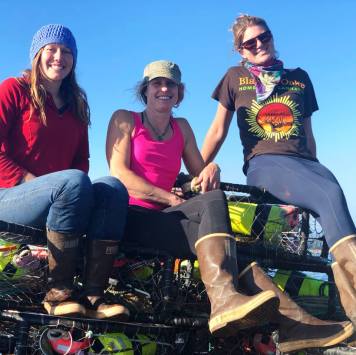 Along the way, she sold the Julie and bought and sold two other boats. In 2009, she purchased a larger vessel with a blast freezer named
 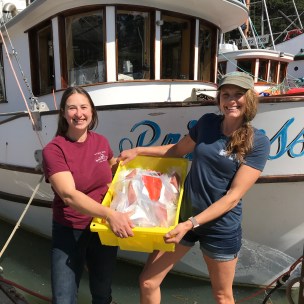 As a woman in this field, Heather is not unique, but rare. “There are a lot more women in Alaska.” She admires her crew which includes Maia and Anna—graduates of Humboldt State. “The salmon season lasts about six months. It requires a great deal of endurance. We get only five to six hours of sleep a night and are away from home so much. I got a crab permit last winter. Catching crab is easier and is a lot more fun.” Maia and Anna also sell the fish at the farmers’ markets.

 Sometimes the inspiration to move back to the place you love arrives in the most random of ways. An email sent by your wife, added to the hundreds you received that day, nearly lost until a couple weeks later when you find it and ask why she sent you a link to a house for sale in Fort Bragg. She knows how your long work days often spill into late nights and take a toll on your personal life. Since leaving the Mendocino Coast over 20 years ago, you’ve always said you’d move back. Maybe now is the time.
 Jason was born in Houston, Texas and moved to Elk with his mom Laurie Graham when he was seven years old. “My mom’s whole life was her children, but she was always willing to open her home to a friend in need. She loved nothing more than spending time with family and friends.”
 Those were the days before cell phones, when a homesick kid had to pay for long distance calls if he wanted to talk to his mom. Jason didn’t have this luxury. He got an on-campus job as the audio visual tech manager at the student union. He eventually became the building manager.
 He bought a condo near San Jose State and rented out a bedroom, usually to a college student. “In 2009, a friend told me her friend Cate—who lived in Willits—was planning to go to San Jose City College and needed a place to stay. I rented her the room.” They began spending time together and slowly became a couple. They married in 2013.
 It Happened at Purity