The Spirit of Giving

A few weeks ago, my friend—let’s call her Nell—said she felt guilty about throwing away donation plea letters that arrived in December. Throughout the year, she was generous to charities, but during the Christmas season her money was spent on gifts for family and friends. Still, she wished she could answer all the pleas.

She remembered a quote attributed to Jon Carroll. He allegedly said that if you want to give away money, go to the bank, take out as much cash as you can afford, and distribute it to people on the street.

5This appealed to Nell. Nearly every day, she saw homeless people and others in need. But she never paid much attention as she whizzed by in her car or, when walking, crossed the street to avoid them. She thought about her “Fiver Envelope.” Whenever she receives a five-dollar bill as change in a transaction, she saves it. After gathering a bunch, she uses them to treat herself to a massage or some other luxury. She decided to take the $100 she’d accumulated and give it away.

The prospect of approaching complete strangers scared her. She formulated a couple of rules: she would only interact with solitary people, no one in a group; and she would not interfere with those who looked mentally unbalanced.

PostOfficeShe found her first person one early cold morning at the post office. A dented maroon car stuffed with clothing pulled into a parking space, the back bumper tied with a rope on top. A weary woman with thick black curly hair struggled to get from the vehicle and up the post office steps.

Nell pulled a five from her wallet and folded it in half. When the woman entered the building, Nell asked, “May I give you something?”

The woman looked wary.

Nell held out the money.

The woman looked confused and asked, “Why?”

“Because it’s Christmas.”

The woman took the money. “That’s it? For no other reason?”

Nell said, “Yes,” and wished her a Merry Christmas.

“Thank you so much.”

Nell felt happy, very happy.

The second was a young wispy woman wrapped in layers of clothing to stave off the cold rain. She was walking with a black pit bull that wore a padded doggie jacket. Nell pulled to the curb and got out of her car. “May I give you something?”

Again a wary look.

Nell held out a five.

The woman grinned, yet looked close to tears. “I’m so glad I turned around and started walking this way. Otherwise, I wouldn’t have met you.” She gave Nell a hug.

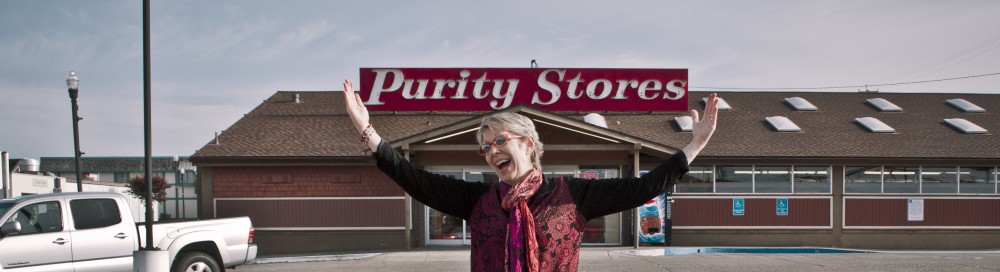
DSC02402The next day, Nell was walking to her car in the Purity parking lot. She noticed a heavy-set woman putting her baby in a car seat in the front of a yellow dented pickup.

As Nell held out her offering, the woman backed slightly away and adjusted her glasses. “I shouldn’t take it.”

Nell reached her hand out further. “Please, I want to give it to you.”

“Thank you. I really do need gas money.” She invited Nell to the live nativity scene produced by one of the local churches on Christmas Eve. She said her baby would play the role of Jesus. She blessed Nell as she walked away.

DSC02477A few days later, Nell saw a middle-aged blonde woman fishing through a public trash can. When she gave her five dollars, the woman beamed. “Thank you. It’s my birthday.”

Nell’s heart soared. “Happy birthday, my dear!”

Every time Nell gave away money, she felt immense joy. She was as grateful for the offering as the recipients were to receive. Most interactions were less than a minute, but during that time she was able to look a person in the eyes, touch his or her hand and, in a few instances, receive a hug. In those moments, she felt something she had never allowed herself to internalize—these are human beings just like her. They have feelings, fears, hopes, and dreams. Yet their daily lives are immeasurably more difficult than hers.

She felt compassion.

DSC02540Her last five was given to someone she sees frequently—a tall, lean man who sports a camo jacket and walks a dog with a matching bridle coat. He’s a loner, who appears to avoid others. It was shortly after the New Year and raining. She spotted him on the sidewalk. He was walking so fast that she pulled over a block ahead. She got out of the car with trepidation. He’d always seemed stoic and she wasn’t sure how he’d react to her approach.

“Hi,” she said.

He returned the greeting with a slight twinkle in his eyes.

“May I give you something?” She held out the folded bill.

“Are you serious?” he asked.

“Yes, please, I want to give it to you.”

He grinned. “Thank you.”

She had never been close to him. She looked at his face—really looked at it—and saw a kind man in his forties with well-sculpted features and dark brown eyes who somewhere along the line learned to keep to himself. She reached down and petted his dog, grateful that he had a companion.

“Happy New Year.” As the words left her mouth, she regretted them. They sounded hollow and trite.

“Happy New Year to you,” he said, leaving her with the gift of his smile.


DSC02521

Goodbye Little Mister

LilMrEleven and a half years ago, our son Harrison graduated from high school. That summer, he was left alone for a week while his sister, dad and I went out of town. We returned to a house wiped clean of any evidence of partying and a fluffy gray kitten to add to our menagerie of two dogs and three cats. (While we were gone, he’d encountered someone outside a restaurant with a box of kittens.)

We had more than enough cats. Harrison was, technically, the owner of one. As a child, he’d been given a short-haired, half feral kitten that he named Indiana Jones Riley. (Indiana turned out to be a girl.) He argued that Indiana was far from friendly and he’d always wanted a fluffy gray cat. We explained that he was going off to college in a couple months and we’d be stuck with it. In order to sway us, I think he finally said please or something nice. But I really don’t remember.

He named her Pancake. Laine called her Lily. I called her Harrison’s Parting Gift.

Lily was a feisty little thing that hated physical contact. In an effort to domesticate her, she was required to eat while sitting on someone’s lap and being petted. It didn’t take long before she begrudgingly relaxed. She lurked about with jaunty confidence, and tortured our two older females with surprise pounce attacks. Laine’s male cat Figaro would have none of that, whacking Lily with a paw whenever she got close. I nicknamed her Little Sister—the obnoxious baby of the pack.

When it came time for her to be spayed, the vet discovered that, under all that fluffy fur, Little Sister was actually a Little Mister.

Over the next few years, as the older cats died off, Little Mister reigned supreme. Our two large dogs gave him a wide berth whenever he strutted about the house. He was a talker and not shy about asking for what he wanted. “I need food!” “Let me in!” “Let me out!” “Pet me!” “Stop petting me!”

Two years ago, we were given a puppy and Little Mister’s dictatorship came to an end. All Lucy ever wanted was to establish a playful relationship with him. All he ever wanted was for her to go away. My efforts to integrate them failed. Relative peace was finally established by erecting a baby gate on the stairs. Little Mister spent his indoor time upstairs, safe from intolerable puppy energy.

***

On an early evening nearly four weeks ago, I put him out. He’d been sleeping all day and company was coming over. If he didn’t go out then, he’d insist upon it later and wake me in the middle of the night to get back in.

Before going to bed, I opened the front door, expecting him to rush in, scold me for leaving him out for three hours in the wet cold, and race upstairs with a chirp which translated, “I’ll never speak to you again!”

He wasn’t there. I called and called, but he didn’t show up. It wasn’t the first time he’d failed to come home. It was no longer raining. He’d probably show up howling in the middle of the night.

But he didn’t.

cat(7)It was the week of Christmas. We had a house full of people and activities. I was concerned about Little Mister, but consoled by the knowledge that he’d sometimes disappear for two to three days at a time. On our walks around the neighborhood, Lucy and I looked for him. Several times a day, I’d open the door and call his name.

As time went by, I wondered if he’d been ill. For the past few months, he slept a great deal. Unless it was three o’clock in the morning, he rarely demanded to go outside. I’d have to hunt him down in the afternoons to put him out where he’d usually spend less than an hour.

The day after Christmas, Laine suggested we check the Humane Society to see if someone found him. I agreed, but wasn’t surprised when he wasn’t there. Little Mister would never, ever let a stranger capture and transport him.

It’s an odd feeling to have a pet disappear. I’m sad, but not emotionally broken. Over the years, I’ve experienced the heart-wrenching grief of watching five dogs and three cats deteriorate to the point where they had to be taken to the vet to end their suffering. I suspect Little Mister wandered off to die, but carry the hope that he’ll return. A tad of wishful thinking allows me to fantasize that he found another home—one with a sweet little lady who doesn’t have a puppy and lets him lounge on her lap all day.

At times, I hear his chirp at the front door only to open it and find the porch empty. Whenever I go upstairs, I anticipate him nestled in the middle of the bed. I miss his insistence upon being petted as I read at night, wrestling his way onto my chest, between my face and book, purring and drooling.

I’ve finally washed his bowls, taken his remaining food to the Humane Society, and removed the baby gate from the stairs.

Four weeks ago, I watched his gray fluff scurry out the front door. If I’d known it was going to be the last time I’d see him, I would have at least said goodbye.LilM

Luck of the Draw

The recent terrorist attacks in Paris and San Bernardino leave me with face in hands, shaking my head in despair, and asking the great unanswerable question: What are we, as human beings, doing to ourselves?

JourneyOver twenty years ago, my husband Gary and I loaded the wagons and left a metropolitan area peppered with gang activity, drive-by shootings, and armed robberies. We trekked north to tiny Fort Bragg with the aim to raise our two young children in a town reminiscent of what life was like when we were growing up.

This community sheltered our tender saplings from the harsh winds of big city realities and allowed them to grow strong and tall. Along the way, we exposed them to places outside this protected island. We encouraged them to eventually leave and experience the real world.

By their senior year in high school, each was eager to squeal their tires, lay rubber, and flip off this small town. They left for college, junior years abroad, and eventually to careers in San Francisco. They have no desire to take up residency here again—even after all the terror that’s sprouted up in “civilized” cities across the world.

Our older children and grandchildren live in Seattle and Boston. I want to scoop everyone up and gather them in Fort Bragg to keep them safe from random acts of violence. But I know they won’t agree to come.

This is the world they’ve matured into and they are much more adaptable to change than I am. childmeI grew up in an era where people didn’t lock their doors—even when they went away on vacation—and often left keys in their parked cars; where children could safely walk alone without fear of abduction; where crazy people didn’t storm public places with automatic weapons and open fire. Today, none of this holds true; it is merely a quaint tale from the distant past.

Fear for my family occasionally becomes my sparring partner and I work hard to beat the crap out of it. turkey_map_02When our daughter Laine recently announced she was going to Turkey, I went to the atlas to reaffirm that the country shares a border with Syria. Fear and I went a full ten rounds. The day after her arrival in Istanbul, we woke to a headline that Turkey had shot down a Russian fighter jet for allegedly violating their air space. I spent the day punching fear in the face.

The following day, Russia stated it would not declare war on Turkey. Thank God. I needed a breather. Now that she’s “safely” back home in Oakland, those two countries can have at it. I am powerless to stop whatever madness is to come.

The chances of an encounter with a life threatening, potentially life ending event has always been the luck of the draw. Lately, though, the odds seem increasingly stacked against us. We are being given far more opportunities to draw the short end of the stick.help

Cash Flow

In the summer of 2008, after numerous citizen complaints, the Fort Bragg city council passed an ordinance against panhandling. I was relieved.

PanhandlingFlyerIn lieu of giving strangers money, I prefer to donate to organizations that help the homeless and those in need. But as the town’s panhandling situation escalated, I felt pressured. It got to the point where I couldn’t go grocery shopping or walk downtown without being asked for spare change. When I finally mustered the nerve to deny one guy, he told me to “Have a nice day, bitch!” Well there he went, ruining it for everybody. With few exceptions, spare change has stayed in my wallet from that moment on.

Some years ago, I drove around Spokane, Washington, with our son Harrison collecting what he needed to move into a dorm at Gonzaga University. On our one hundredth trip to the Valley Mall, I pulled onto the freeway off ramp and stopped at a light. A short, stout woman with hair the consistency of a bird’s nest stood in the dry weeds next to the street holding a sign that stated, “I need money to get out of here.” Perhaps it was her extreme twitchiness that prompted me to roll down my window and ask, “Where are you going?”

“Idaho.”

She was only twelve miles from the Washington-Idaho border. Her chances of success were quite high.

“And then I’m going to the state after that and then the state after that and the state after that….”

I reached into my wallet and pulled out the first bill I touched. It was a five.

“Thank you, thank you, thank you.” She shouted as she took the money.

The light turned green and I proceeded to the mall.

“You know she’s going to buy drugs with that money, don’t you?” Harrison said.

“I suppose.” I didn’t tell him I had experienced times in my life when I wanted to make a run for the border and keep going to the state after that and the state after that.

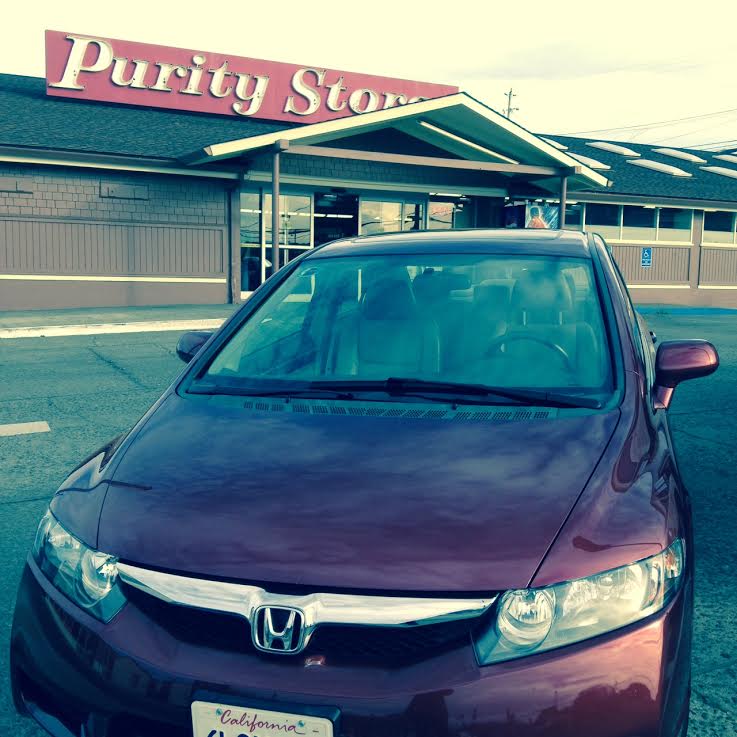
mycarThis past spring, about a month before a van tried to run me over in The Purity parking lot, I found a dollar on the sidewalk. I put it in a cup holder in my car. I would give it to the first street person who asked for money, preferably someone encountered in the parking lot at The Purity.

I was surprised how long it took to pass along that dollar. Seven months after finding it, I was downtown on Laurel, walking along the north side of the street. As I approached Pippi’s Longstockings, a young man and woman crossed the street from the alley.

Both were tall and lean, the kind of lean that borders on emaciated. Despite the warm weather, they wore sweatshirts, the hoods pulled over their heads and down to their eyebrows. His was gray, hers a faded red. There was a dark desperation about them, the kind of look I get when I’m denied my mid-morning sugar fix. I gave them a nod of acknowledgement, a smile of understanding. I’ve been caught without cookies in the house when I dearly need them.

As if I’d tossed a lasso and pulled her in, the woman approached. “Do you have a dollar?” she asked.

I do.” It’s difficult to describe the joy that came over me. Someone had finally answered my call and I was able to relinquish the responsibility of being a good steward of found cash.

The original Purity dollar was in my car, but I had a substitute in my wallet. I pulled it out and handed it to her along with a big smile. She snatched it from my hand. “Thank God,” she said, with a deep sigh of relief. It was the same relief I feel when, hopeless, I remember a stash of mini-muffins in the freezer.

Her man friend had continued north through the alley. She quickened her stride to catch up.

Perhaps she’d use that dollar to feed her addiction. Maybe it would help her buy some food. Possibly it would help get her to the next state, and the state after that, and the state after that.

Tattoo You

One of my greatest talents is avoiding self-reflection. I’m content with believing that I’m hip and easy going. Unfortunately, I have kids who call me on my crap. Unlike fair-weather friends who can be kicked to the curb when they criticize me, I take to heart the observations of my children.

For example, I like tattoos. I really do. I own a couple myself and admire the courage of those who have murals painted on their arms, chests or backs.

I recently discovered that as much of a fan I am of tattoos, I like them on others more than on my own children.

Our son Harrison has no tattoos. Our daughter Laine got her first one in December of her eighteenth year, when she was home for Christmas break from college. As a veteran of one tattoo at that point, I was excited for her.

Lainetat3When she was at the tattoo parlor, I wandered in to take a look. I nearly fainted. The artist was painting a very large antique key across her left shoulder blade. “It sure is big,” I said. (Okay, I probably said it more like, “IT SURE IS BIG!!!”)

Later Laine said she didn’t know it was going to be so large and asked if I was okay with it. I apologized for my initial reaction and told her she could have whatever she wants painted on her body.

Lainetat1A few years later, she got a single lens reflex camera tattooed on her right ankle. It was small and dainty. I liked it.
Lainetat4A few years after that, she and a couple of her girlfriends decided to get red button tattoos behind their right earlobes. I thought this sounded sweet and fun. I envisioned a petite shirt button. She came home with a coat button. “It sure is big,” I said. (Okay, I probably said it more like, “IT SURE IS BIG!!!”) Noting her disappointment, I added, “But I like it.” She was twenty-three, it was her body, and she could tattoo whatever she wanted on it.

Flash forward a few years to Harrison’s wedding. Months before the event, Laine—who is now twenty-six—chose a strapless bridesmaid gown. I encouraged her to wear a shrug to cover her back, thinking some people in the audience might be offended by the large key on her back. (Yes, I did and yes, I am now ashamed to admit it.)

A couple of hours before the bridesmaids were scheduled for photos, Laine asked if she could speak with me privately. I panicked. What could she possibly have to speak to me privately about? I feared I would be reprimanded for some inappropriate behavior. I had no idea what I might have done.

She spoke softly as she took me on a retrospective of her three tattoos and my reactions to each. She said she would not wear a shrug to the wedding ceremony because she is who she is—a woman with a large, beautiful tattoo on her back.

I was ashamed that I had asked her to compromise who she is in order not to offend others. I apologized. (Mostly, I was relieved that she didn’t point out times when I might have acted like a fool during the wedding weekend.)

Then she said, “A few months ago I got another tattoo. It’s on my arm. And it’s big.”

I braced myself, took a deep breath and said, “That’s fine honey. It’s your body and you can do what you want.”

Lainetat2

Lyric from the Bright Eyes song, “June on the West Coast.” Also a description of Laine’s hometown, Fort Bragg, California.

She pulled up the sleeve of her robe to reveal a quotation in beautiful calligraphy on her left tricep. I won’t lie—IT IS BIG and caused me a moment of shock. I hugged her and apologized for making her think I disapproved of her previous tattoos. She is a successful, kind, productive citizen of this world. She can tattoo whatever she wants onto her body.

In the days that followed, the need to reflect on what happened between my daughter and me poked me in the ribs. Why could I accept and admire body art on others, yet have such a difficult time accepting it on her?

When I gave birth to her, I created a perfect masterpiece with delicate, soft skin that I lovingly bathed and caressed, protected with sunscreen, and bandaged when wounded. I now realize the sense of ownership I still harbor toward that skin. Deep in my heart, I can’t help being offended that she so casually lets people scribble on it.

On others, I consider tattoos art; on her, it’s graffiti.

tattooyou

Water

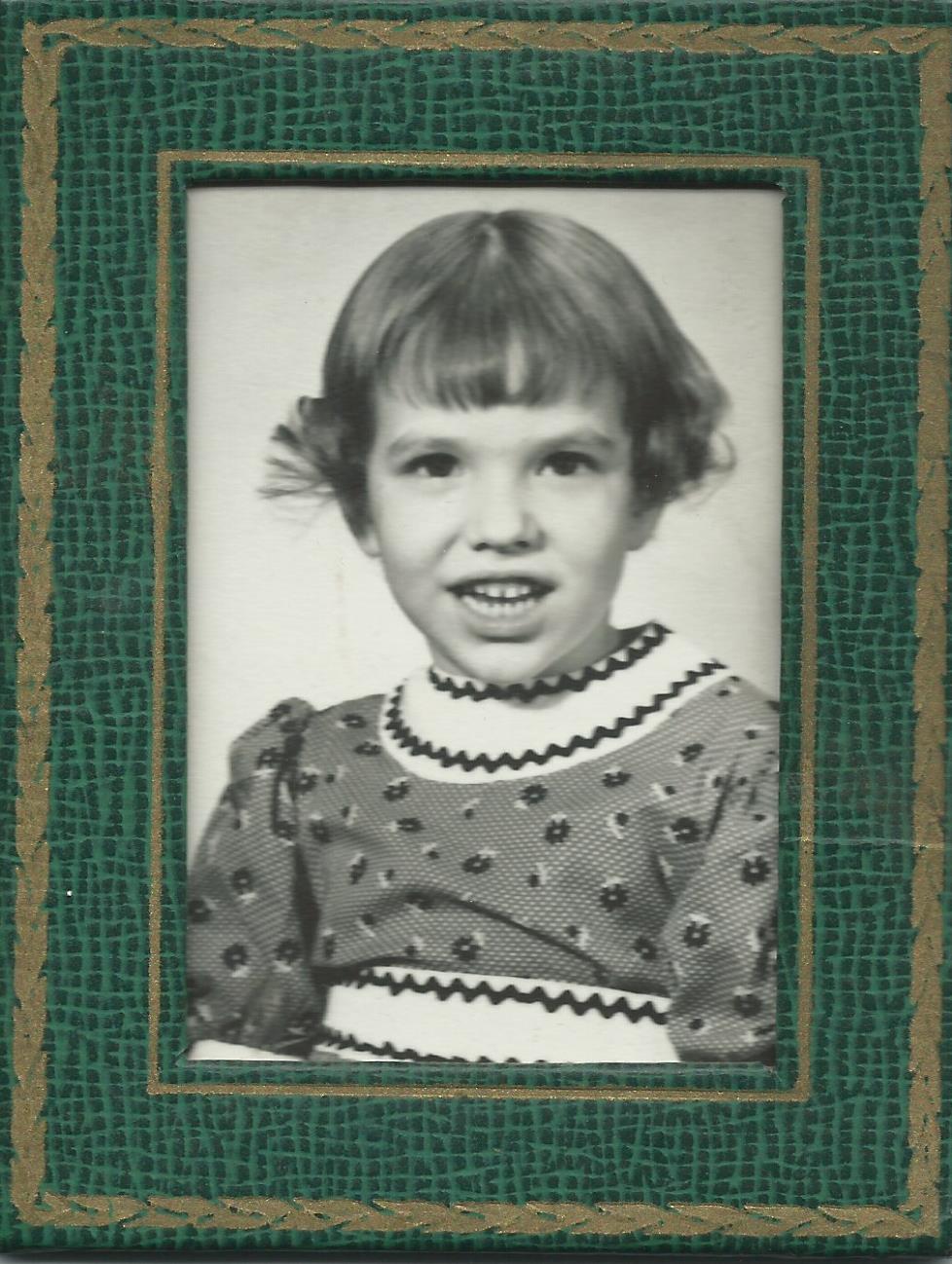
childmeWhen I was six years old, I stood in the kitchen while my mother washed dishes. It was dark outside and rain splattered against the window above the sink. “What will happen when we run out of water?” I asked. She chuckled as she rinsed soap off a plate. “We’ll never run out of water.”

But now we have. “Council Declares Stage 3 in Emergency Meeting” (Fort Bragg Advocate-News, September 30, 2015). Apparently, high ocean tides have polluted the Noyo River with salt water. This river supplies 40 percent of Fort Bragg’s water supply. So here we are, almost out of water.

I’m not happy to have been lied to all those years ago.

As California steadily dried up, I did my best to ignore it. At the risk of public ridicule, I’m going to admit what others harbor deep in their hearts—the past three winters with day after day of bright, crisp sunshine have beat the hell out of the previous ones where we suffered endless, miserable rain. The warm, luxurious summers have been a huge bonus. There, I said it—so stone me.

In the two decades I’ve lived here, a couple of winters stand out: the one when it rained every day during the month of January, and another when it rained nearly five feet from October through May until it finally, mercifully stopped.

Whenever I hear—usually from others who pay attention to the news—that a town like East Porterville (wherever that is) has run out of water, I frown, tsk-tsk, shake my head, feel compassion, but mostly great relief that I don’t live in a town like that.

Now I do.

I’ve always done my part to respect the planet, which allows me to feel quite smug. For decades, I’ve recycled, reduced, reused. I’ve driven fuel-efficient cars and rarely wasted water to keep them clean. I’m so obsessed with saving electricity that my family calls me the Light Nazi.

plantsWe have never watered our lawn and rarely the outside beds. This past summer, we overhauled a portion of the yard and installed drought-resistant plants. We have a bucket sitting in the kitchen sink that collects what would normally be wasted water to feed the outside plants. We have low-flow toilets and water-saving appliances. We repair leaks immediately.

Up to this point, my heroic efforts have caused only minor inconvenience.

I can handle every sacrifice that comes along with saving water except one—at the end of a stressful, planet-saving day, I like a long, hot bath.

My job can be very demanding. I also exercise regularly. I’m not a person who merely perspires. I sweat. After a strenuous workout, I’m often asked if I’ve been swimming.

So yes—stone me again—I enjoy an evening bath where I can relax and let go of the day.

I’ve never been fond of showers. I have difficulty regulating the water temperature. It’s either too hot or too cold. It also irks me that the amount of water that goes down the drain could be used to fill a soothing tub. I leave the experience feeling deprived.

A few years ago, out of respect for the drought, I reduced my baths from seven per week (yes, I hear your gasp of contempt) to six. As the drought gained momentum, I reduced them to four. When the stage three water emergency was declared, I eliminated baths and succumbed to extremely short showers.

This last sacrifice turned me to a fit-throwing two-year old in the grocery store who’s been denied a candy bar. The damned drought has now robbed me of the ability to calm down. Friends suggest yoga and deep breathing. Right. Sure. No thank you.

Two weeks into the new normal, I’ve decided to look on the bright side. I can actually live—not happily, mind you—without an evening bath. Next year, I could be reduced to hauling buckets of water from Pudding Creek. womancarryingwaterIn the meantime, I’ll sing along to this:


Virginia Loperena

I met Virginia Loperena in typical small town fashion. Norma Watkins belongs to the Writers of the Mendocino Coast. Norma and I belong to the same writers group where we often talk of the quirkiness of Fort Bragg. Norma suggests I contact Virginia about a poem she wrote about our town and presented to the writers club.

In a roundabout way, I already know Virginia. She is linked to Jasper Henderson, a young man who went to school with my daughter. My daughter is friends with Virginia on Facebook.

I contact Virginia through Facebook and she is delighted to share her poem. I meet with her the day before she is scheduled to leave Fort Bragg for an adventure that will start by returning to her hometown of Coney Island, New York.

Virginia went to Harvard where, among other things, she met Jasper. After graduation, they ventured to Anchor Bay where his father lives. A few months later, they decided that area was too isolated and moved to Fort Bragg. In her two years here, she worked as the Marketing and Development Director of the Noyo Food Forest and as an Administrative Assistant and Data Base Manager for the Cancer Resource Centers of Mendocino County.

It took time for her to adjust to life on the Mendocino Coast. “I was surprised that so many people know one another. When I was out with Jasper, he’d always run into someone he knew. At first, I’d stand aside, feeling like a Martian envoy. But it didn’t take long before I became known. I like going to places like Headlands and running into people I know.”

Virginia loves the natural beauty of the area and the preponderance of what she calls “Hippy Stuff”—organic food, Fair Trade, non-GMO food. She recognizes that we’re a passionate community. People rally for protection of the ocean and the whales, and rail against devastating forestry practices. “People having a pet cause makes for an engaged community.”

Virginia also found things that she doesn’t like about living on the Mendocino Coast. It’s very isolated—at least three hours from the bustling urban city of San Francisco. She is also disheartened by the recent rise of a small vocal group of negative people. “They can sap the energy and joy out of living here. In a large city, these voices are like white noise. Here they’re hard to drown out. The rumor mill can quickly get out of hand. It’s not based on fact and becomes a scary thing for those who are targets of rumors.”

I wish Virginia well in her future endeavors and thank her for her contributions to our community and, of course, my blog.

Ode to Fort Bragg in Autumn
By Virginia Loperena
It’s six-thirty and the world has ended.
No, really. The sky has darkened to
Black, like ink, or strong coffee.
Speaking of coffee, at the coffeeshop
(We’re taking Headlands)
They play live music nightly.
The waiting list is a moon’s turn.
The moon is not risen
But will be a waxing gibbous
Tonight. The artist is a local man
Who plays jazz while I drink
Local! Port! Wine!
O, Fort Bragg, land of Laurel Street,
Of Locavores,
Of loquacious signage!
Tonight, the musician will begin his set at seven.
The sun begun its set
Over an hour ago.
We patrons are all tired and reading books.
Talking local politics,
A character we call Karl Marx discusses
A local County Supervisor
“He’s a phony. A phony!
Gladhanding around town,
Calling himself an Avatar.”
The coffeeshop, at this hour,
In this month
(November, just past Daylight
Savings, when the cold begins to set in,
But the leaves and rain remain
Indifferent to the season’s turn),
Is dead.
The night is so black.
Who would take their coffee
Or their reasonably priced port
At this dark hour?
There are no tourists left
To marvel at this quaint coastal town,
And gawk at the glassy beaches,
And kick back trendy microbrew.
Even the locals evaporate
Burnt out like afternoon fog.
My lover, a poet, says,
“They’ve all gone home
To put their animals away.”
O, Fort Bragg!
This lunacy, this love affair
Is delicious. O Karl Marx!
The universe is, indeed, “full of things.”
I do believe in gravity, in energy fields,
In the consciousness of Redwoods.
I believe,
In syncing my menstrual cycle with the moon-mother!
I believe,
In Mercury, in retrograde,
In November,
In the magick of this early falling night.

Mother of the Groom

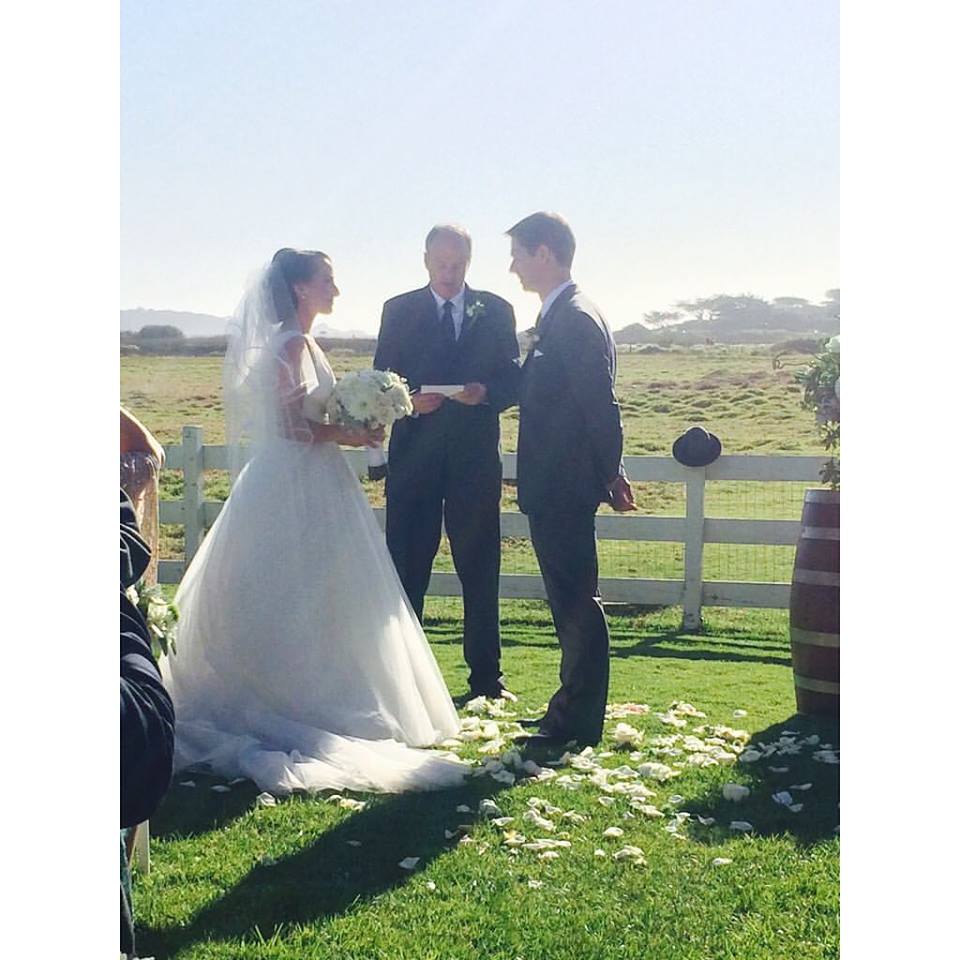
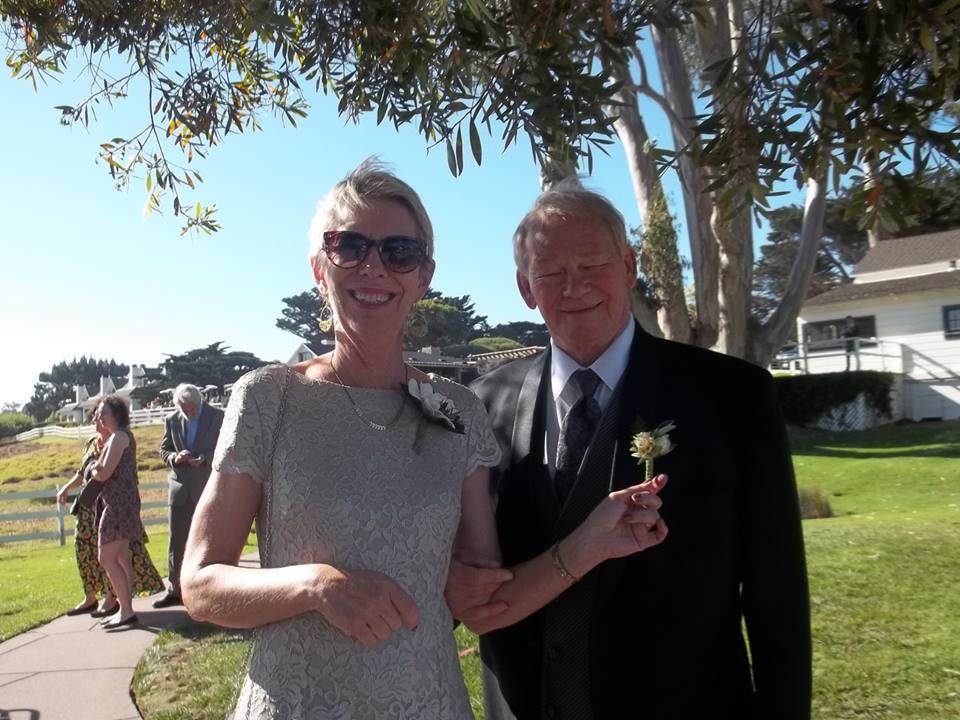
wedding2I sat in the front row, Mother of the Groom, and watched our son’s face as his bride Kasi walked down the aisle. I had never seen him so happy. He radiated pure joy. Through tears, I marveled at how we arrived at this place.

If you’re a mother, you know how it is—you give birth to a kid who transforms your life by infusing it with an intensity of love you never thought possible. After a couple of years, he starts bossing you around and this pretty much continues for the next 16 years until you happen upon a socially acceptable way to kick him out of the house—borrow a million dollars and send him to a faraway college. Through it all, you continue to love him, but secretly admit there are times you really don’t like him.

In his mid-twenties, you witness what has been scientifically proven—his brain fully forms. He makes statements such as, “I can see why you freaked out the night my friends and I snuck out of the hotel in San Jose and you searched for us until two in the morning. We were only 15.” You suspect aliens have turned him into a pod person (ala the movie “Invasion of the Body Snatchers”).

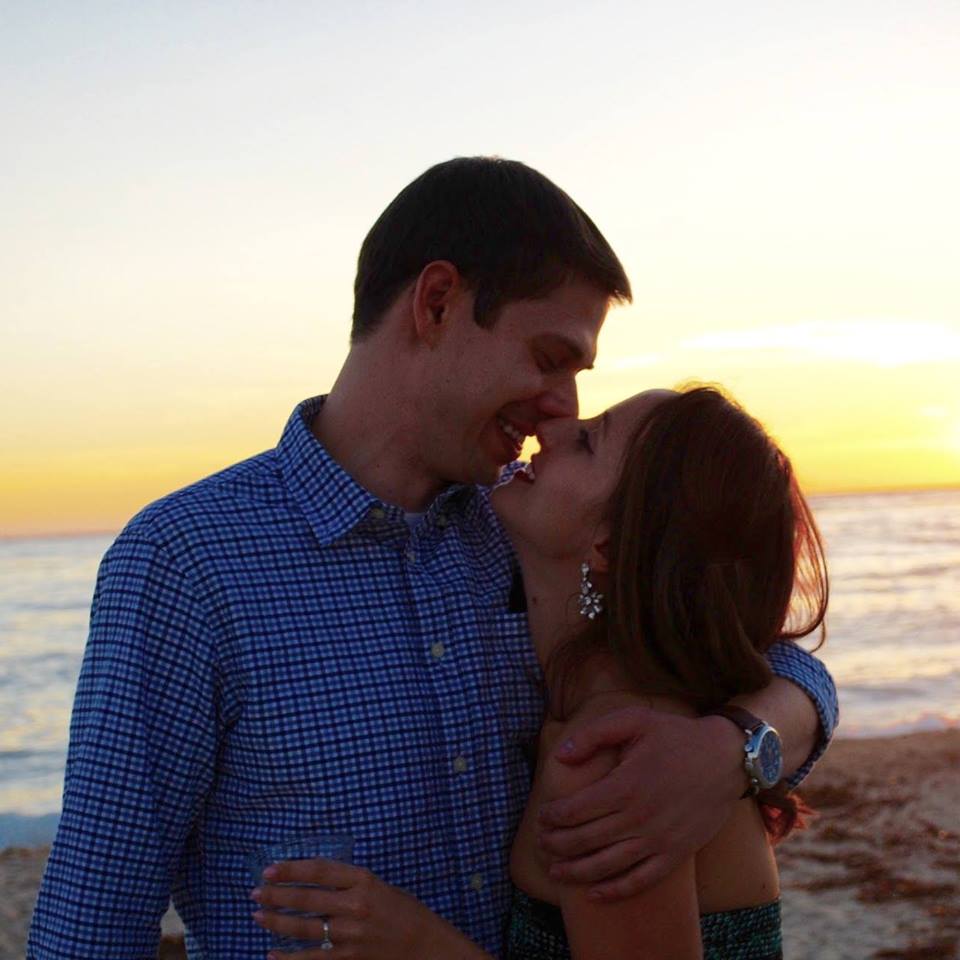
HarrKasi2When Harrison proposed to Kasi, his dad and I couldn’t have been happier. We christened her the girl of “our” dreams. If we could have arranged a marriage, it would be to this girl. She is loving, charming and energetic, and has encouraged the growth of kindness and generosity in our son.

Once the wedding date was set, I searched online for etiquette on how to behave as Mother of the Groom. Basically, I was advised to buy a nice dress and keep my mouth shut. The mouth would be a challenge, but the dress should be easy. I typed Mother of the Groom Dresses into my search engine.

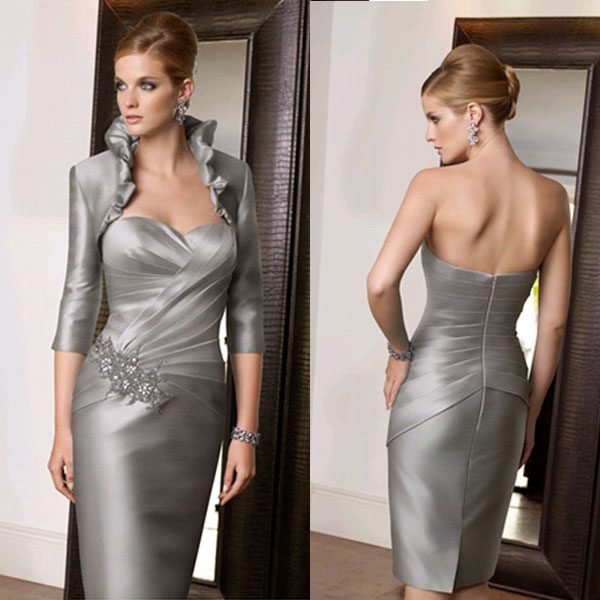
MOG1MOG9


I was surprised by the number of dresses that bordered on skanky and shook my head in judgement at the type of mother would wear such a thing to her son’s wedding.

I chose a simple frock topped with lace.

As the wedding day approached, Kasi said she’d hired professional aestheticians and asked if I’d like to have my hair and makeup done. I was thrilled. It would be like Project Runway when Tim Gunn says, “Send your models down to hair and makeup.” I relished being painted into a thing of beauty. Then I remembered the day I turned 50 and went to a makeup artist. I hoped she could show me some tricks to look younger. An hour later, I emerged from the salon looking like a 50-year old hooker. I cried all the way home where I immediately washed it off.

I wear my hair so short that my own hairdresser can’t style it. I feared what a 20-something aesthetician would attempt to do. I called Kasi and declined the invitation.

Me&LaineThe day of the wedding, our daughter went to the hair and makeup studio and emerged a stunning bridesmaid. I helped my husband Gary put on his handsome tuxedo jacket.

I carefully applied makeup. Did you know there’s this thing called primer, like paint primer, that allows the top coat to go on more smoothly? After watching a YouTube video on how to put makeup on “mature women,” I bought some. I guess it works—I don’t know. I ran a man comb through my hair, sprayed down stray wisps, and put on my non-skanky dress and heels.

KateGaryWe were blessed to be surrounded by loved ones—our older son and daughter, son-in-law, granddaughters, sisters, a niece, brother-in-law, and my mother—family who had not been all together in years.

After the guests were seated, Gary and I walked down the aisle and took our places in the front row. Harrison stood about five feet in front of us.

BB4Here was the baby I had held close and twirled in my arms as we danced to “More than a Feeling;” the kindergartner who exited his classroom on the first day and exclaimed, “This is the best day of my life!”; the child who interpreted “No” as the start of the negotiation process; the eighth grader who wouldn’t allow me to chaperone a school dance until I paid him twenty bucks; the teenager who loved to cook and would make four-course dinners for his friends; the sports enthusiast who enticed us to share his passion; the boy who made us proud over and over again.

I looked at our little boy, all grown up, and felt the same intensity of love as the day he was born, a feeling so powerful no other existed. I watched his smile, his beaming face, and knew that this was how he felt towards his beautiful bride.

All the years we’d traveled together had led us to this perfect time, this perfect place.

HarrKasi

5 Tips for Mothers of Graduating Seniors

KatelynChariseI have a couple of friends with kids who graduated from high school and will soon be off to college. Their pride is tempered by gloom mixed with apprehension and rolled like a burrito in a wrapping of grief. Their children will leave them to rattle around the shell of what was once a rich life, clinging to memories of not so long ago.

I know what they’re going through.

KimJamieFor years, outside of my job, I did little except be a mother. I volunteered in classrooms, shuffled kids to and from activities, and enjoyed a house filled with their friends. My children were never far from my thoughts—even when I “ran away” to walk the dog. During those walks I encountered a mysterious woman in our neighborhood.

She was tall and lean with short sandy-blonde hair that wisped about her face and curled against a khaki sun visor. She had excellent posture. Her gait was slow and smooth like a runway model. I marveled at her apparent serenity, her solitude. I remember her as a creamy ivory color. She was older—the age I am now.

Her eye contact avoidance gave the impression she didn’t want to be disturbed. I ignored that desire by hollering “Hi!” which force a whispered, “Hello.”

I knew nothing about her which gave me free rein to imagine her life. Because she was older, I suspected she had no children at home. I envied her tranquility, but pitied her loneliness. Poor thing. How could she possibly be happy when the years of raising children were behind her?

She made me fear my future lonely existence. At the same time, I looked forward to the possibility of long, peaceful walks.

Twenty years later, my children grown and living far away, I view her differently. She was neither sad nor in need of pity, which doesn’t mean she might not have missed the hectic life she once had. Time gave her the ability to appreciate that tranquility I witnessed. She was probably grateful—as I am—for her life, then and now.

For those with kids poised to leave home, let me share a few things I’ve learned along the way:

1. You get kicked out of the “Parents Club.” It’s a horrible feeling of abandonment and betrayal. Scratch and claw all you want—you will never get back in.

2. You will be depressed. For months after our younger child went to college, I could barely vocalize more than a grunt. Whenever someone asked—and always with a smile—“How does it feel to have an empty nest?” I’d snap, “It feels like crap,” offended by their insensitivity and bitter to be forced to articulate actual speech.

During this period, it helps to connect with people whose lives are more depressing than yours. Watching Judge Judy did wonders for my husband Gary and me. I was also nurtured by episodes of Dog the Bounty Hunter and Breaking Bonaduce.

3. You get 100% of your adult life back. The problem is you’ve forgotten how to live that life. Raising children is like drinking just enough coffee to get a little hand tremor going. Their youthful energy, the company of their friends, and bonds forged with other mothers is addictive. Over the years, those little buggers turn you into a mother junkie. For six months after they leave, you will detox by sitting in rooms lit only by the glow of a television, rocking back and forth. You will cry—a lot.

DSC024954. You’ll have lots of spare time for self-reflection. Ugh—nip that in the bud! After our younger child left, I was so desperate to avoid reflection that I volunteered in a first grade classroom. I quit a few years later when my teacher transferred to the middle school, and I decided I’d rather suffer reflection than deal with that age group.

5. Six years into the new deal, after you finally have a handle on adult living, your kids will take pity on what they perceive as your boring life and give you a puppy. You will not immediately realize the merits of this gift, but after enrolling in a half dozen doggie classes, you’ll be welcomed into a new group—the Dog Owners Club! The wounds of being thrown out of the Parents Club will finally heal. You will become addicted to puppy excitement which will, thankfully, take away any time for self-reflection.

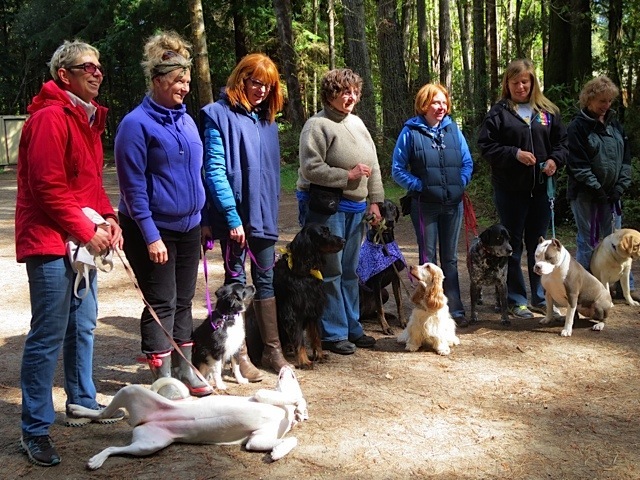
Yes, that's me on the far left with Lucy-puppy who interprets the command "Sit."

Yes, that’s me on the far left with Lucy-puppy who interprets the command “Sit.”

Any fantasies I once held about morphing into that ethereal woman from long ago have not materialized. When I finally had no one at home to run away from and could stroll at my leisure, a puppy arrived and put me back into the demanding feeling of caring for children.

I suppose I could run away from Lucy-puppy by taking walks by myself, but I’ve discovered that tranquility isn’t all it’s cracked up to be. I prefer the hullabaloo.