Ode to Joy

In late summer of 2024, my friend—let’s call her LM—and I took an afternoon walk on Fort Bragg’s South Coast Trail. She asked if I was still doing my solitary sunrise walks. I told her I did them nearly every day, and had begun offering snack packs to the street people I encountered. It made me happy to see someone smile when handed an unexpected treat.

A regular named Jim called me his “Cookie Lady.” I’d often find him sitting on the Redwood Avenue bus bench smoking a joint at six-thirty in the morning, a mug of milk-laced coffee resting by his side. He looked like a grizzled, chubby toddler, and his face burst with delight whenever he accepted my offered snack. We’d spend a moment together, looking east to marvel at the sunrise and wish each other a good day.

LM was impressed by my benevolence which, in turn, fluffed my tailfeathers and made me feel almost Mother-Theresa-like. Look at me being all kind and generous and shit. And all first thing in the morning—even before I’d brushed my teeth.

As LM and I ended our walk, we spotted a woman standing at a picnic table near the headlands of the Noyo River. Her oversized drab green parka hung to her knees, covering most of an ankle-length flowered skirt. Her long brown hair was streaked with grey, held in place against the breeze by a dirty beige cowgirl hat. A cart beside her was piled high with bulging black trash bags.

LM—who owns a local storefront—recognized her. “She sometimes comes in and isn’t like the other street people I’ve encountered. She’s polite and seems well educated.”

My benevolent alarm sounded. I got all excited and said, “I have snack packs in my car. Should we give her one?”

LM is the most reserved person I know. I was shocked when she enthusiastically said, “Sure.”

I crossed the parking lot to retrieve a pack of Ritz-Bits. LM and I—fortified by our do-gooderness—walked over to the woman who by that time had spread a red and white checkered tablecloth over the picnic table.

“Hi,” I said, my smile wide and genuine.

She looked up, narrowing her eyes and pressing her lips together into a menacing line.

Uh-oh.

Maybe approaching this woman hadn’t been such a great idea. But I’d initiated contact and had to follow through to show LM that it can be a fulfilling experience to interact with the less fortunate.

Holding forth the Ritz-Bits, I said, “Would you like a little snack?”

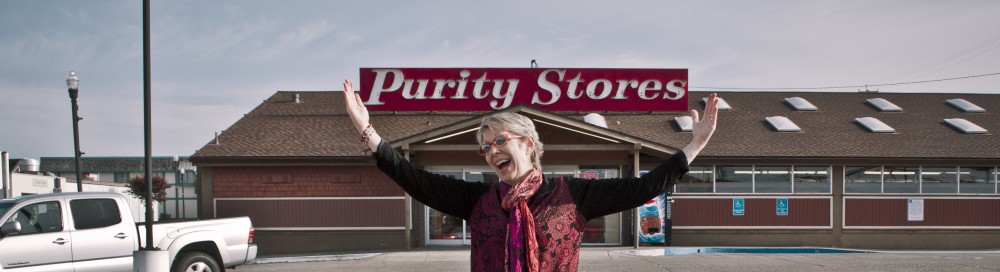
“Why would I want that?” she said, her face a full-blown scowl. “I just went to Purity and bought two boxes of Ritz crackers.” She fished inside one of her trash bags, pulled them out, and placed them on the table.

Oops!

“But these are Ritz Bits with peanut butter,” I countered with great enthusiasm.

“What are you selling?” she growled.

“I’m not selling anything. If you don’t want them, it’s okay.”  

“I DON’T,” she yelled in a most malevolent way.

LM, cowering behind me, leaned into my ear and said, “She’s not the woman I thought she was. I think we should leave.”

As we turned, I noticed a middle-aged minstrel playing a guitar at a picnic table about twenty-five feet away.

“Come,” I instructed Laurie. I was determined to show her my giveaway plan was a noble cause.

As we walked over to him, Malevolent Woman, yelled, “WHAT ARE YOU TRYING TO PULL? GET THE HELL OUT OF HERE!” and other heinous things I can’t remember.

The minstrel paused in his strumming and graced us with a most beautiful smile. Surely he would accept our act of kindness.

“DON’T FALL FOR IT,” Malevolent Woman hollered. “THEY’RE DOING PRODUCT PLACEMENT!”

“Hi,” I said to the minstrel, holding out the Ritz-Bits. “Would you like a snack?”

He gently said, “No, thank you.”

As LM and I turned towards the parking lot, Malevolent Woman moved around her table, giving her closer proximity to us. “I TOLD YOU TO GET THE HELL OUT OF HERE! TAKE YOUR RITZ CRACKERS AND SHOVE THEM UP YOUR ASS!”

“Run,” I said to LM.

Fortunately, LM and I are quite fit, which allowed us to trot safely to our cars.

Malevolent Woman didn’t follow.

“Well, that was an adventure.” LM nervously giggled.

“It sure was,” I laughed, but suspect she’ll never agree to go on another one with me.

***

            So, you might wonder, how did this fiasco come about?

On the morning of the Ides of March 2024—the third anniversary of Gary’s death—I woke, as usual, at six o’clock. I stumbled to the kitchen, made a cup of coffee, and sipped it while sitting on the sofa. I shed tears as the significance of the date washed over me.

After my last sip, I took my cup to the kitchen. A glance out the window revealed the edges of an inky eastern sky beginning to lighten. With barely a thought, I pulled my winter coat over my pajamas, slipped on shoes, grabbed my iPhone, placed Air Pods in my ears, and stepped out the backdoor. I walked through the gate and took a right in the alley. A cold breeze slapped my face and made me question what the hell I was doing. I’d never gone outside at this time of day.

“Today is different,” something inside of me whispered. “Today you do.”

I opened Spotify on my phone and the song, “Sitting,” by Cat Stevens popped up.
Sitting on my own, not by myself
Everybody’s here with me
I don’t need to touch your face to know
I don’t need to use my eyes to see

I started to cry, yet continued walking. The song gurgled up all the grief I’d experienced over the loss of key family members over the previous three years—starting with my husband Gary’s death in March 2021. Then brother-like friend Jerry’s nine months later. My mother’s nine months after Jerry. And Jerry’s widow—our sister-like friend—Marcia’s death eight months after Mom. Interspersed among these were the deaths of my brother-in-law Jim and dear friend Karen.

Oh—and mixed in with all that mess was my sadness over recently making the decision to end a romantic fling. A fling I’d held high hopes for turning into a casual, yet sustainable relationship. An experience that eight months into it made me realize—for a number of reasons—that a short-term affair was all it could ever be. The breakup was very civil and amicable, but left me heartbroken. Another loss packed into a grueling three-year period.

Death. Loss. Grief. DeathLossGrief. Over and over and over again.

Goddammit!

That chilly Ides of March morning, I wept as I walked up the incline of my empty street. I watched the sky lighten to a rose and blue-gray as the sun inched towards the horizon, placing the Fort Bragg Middle School campus and the trees behind it in silhouette. I stopped and stood in awe of the simplicity, yet the miracle of this sight.

This might sound bizarre. Of all places on earth, Fort Bragg Middle School associated with a miracle? Middle schools are notorious for being places where hormones rise up to propagate armpit and genital hair, kill childhoods, and leave people traumatized for life.

But here’s the thing—if I hadn’t been outside that morning, I’d have been cloistered in my office, my focus held captive by financial news on my computer. I wouldn’t have stood across the street from a building I’d seen thousands of times, wouldn’t have known the cresting sun could bless it with such loveliness.

As I absorbed this beauty, the song “Sitting” reminded me, “Everybody’s here with me.” I deeply missed the people who were once central to my life, but at that moment, I felt them all—Gary, Marcia, Jerry, and Mom—wrapping me in comfort.

I wish I could say that a half hour of wandering allowed me to return home fully recovered from grief bullshit, but such was not the case. I did, however, feel some relief from letting go the tears that had simmered inside me throughout the days before.

The next morning at six-thirty found me outside again.

And I went out the morning after that and the morning after that and. . . .

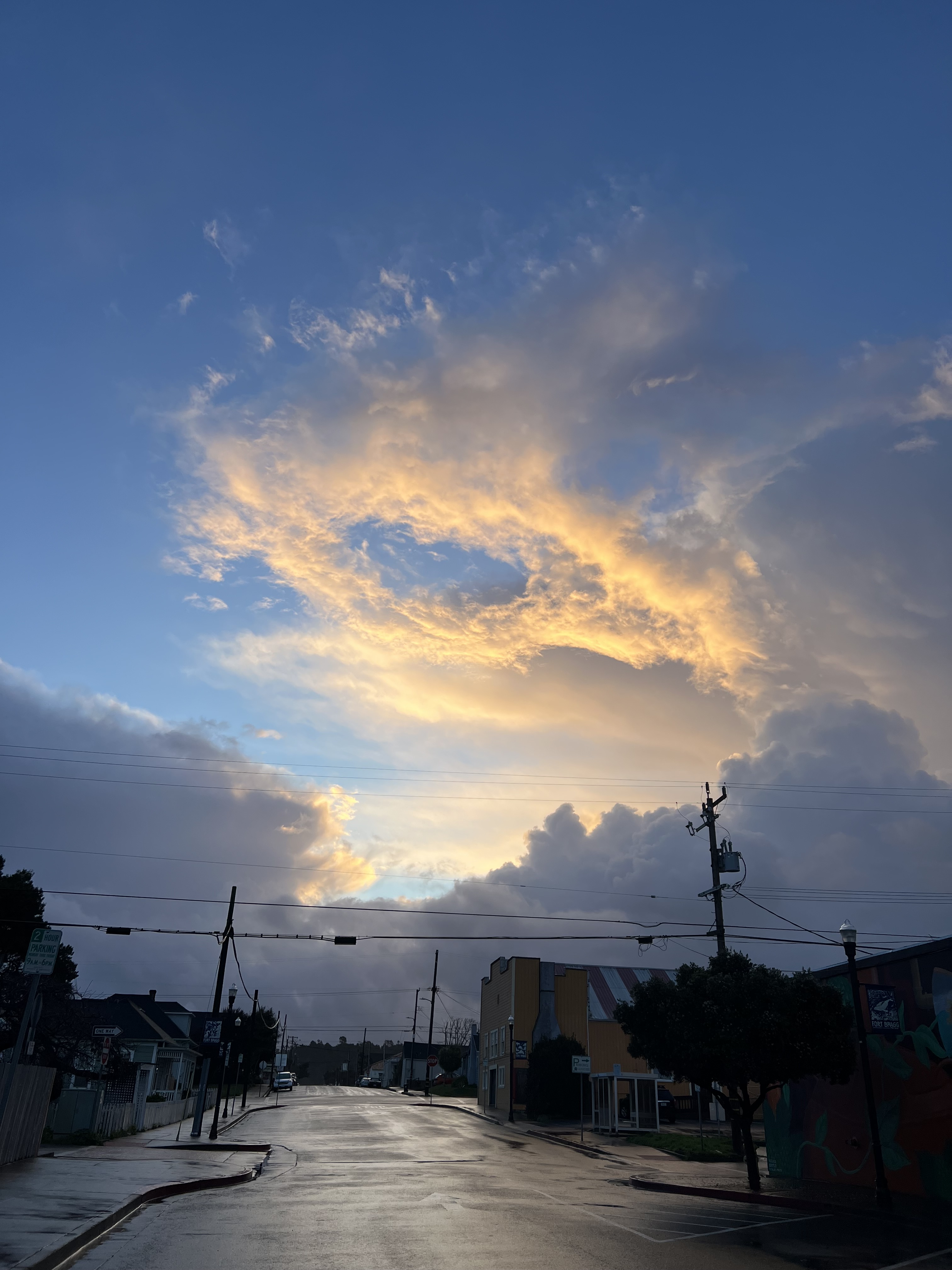
One stormy morning, as I walked between the rain squalls on an empty street, the rising sun beamed through a gathering of dark clouds, the brilliant rays imitating a Renaissance painting of heaven bursting forth upon the earth. I stopped and searched “O Come O Come Emanuel” by the Mormon Tabernacle Choir on Spotify. As my favorite rendition of this divine song played, I stood in the middle of the street and wept with gratitude for being given this sight. I don’t believe in heaven—and certainly not in hell—but I do believe in the mystical power of the universe, and at that moment it touched my soul.

After beginning this walking quest, I’ve rarely skipped a day. Each goes a long way towards easing my periods of anxiety and melancholy. They gift me the rare opportunity to be in the moment. I wander alone through the streets—me and my music—putting one foot in front of the other—over and over and over again.

Whenever I see a newspaper on the sidewalk outside someone’s home, I pick it up and toss it onto their porch. A year into these walks, I have three houses where I routinely do this. One is a couple blocks away. I’d recently learned the husband had been diagnosed with a terminal illness. Each morning, I pick up their “Press Democrat,” open their front gate, walk to the edge of their porch, and toss it as I whisper, “I wish you peace.”

I’m not telling you this to indicate I’m a saint. I’m far from it. But from my painful experience of watching my husband Gary deteriorate over a period of years and the trauma of the six wretched weeks leading to his death, I know—I know—the emotional devastation happening in that household. If I can provide a minuscule bit of relief—not having to navigate porch steps and out to the sidewalk to retrieve a paper—that’s what I’ll continue to do.

As my spring walks turned into summer, I began stuffing a couple of snack packs into my pockets to offer to any street person I encountered. Usually, though, I anonymously leave a couple on the Redwood Avenue bus bench, about a half block from the Hospitality House.

I’ve also begun placing tiny artificial birds in people’s yards. They’re bright and colorful and I order them in bulk online. I put one in my pocket before I head out the door. Initially, I clipped one on a bush or tree in the yards of people I know. When I exhausted those properties, I began allowing a yard to tell me if it needed a bird. It might be a home that’s well-manicured, where the residents take pride in maintaining their landscape. The bird becomes a seal of approval—a well done award. It might be a place so beaten down and sad that a colorful little bird is the only thing that gives it a splash of joy.

My morning walks are an unexpected gift. They allow me to experience setting moons, half-moons, quarter moons, you-name-it moons. Full moons so majestic they take my breath away. Sunrises through magnificent cloud formations. Ravens swooping about in pairs, warming up for a day of mayhem. Serenity—deep, soothing serenity. They make me feel like I’m getting away with something, but I ‘m not sure what. Maybe I feel I’m the only person on earth privy to witnessing such miracles.

Occasionally, I encounter forty-something-year-old women power-walking. They remind me of myself at that age—desperately trying to get a grip on life by speeding through it. I’ve come to realize that such scurrying about delivered me to where I am now—a place that allows me to pause, take a deep breath, and appreciate the dawning of each new day.

Three years after bearing the dreadful grief over the deaths of my loved ones, the universe granted me ways to conjure moments of joy. These moments are fleeting, but enough to sustain me to continue walking through this challenging experience called life.

California DMV

I knew my driver’s license was due to be renewed by my birthday in March of this year. What I didn’t know was that, at the age of 70, I forever lost the luxury to simply pay a fee to continue driving another five years.

In January, after receiving my renewal notice with this disturbing news, I went to the tiny Fort Bragg DMV office on Franklin Street, grabbed a free driver’s manual, took it home, tossed it on the kitchen table, and ignored it.

I went to the DMV website and found assurance that I shouldn’t worry about taking the written test. They don’t want me to fail. They sincerely want me to pass. To prove their point, they offer four practice tests with ten questions each. I easily passed them all. I searched the internet for websites that offer free practice tests, which I found in abundance. These were more challenging, but I passed three of them a day for a week.

On Tuesday, February 6th, I had a free afternoon and felt cocky enough to go to the DMV and get the ordeal behind me.

When I was last there six years ago to exchange my ordinary license for a Real ID, they had a system where you pulled a number from a dispenser thingy, took a seat, and waited for your number to be called. This time, the dispenser was nowhere to be found and I was greeted by a white poster board with handwritten instructions to wait in front of it.

A woman stood about four feet to the left of the sign. When I asked if she was in line, she shook her head and said her teenage son was at the counter being processed for his written permit test. I smiled and nodded, which seemed to give her permission to go on a rampage about how their primary home is in Sacramento, but they’d been staying at their house in Gualala where the recent storm had knocked out power for three days and there was no scheduled time for when it would be restored. She hadn’t had a shower since the outage. She thought she’d go insane if she couldn’t get one soon.

I felt she’d already gone insane, but could empathize. I hate power outages and, as I grow older, am prone to babbling complaints to complete strangers as long as they don’t break eye contact.

I noticed a mid-forties gentleman standing a few feet behind the permit test lad and crept around the ranting woman to ask if he was in line. He nodded. I wanted to point to the scrawled sign and inform him he wasn’t following the rules, but quickly reminded myself I don’t work for the DMV and line rule violations aren’t my problem. I took up position behind him.  

“This is so confusing,” I said.

“I know.” He launched into what a pain in the ass it is to try to register a vehicle online and he wasn’t about to put his credit card information on a third-party website because he’d already had two credit cards hacked, so he came in person to get it done.

“That’s some rough stuff.” I pretended to sympathize, but wanted to scoff at his dilemma. It was nothing compared to my having to endure a test I hadn’t taken since before he was born. I wanted to tell him to enjoy life—he’d be 70 before he knew it and then he’d really have something to bitch about.

The counter person sent the permit boy to take his test on one of the computers that grace the west and north walls of the office. He then asked everyone in the room to get in line in front of him and he’d assign them a number. He wrote each number on a small Post-It Note.

A couple of other people had arrived and stood behind me. One was a fella I recognized as a frequent offender from my habitual online viewing of the Mendocino County Sheriff Booking Logs. I’ll call him Tony.

After he got his number, Tony and what appeared to be a female acquaintance took seats in front of me. Apparently she hadn’t seen him in a while and asked what he doing at the DMV. I wondered, too, hardly believing his criminal history would allow him the privilege of obtaining a driver’s license.

“The last time I got arrested, the judge ordered me to get an official ID. I told him all the cops know me, so what’s the point?” He chuckled. “He threatened to hold me contempt. So here I am.”

She commented on how good he looked.

I silently agreed. His last name indicates he’s of Italian descent. Even though he’s in his early fifties and has been a repeat offender for such crimes as drunk in public, drug possession, and burglary for the past fifteen years that I’ve had access to the booking logs, his Mediterranean genetics have served him well.

He thanked the woman for the compliment. “A couple years ago, I started getting a lot of grey in my hair and beard, and began using hair dye. Last month, I was in jail for two weeks and came out looking like a snowman.” Both he and the woman laughed.

I also wanted to laugh, but my number was called and I was forced to leave this entertaining conversation.

The kind man behind the counter finished the application I’d been unable to decode online. He conducted a vision test and took me to the designated area to snap my photo. He asked if I’d like to take the test on the computer or on paper. I opted for the computer because I felt it would get me out of there faster. He said, “You’ll pass. I know you will.” I wanted to hug him.

With his endorsement, I went to a corner computer and entered my identifying information. As I answered one question after another, I wasn’t aware that the program would immediately tell me when I missed one. I thought the tally would wait until the end. After my first two missed questions, my inner perfectionist pounded me over the head. “Get it together damnit! You’re only allowed to miss three more!”

I missed a total of six, mostly because I hadn’t taken my time to contemplate my answers. Mortified, I hightailed it out of that office.

The DMV allows people to take the test three times. Instead of focusing on the positive of having two more tries, I went to the dark side of neurosis. What if I failed the next two? Would my driving privileges be permanently revoked?

I was too afraid to ask or look it up online. I didn’t want to know what I suspected was the worst. After three failed attempts, I’d never be given another chance to renew my license, never again be able to drive. I’d become a recluse, trapped inside my house, relying on the kindness of others to visit and supply me with food.

I’d become someone like the serial offending Tony with a lowly California ID card that didn’t entitle me to much outside of identifying me to the cops if I got arrested. My life—the new life I struggled so hard to rebuild since my husband died three years ago—would be over.

Over.

The next day—Wednesday—I picked up the dusty DMV manual and made a several-page study guide. I reviewed it over and over and over again. I crammed information into me like a duck being force-fed to fatten its liver to make foie gras.

My logical brain knew I was prepared to pass the test, but still—still—there were those pesky details on my study guide that I continued to miss like, “When can a child ride in the front seat of the car?” It’s ten-years-old, but there’s also the rule that they can be relieved from their child car seat when they either turn eight or are the height of a miniature donkey. “How many inches should there be between anyone in your vehicle and the air bags?” Ten inches, that’s how many. Why should we, as drivers, be expected to know this? Shouldn’t that be the responsibility of car manufacturers?

What if my test was filled with such obscure questions?

I’d set an arbitrary goal to take my second test on Thursday, February 15th. This time, I would ask for a paper test—the kind I assume most “old” people choose. It would give me time to calm the hell down as I slowly went through it page by page. By then, I would have chalked up at least 20 hours of studying time. But as my knowledge grew, so did my fear of failure. I was way overthinking and needed stop this nonsense.

On Tuesday, February 13, I went to the DMV at nine o’clock. This time, the cast of characters was quite mundane, but the crowd made me suspect I was in for a long wait. At that point, I didn’t care. I’d ingested a trusty Lorazepam and brought plenty of snacks to soothe me.

An hour later, my number was called. I sat across from a late-forties woman who possessed all the warmth of Darth Vader. She didn’t acknowledge me, but she hadn’t acknowledged anyone before me either.

I handed her my paperwork and explained I was there to take a second test. This time I wanted to take it on paper. Without making eye contact or a sound, she tapped on her keyboard. I couldn’t tell if she was even breathing. Her printer whirled and ejected five pages. She tapped a bit more and additional pages spit out. She stapled the first set on the upper left-hand corner and handed them to me along with a #2 pencil.

“Thank you.” I smiled.

She said nothing.

I took my test to the far corner of the room. I was fairly confident of my answers, but there were ringers like, “When must you turn your headlights on when there’s limited visibility due to weather conditions?” The answer choices were in feet. I knew that we must turn our headlights on a half hour before sunrise and a half hour after sunset. But how many feet? I had no idea. I went through every question twice before deciding I was brave enough to face the results.

The room had cleared and I didn’t have to wait before handing my test to Ms. Darth.

She placed the second test she’d printed on her desk next to mine. One by one, she lifted the pages of each to compare mine to the correct answers. In an effort to fight off fainting to the floor, I pulled a small handful of cashews out of my snack baggie, stuffed them into my mouth, and began furiously chewing.

She finished comparing all five pages without comment. Maybe I’d gotten a perfect score! I was too afraid to ask. Without hesitation, she could vaporize me with one death ray. She pecked a few keys on her keyboard and a page spit from her printer. She took it, tore off the bottom half, and handed it to me.

It was a temporary license.

“I passed!?!”

 “Yes,” she groaned.

“How many questions did I miss?”

“Four.” She grimaced as speaking to me caused her increasing pain.

I have no idea how she calculated my missed answers. She hadn’t made any marks on my test paper. Maybe she’d kept tally with her toes.

I clapped and shouted, “Yoohoo! Thank you! Thank you so much!”

She said nothing, but her expression indicated, “I command you to leave.”

As a bonafied California licensed driver for the next five years, I stood up and happily complied.

The Mystery of Grace Turner Cannarr

In January 2019, Fort Bragg’s only mortuary, Chapel by the Sea, was destroyed by fire. Two years later, I was asked to write its history for the local Real Estate Magazine. I interviewed a number of people and learned that over the course of 51 years, the mortuary changed ownership five times. Historically, mortuaries have been owned by men, and this one is no exception.

One of the owners was the late Bryan Fairlee. His son Duff told me Chapel by the Sea was his father’s second local mortuary purchase. Bryan bought his first in 1950 from Grace T. Cannarr.

“Wait a minute,” I said. “Grace is an unusual name for a man.”

“Grace was a woman.”

What?!?

It took guts for a woman to run such a business in the last century—a time when women were not encouraged to aspire beyond the role of homemaker. How on earth did Grace accomplish this? And in remote Fort Bragg, California of all places? These questions weren’t central to the article I’d been assigned. For that and a number of reasons, I had to put my curiosity on hold for a few years.

I eventually reached out to the Fort Bragg-Mendocino Coast Historical Society and was sent an article about Grace from their publication, Voice of the Past. The article provided an outline of Grace’s life and sparked my obsession to learn more about her. A few months ago, I discovered the website newspapers.com. I was thrilled to find a source that allowed me to learn more about Grace.

Grace Turner was born in Berlin, New Hampshire in 1889. By the time she was twenty-one, she’d married Alfred Sloane. I don’t know the exact date, but do know that in 1911, when she was 22 years old, she gave birth to a son named William.

In 1913, when she was 24 years old, she, her two-year old son, her parents William and Jeanette, and her sister Lulu traveled across county to Usal, California, about 28 miles north of Fort Bragg. Her uncle Luther Turner owned a cattle ranch there. Why they relocated is anyone’s guess. I’m thinking her father may not have been doing so great in New Hampshire and needed steady work. Or maybe he suffered a midlife crisis and sought adventure. Or perhaps they’d all grown weary of brutally cold winters and yearned to live in a temperate climate.

Things must not have been going so great between Grace and husband Alfred because as the group made their exodus, he stayed in New Hampshire. In August 1916, Grace was granted a divorce from him in Mendocino County.

During that cross-country trip, the family lingered long enough in Iowa City for Grace to become trained as an embalmer and undertaker at the Carpenter College of Embalming. What could have possibly motivated her to aspire to obtain such a designation in a field that hardly seemed welcoming to women?

Maybe Grace had long before set her sights on that school and her family obliged her as they made their way to California. If so, they had to be a mighty progressive clan. More likely, her dad needed to pick up work to finance their epic trek. Not content to wait out the delay by darning socks and doing laundry in boiling pots over open fires, I imagine a spunky, young Grace discovering the college and saying, “Why not enroll and set myself up to eventually have a career? I’m smart, I’m capable, I’m going to do this.”

Picture this—not only did Grace endure a move across the country when interstate highways were nonexistent and cars extremely uncomfortable, she also had to deal with the volatile moods of a toddler. Despite all this—and being a single mother—she managed to become a certified embalmer and undertaker along the way.

I’m in awe of her.

After her family settled on the Mendocino Coast, Grace met Robert C. Cannarr in Fort Bragg. I don’t know how they met, but envision a social event—perhaps a community potluck—where from across a crowded room, he caught her eye and sparks began to fly. Or maybe they encountered each other while dishing up potato salad and discovered a shared passion not only for the salad, but for the mortuary business.

Robert was born in 1882 in Rock Rapids, Iowa. As a teenager, he apprenticed as an undertaker in Muscatine, Iowa before enlisting in the Army. In 1910, instead of returning to Iowa, he went to the more scenic San Francisco. I have no idea what occupied him while there. In 1912, he moved to Fort Bragg where he made deliveries for the Union Lumber Company. He may have chosen Fort Bragg because logging and lumber mills were booming along the Mendocino Coast to supply a nearly endless demand to rebuild San Francisco after the 1906 earthquake. A few years later, he moved to Chicago where he received a degree in embalming in 1915.

In 1917, Robert married Grace and they moved to Sacramento where he became an embalmer for the firm Clark, Booth and Yardley. He adopted Grace’s son William.

A year later, Robert and Grace returned to Fort Bragg where Robert again worked for the Union Lumber Company. Grace went to work in the company’s office. In 1920, they opened the Cannarr Funeral Home on Franklin Street across from City Hall. I imagine it took them two years to scrimp and save from their paychecks in order to finance the business. At that time, the Mendocino Coast was a sparsely populated frontier filled with lumberjacks and fishermen who often lost their lives to dangerous jobs. A mortuary would have been profitable.

For 12 years, Cannarr-Cannarr was a successful business partnership, but it and their marriage ended in 1932. In the 1933 divorce settlement, Grace was granted the mortuary. She was 44 years old—a rare woman at that time to come out on the winning side of a divorce.

Grace must have possessed immense fortitude to enter the mortuary business in the first place. I believe she worked hard to establish Cannarr-Cannarr and was not about to roll over to let Robert take it from her.

The town must have been abuzz with speculation as to what dirt Grace had on Robert to accomplish this feat. Or did a cold-hearted Grace cause Robert to fall into the arms of another woman, a woman from Mendocino, a woman he later married? Whatever the speculation, historical records indicate Grace carried on with dignity.

In true Grace fashion, she got to work and relocated the mortuary to Main Street—where the North Coast Brewery and Tap Room is now—and renamed it the Grace T. Cannarr Funeral Home. She ran it for 18 years in an era when most women were not allowed to own property, much less work outside the home The fact that she continued to operate this business through the Depression and nineteen forties shows she was an astute businesswoman.

The facts I learned about Grace made me yearn to know more. Three years ago, I reached out to my dear neighbor Joanne Matson who was 94 years old at the time and had long been active in the Fort Bragg-Mendocino Coast Historical Society. She said she’d known Grace.

Joanne told me that in the late nineteen thirties, she and her mother Laura Babcock lived in a large house on Franklin Street just north of Pine Street, where they rented rooms to female school teachers and served them dinner each evening. Grace, whose business was a short walk away, regularly joined them for the evening meal. This was after her divorce, after her son had grown and moved away.

When pressed about Grace’s character, Joanne would only offer, “She was very serious. My uncle worked for her and she always wanted things just so.”

Was Grace a control freak? Joanne, being a very sweet person, would not use that term, just conceded Grace sought perfection.

I envisioned Grace an early feminist, dressed in severe suits, wire-rimmed glasses, and sensible shoes. Joanne shook her head and giggled. “She was average height, a bit heavy-set and dressed in the fashion of the day.” I coaxed Joanne to dish up some shocking details about Grace. I could tell by her grin that she knew a thing or two, but she wouldn’t reveal them.

Joanne did share that Grace had two cousins who taught piano to children—Joanne included—at the Episcopal Church. She was struck by how the humor of these gregarious cousins differed from the serious Grace.

Over the course of learning about Grace, I’ve come to admire and feel a bit sorry for her. I imagine her somewhat aloof and friendless.

Grace was a businesswoman—a rarity for women of that era. To complicate matters, she was involved in what most people consider the messy business of death and embalming. Maybe the proper matrons of Fort Bragg were repelled by her profession. She belonged to a few women’s civic groups, but perhaps her efforts to connect only made her feel more socially isolated. I suspect most of her fellow club members were married with children. Grace was once also married and had a son, but had a career outside those expected roles. She eventually became a divorcee—a scarlet letter for women at that time—which may have increased her loneliness.

I hope Grace found a special kinship with the women teachers at Joanne’s mother’s boarding house. It warms my heart to imagine her sitting around a large table at the end of a stressful workday and enjoying a homecooked meal with other professionals who became true friends.

In 1950, after 18 years of operating the Grace T. Cannarr Funeral Home, ill health forced Grace to sell. Sweet, wonderful Byran Fairlee bought the business. A year later, she died on March 29, 1951. Her obituary states that an illness caused her to spend nearly eight months in the hospital. I’m saddened to realize this dynamo of a woman suffered a painful end, but happy she died at home, which her obituary lists as 544 N. Corry Street, a few blocks from my house, a midsize, stately structure—one I’ve long admired.

Her death sparked a battle over her estate, valued at $150,000—the equivalent of $1.7 million today. Her son William was angered to learn that his mother’s will left him a measly $25,000, stipulated piddly sums to 11 other beneficiaries and $115,000 to a scoundrel named Albert Rowe. In court, William accused Rowe of moving into his mother’s house in January 1951 and attempting to keep him away from her. A few weeks before she died—while heavily sedated with painkillers—Rowe convinced her to change her will. William also accused his mother’s caregiver Katie MacLean of being in cahoots with Rowe.

Nearly a year after Grace’s death, the case was settled out of court. William inherited one-half of the estate and Rowe the other half. MacLean received a diamond ring valued at $2,500—the equivalent of $29,000 today.

Bryan Fairlee conducted Grace’s funeral service and honored her final wishes by transporting her to the Chapel of the Chimes Cemetery in Santa Rosa. In 1964, her son William was interned next to her. Like his adopted father, Robert, William had no biological children.

Grace Turner Cannarr took respectful care of the dead along the Mendocino Coast for decades and consoled families through the most traumatic events of their lives. She accomplished this at a time when women did not become certified embalmers and undertakers. If they worked at all, they became nurses or teachers. Grace defied the times by becoming an equal partner in a mortuary business for twelve years and running it as a single woman for another eighteen.

***

Grace Turner Cannarr has become one of my heroes. As much as I’ve uncovered about her, I yearn to know more. One of my biggest disappointments is I cannot find a picture of her. I’d be overjoyed f anyone reading this can supply me with more information.

Racing Against Myself

When I started running 11 years ago, I considered it a success if I could last five minutes before having to stop, gasp for air and stifle the urge to puke. I did not undertake this torture voluntarily. I was duped.

In the spring of 2011, my friend Kathleen called shortly after she’d landed at an airport. On her flight, she’d sat next to a woman who had competed in a number of triathlons and raved that they were so much fun. Kathleen knew the Rotary Club in Ukiah hosted a triathlon each fall and suggested we do the next one. The excitement in her voice was contagious and I readily agreed. Before I had a chance to ask questions, she hung up to collect her luggage.

I swear, I didn’t know what a triathlon was, but trusted her not to suggest something that wasn’t enjoyable. She’d long been my friend, workout partner and fellow empty-nester. We regularly encouraged each other to seek ways to challenge our physical abilities. Mostly, though, we tried to prove to our 20-something-year-old kids that we were still vital and relevant.

Days later, I looked at the Rotary Club race website: half mile swim—okay, I swam a lot as a kid; 20.5-mile bike ride—again, childhood bike riding experience qualified me; 5k run—now wait a darned minute. I’ve never been a runner and, in my late fifties, wasn’t about to start. I called Kathleen and said, “NoNoNoNoNo! You didn’t tell me about the running part. I hate running. I’m not going to do it.”

She gently reminded me I’d already committed. Goddamnit! I had no choice but to honor my pledge. Throughout our four months of training, she tolerated my constant bitching with great patience and a bright smile.

Over time, when running, my feelings of nausea and lightheadedness abated and I started to believe the activity may not have actually been invented by the Devil himself. I regularly recorded my time and became obsessed with trimming my minutes per mile. As the triathlon grew closer, I felt quite smug. However, my only goal was to live to tell the tale.

I lived. It was fun. And I’ll never do it again.

A few weeks after the race, I inexplicably felt urge to run. The urge to run? Oh, for God’s sake! I’d become one of them—those people who prance about on sidewalks and the edges of roadways seemingly to mock my opposition to prancing.

The following spring, after months of running, I decided I might be fit enough to sign up for the 5k at the local Whale Run. I love seeing a person’s eyes widen in awe and admiration when I announce that I’m going to do a 5k. I sincerely thank whoever invented the metric system for making that distance seem far more impressive than 3.10 miles. I was pleased enough with my time—12 minutes per mile—but determined to beat it in the next race.

I ran a few races each year, one time earning a medal and another time a ribbon—just enough incentive to keep going and push myself to collect more. One year, I ramped up and did a 10k. This taught me an important life lesson—after 5k, my enjoyment of running quickly turns to loathing.

The best thing about participating in these races is the exhilaration of being among large groups of people who are intoxicated with endorphins, which makes them extremely happy. Maybe St. Paddy’s Day in Chicago has a similar vibe, but I’ve found no other event that compares. It’s addicting.

When Covid Time hit in 2020, all local races came to a halt. In March 2021, my husband of 46 years died and I was catapulted into a tailspin of grief.

During my first year of widowhood, I suffered so many things—the most confusing and disturbing were severe panic attacks. Well-meaning people offered suggestions to relieve my pain. High on the list were yoga and meditation. I gave both a try. I adore my yoga instructor Delphine, but after several Zoom classes, I had to concede I really don’t like yoga. Guided meditation only made me cry more and increased my anxiety attacks.

I moaned to my friend Jessica about my shame and frustration over not being able to follow what appeared to be highly recommended prescriptions to lessen my grief. I’ll never forget how she looked me straight in the eyes and asked, “What do you like to do?”

“I like to go on a run, come home to do a light workout, then stretch while laughing at standup comedy on YouTube.”

Jessica said, “Then do that.”

I started doing that a few times a week. It went a long way towards cleaning out the toxic pipes.

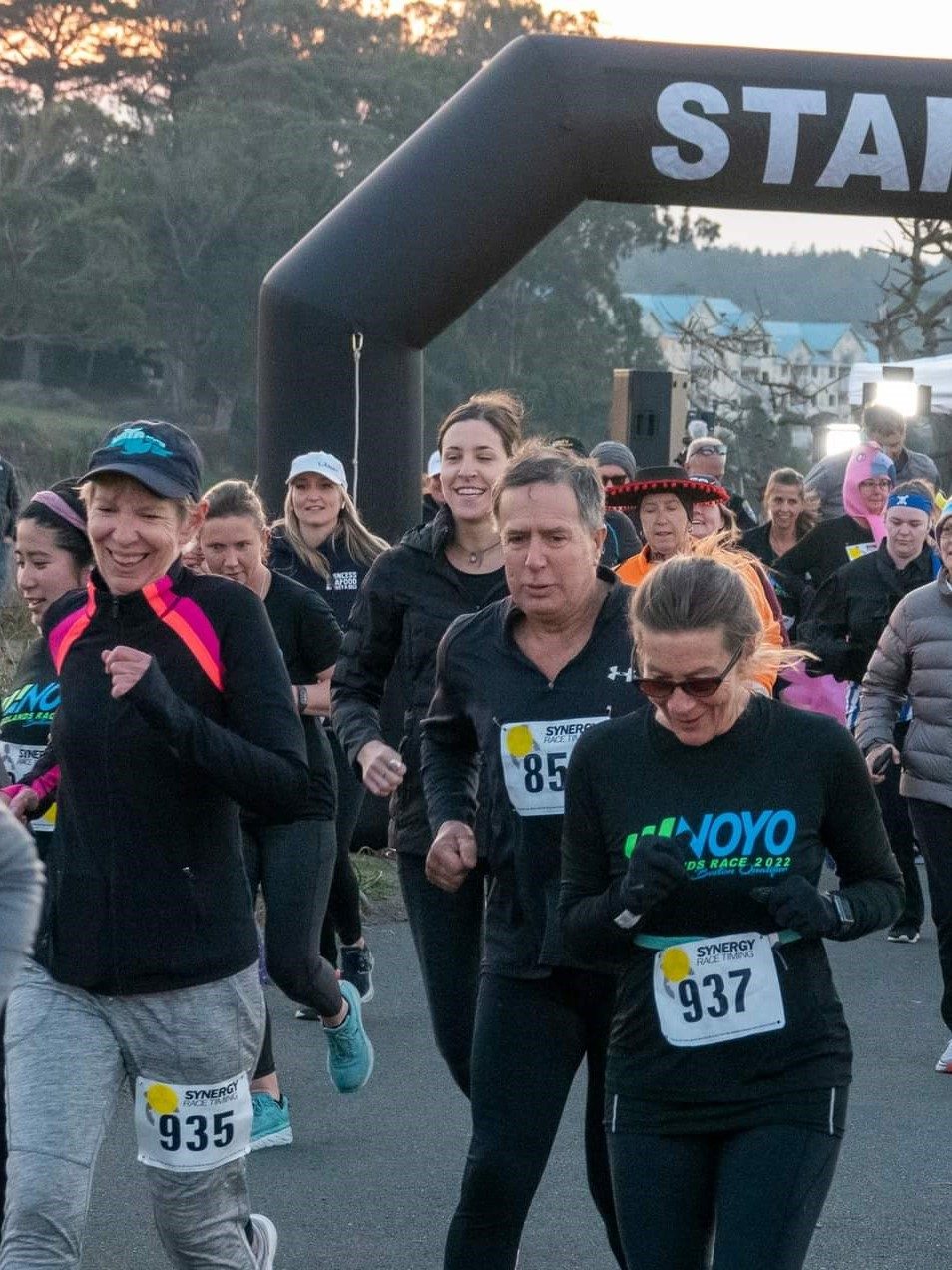
A year later, I volunteered to help organize the Noyo Headlands Race scheduled for October 29, 2022. A germ of an idea entered my head—maybe, just maybe, I could sign up for the 5k.

My internal judge would not shut up. You haven’t done a race in over two years. You’re 68 years old—too old to engage in such nonsense. Your body isn’t what it used to be—you’ve got the lower back thing, that hip thing, and your knees sometimes plot to assassinate you.

Two months before the race, I punched my internal judge in the face, registered for the 5k, and made an appointment with my chiropractor.

I girded my loins against him suggesting that pursuing such a goal at my age was ridiculous. Instead, he asked, “Do you want to compete or finish?”

I’d never entertained the idea I could enter a race and not obsess about my time—to do it just for fun. “I guess I just want to finish,” I said. “Do you think I’m capable of doing that?”

“Yes,” Eric said. “And I’ll help you.”

His encouragement filled my heart with gratitude and I saw him every other week. I also made regular appointments with my massage therapist who was on board to help me reach my goal.

As the weeks passed, I became increasingly discouraged. I’d once pushed myself to run an 11-minute mile. My time now, at best, was 13-15 minutes. Grief over the loss of Gary and, more recently, my mother, sometimes strapped concrete blocks to my legs. I pushed myself to increase my speed, but couldn’t always shake off the weight. I kept returning to Eric’s question: Do you want to compete or finish? What a liar I was when I told him I was fine with merely finishing.

I continued racing against myself. One Sunday, near the end of a frustrating run where the weight I was carrying caused my knees and hip to carp at me the whole time, I sat on a curb, put my face in my hands and sobbed. With my feet in the gutter and my palms soaked with tears, I gave up. I accepted I could do no more than finish the race and reluctantly embraced that as a respectable goal.

***

After I crossed the finish line at the Noyo Headlands Race with my friend Yvette, I was surprised when I began to cry. I grabbed her in a hug and wept with gratitude. A month before, she—a fierce competitor—agreed to run this with me and accepted my condition that we wouldn’t concern ourselves with our time.

I cried as I remembered my workout trainer Bethany, who took me by the shoulders at the start line and said with great authority, “You can do this.” At that moment I knew I could, but confessed I was concerned how my knees had been nagging me and I feared they were on a murderous sabotage mission. She bent down, cupped my knees and gave them a blessing. They miraculously cooperated.

I have no idea what my finishing time was. It may have been slightly better than the mother with a toddler in a stroller and her seven-year-old son jogging by her side, but I don’t know. I lost track of them as Yvette and I bellied-up to the halfway point turnaround table, slammed back water shots for a good five minutes, and exchanged pleasant banter with the proprietors.

I must say this was the most fun I’ve had at any race. Yvette and I trotted along, joking and laughing, cheering on runners who passed us and those who were on their way back to hopefully snag a medal. It felt good. It felt so, so good.

By giving up, I outraced myself and won.

Dear friends Bethany & Yvette

The Waiting Room

As I recover from a respiratory illness struck upon me by Satan, my mind wanders back to the last time I was this sick.

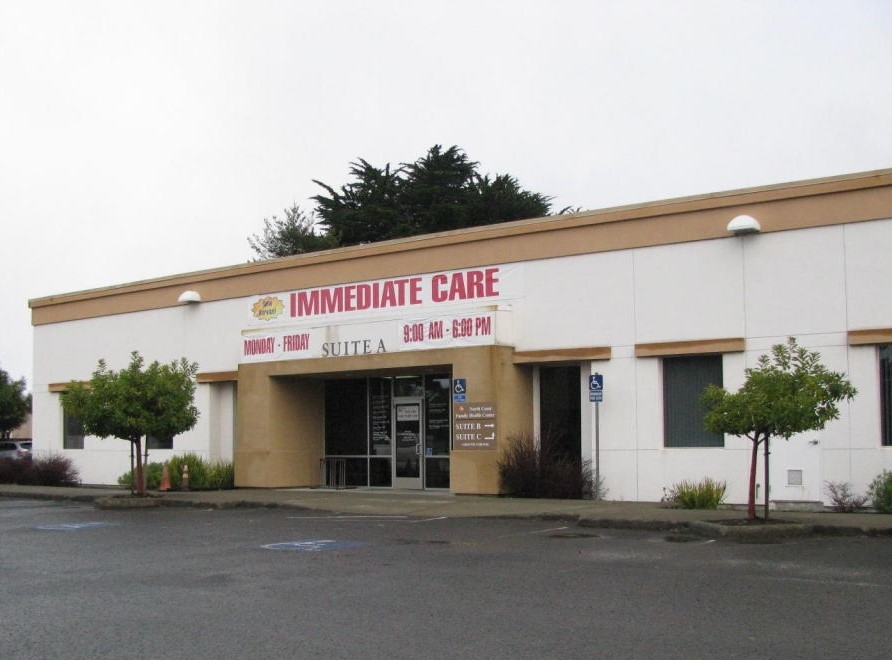
It’s January 5, 2020. Covid-19 is rearing its ugly head, but we’re a couple of months away from sheltering in place. I’m in the waiting room of Immediate Care with a fierce cold, sore throat and first-ever case of laryngitis. After days of suffering, I need antibiotics or enough oxycodone to euthanize myself.

A woman who looks to be in her seventies with steel-gray hair tightly curled to hug her head enters accompanied by what appears to be a Great Dane mix. He seems too bumbling to be an emotional support animal and too unruly to be a service dog, yet he sports a service dog vest. As she makes her way to the receptionist window, the dog lunges this way and that. I marvel at how this woman of rather short stature doesn’t get tossed off balance and face-plant onto the linoleum. After she checks in, she takes a seat on a chair to my right. The dog lies at her feet.

I love dogs and he appears to be a sweet one. I don’t particularly care if she’s scamming the service dog system by buying him a vest on the internet. If my dog Lucy wasn’t so nervous, I’d get her such a vest and take her everywhere with me. As it is, she panics whenever I try to coax her into walking outside her safety zone—a two-square block area around our immediate neighborhood.

A middle-aged woman enters and announces her name to the receptionist with the confidence of a great orator. If Tom Petty had a twin sister, she would look like this woman. She wears a black leather motorcycle jacket that pairs nicely with her skinny jeans and black leather boots. She sits on a chair to my left and starts making googly eyes at the service dog imposter. “Aren’t you just the cutest thing? Wouldn’t you like me to pet you? I bet you would, oh yes you would.”

The dog stands, tail wagging enthusiastically, whipping the legs of his owner who sweetly says, “I ask people to not encourage him to play. He needs to focus on his work.” She coaxes him to lie down again.

“I completely understand,” the other woman says, tossing her head backwards and slightly to the right to flip some hair behind her shoulders. “I’ve been an animal trainer all my life and have trained animals all over the world. The only animal I haven’t trained is an elephant.”

“Ah,” the dog owner draws this out, clearly impressed.

I want to ask if she’s trained a rhinoceros. Or a koala. Or a blue whale.

The world-renowned animal trainer waxes on about how her flair for animal training has sent her to Africa, China, and roadside zoos in Florida and Oklahoma.

The dog owner listens patiently before changing the subject. “I have dementia and Beavis is trained to help me recognize my roommate.”

The world-renown animal trainer narrows her eyes. “You don’t recognize your roommate?”

“When I get up each morning and see her in the living room drinking coffee, I think there’s a stranger in the house. After Beavis greets her, I know she’s okay. I also have a tendency to fall and he helps get me up.”

World-renown animal trainer gives an approving nod.

“Do you want me to show you how he does that?”

I want to shout, “Yes, please! Sweet Baby Jesus, please!” But I have laryngitis and the animal trainer urges her not to do it, putting the kibosh on what could possibly be the best entertainment I’ve had in ages.

A nurse calls my name and beckons me into an exam room. I don’t want to go. I want to stay and continue watching this fascinating weirdness.

After the doctor enters the exam room, I croak out plenty of reasons why I need antibiotics—fevered, blowing yellow snot, sick of being sick, needing a miracle, but since I’m not religious I’m not likely to get one.

“It’s a virus,” he says, flatly. “Antibiotics won’t help.”

I want to put him in a head lock and give him noogies until he surrenders to my demand.

“There are 27 viruses going around right now.”

I suspect he made that number up, but who am I with laryngitis and a mere Bachelor’s degree in Anthropology to argue? As disappointed as I am, I leave knowing that the clinic visit wasn’t a total bust—at least I have the service dog/world renown animal trainer experience to give me chuckles through the miserable days ahead.

Dragonflies

I first heard the song “The Night We Met” about six months after my husband Gary died. It came on the radio as I drove home from an errand. The lyrics are hauntingly beautiful and unbearably sad. They transported me to Gary’s and my early days of courtship and catapulted me into my present life without him.

I had all and then most of you, some and now none of you
Take me back to the night we met
I don’t know what I’m supposed to do
Haunted by the ghost of you
Take me back to the night we met

Tears clouded my vision, forced me to pull over to the side of the road, and weep.

Monday, May 30 was Memorial Day—fourteen and a half months since Gary died. All morning, that song looped through my brain and started to make me more than a little irritated. It had been weeks since I had a crying session. “I’m not in the mood,” I seethed at the hovering Grief Bitch. “Leave me alone!”

It was a beautiful day and the garden needed tending. I state this like I enjoy gardening, which I do not, but I occasionally feel compelled to tackle things my paid gardening crew ignores. I try to do this with a positive attitude, but that usually fades within an hour. There were stalks of grass among the lavender that needed to be pulled. This sounds like I have a fancy garden. “Let me don my straw hat, prance about the flowers and devote an hour to weed eradication.” My garden is quite basic with plenty of blights that I choose to deny.

My dog Lucy was thrilled we were having “outside time” and commenced to graze on grass stalks in between snapping at bees. The grazing later makes her barf on the carpet. I don’t want her killing precious bees and a sting could have serious consequences. I spent most of what was supposed to be our happy time scolding her to knock it off.

When I finally gave up and decided we would both be better off indoors, I noticed Lucy had not been chasing bees at all, but dragonflies. Dozens of them flitted about the garden. I rarely see a dragonfly, let alone so many in one place. I was spellbound, watching them dance through sunlight that transformed their luminescent color from red to auburn to nearly purple and back again.

After several minutes, Lucy and I went inside—me still haunted by that song and she frustrated with her failure to catch a flying insect. I reluctantly invited Grief Bitch to join us, sat in my crying chair at the kitchen table with a wad of tissues and told Alexa to play “The Night We Met.”

Later, I looked out the front window. The dragonflies were gone.

I did an internet search and discovered that red dragonflies are quite rare. If you see one, you are justified in feeling honored. Their symbolic significance can mean a number of things:

Self-realization
Transformation
Rebirth
A deeper understanding of the meaning of life

Their presence in my garden was an unexpected gift that caused me to realize I’m beginning to feel these very things. This brought me joy. It brought me peace. Two feelings that have eluded me for a long time.

I’m so grateful for the appearance of those dragonflies. So grateful to be made aware of how this dreadful grief journey has led me to the place I am today. I’m not “cured” by any means, but am no longer ruled by anguish and am experiencing growing contentment.

If you are in the early stages of the intense pain that grief visits upon your very core, you can ignore this. I do not want to fast forward you through the process. A few months after Gary died, I frantically did internet searches in an attempt to find “solutions” to alleviate my pain. Each article I read sent me into a full-blown tantrum. How could anyone possibly claim that it took time to get better, that my anguish would eventually lessen and mostly go away?

Early on, someone offered the unsolicited platitude that I would be fine, that I would grow and change as a result of my grief, I would blossom, I would….

I wanted to punch them in the face!

I do not intend to take away your pain. It belongs to you. You can hold it for however long it takes to trudge through it. And the trudging is hard, so goddamned hard. There’s no specialty brand of shoes, no magic formula, no magic pill to make it easier.

For those of you in the early stages of this trek, know that I walk beside you and hold you in my heart through this dark, scary time.

As Good as it Gets . . . for now

There’s a great scene in the Jack Nicholson movie, “As Good as it Gets” where he barges into his psychiatrist’s office without an appointment. When the psychiatrist sends him away, he walks through a packed waiting room, pauses, turns to the patients and says, “What if this is as good as it gets?” Off camera, someone gasps. Everyone else just stares at him.

One year and one month after my husband of 46 years died and left me to redefine myself with a new label—Widow—I had an appointment with my therapist. I’d been off and on weepy for a couple of days, suspecting we were nearing the end of the journey she had guided me through. I was reluctant for our relationship to end. She’s someone I can sit across from and uncage all my emotions. To me, they’re terrifying gargoyles, yet she never once flinched when I sent the demons flying in her direction. However, over the past couple of months, they’ve calmed down and are increasingly content to snuggle, purring, at my feet.

We talked about how I was doing and reflected on the past 13 months.

Gary died on March 15th—the Ides of March, which was ironic given that his favorite Shakespeare play was Julius Caesar. If you’re unfamiliar with ancient history, Julius Caesar had named himself dictator in perpetuity of the Roman Republic. Soon after, members of the Roman Senate were, like, “Yeah, well we don’t like Caesar all that much, especially not enough to put up with him forever.” But according to law, they couldn’t vote him out.

A few conniving senators gathered and got all hopped up on whatever the Roman’s hopped-up beverage of choice was and decided to call a special senate session with two agenda items: (1) Bring a knife hidden under your fancy toga; and (2) Be prepared to use it.

At the appointed signal, they surrounded Caesar and stabbed him to death—on the Ides of March.

A few days before Gary’s death, he mentioned this play. As if foretold, he died from complications of diabetes exactly 2,065 years after Julius Caesar. Remarkably, Gary survived a nearly recording-breaking 65 years of living with juvenile diabetes. Despite the care he had taken to survive for so long, the devastating effects of his disease conspired to attack all at once— pneumonia, kidney failure, heart failure. Like Caesar, his death was an ambush.

Life is strange. Death, it seems, can be even stranger.

As I’ve said in previous blog posts, I’ve dealt with dozens of widows through my work as a financial advisor. I have a few close friends who were widowed years ago. I’d learned that the first year is awful, the second year nearly as bad, and the third year begins to offer some relief from the pit of dreadful emotions. Despite my enlightenment, my adult children worried about me. Even though I tried to shield them from the gruesome details of my sorrow, they saw through my guise, feared for my sanity and urged me to seek professional help.

I confessed I was a broken-down mess, but argued that this was normal. Eventually, in an effort to placate them, I asked a therapist friend for a referral and based upon her recommendation, contacted Carol.

She was full up until the end of June. Fine by me. I didn’t want to see her anyway.

When I went to my first appointment in early July, I wore snappy business clothes so Carol would recognize me as a woman of corporate steel, someone fully capable of dealing with whatever monkey dung life flung at me. Moments after I sat on her couch, she asked about my situation.

Tears and snot burst from me like an erupting volcano. I tossed the F-word around like beads at Mardi Gras. I spewed my anger at myself for feeling weak and overwhelmed, feeling tired all the time, being confused and forgetful, and hating people who said things to try to make me “better,” but only made me feel worse.

After a bit, I paused and said, “I’m sorry, but I say fuck a lot.”

She said, “I don’t fucking care.”

I knew she was the therapist for me.

Over the months after Gary died, my anger towards people consumed me and caused me to be filled with guilt. I’d been raised to allow others to express anger, but not me, oh no, not me. I’d grown up with the notion that I should react to people with love, not anger. In Carol’s office, I covered my weeping face with my hands and rocked back and forth. I was a horrible person for hating people when they said inane bullshit. I should look beyond their words and honor their attempts to soothe me.

And you know what Carol said? My wonderful, savior Carol? “During times like this, people say things to make themselves feel better. You were raised in an era when women had to bury their feelings in order to be socially acceptable and take care of others. You don’t have to do that anymore. Anger and hatred can sometimes be useful emotions to propel us forward, to help us take action.”

I’m forever grateful to her for this.

I never—well, let’s say very rarely—unleashed my anger onto others. Not because I’m a saint, but because I’ve learned enough in this life to know I’d have to later apologize. Quite frankly, I’m too lazy to expend that type of energy.

Over the following months, Carol guided me through exercises where I wrote scathing letters to those who had ignited my ire. After I read them to her, I was not to send them, but to shred them. This went a long way towards allowing me to maybe not actually like these people, but to not hate them as much.

In my last session with Carol, she praised my hard work. As much as I am tempted to avoid it, I sit with my grief—not all day, every day, but begrudgingly make a place for it whenever the bitch barges in uninvited. I allow myself to experience true anguish even when I fear it will kill me. I have a group of supportive friends who I interact with on a regular basis. I accept myself for being a mess because, fact is, I was a mess and sometimes still am.

When Carol asked if I wanted to continue seeing her, I pointed to a cupboard in her bookshelf and asked, “Do you have any ecstasy tablets in there?” She laughed and said no. “In that case, can I keep you on speed dial if I need you in the future?” She said yes.

For now, this is as good as it gets—long stretches before sadness sneaks up from behind and shoves me to the ground, feeling joy in moments that call for it, gratitude for family and friends and even towards those who said lousy things that once pissed me off—at least they cared enough to say something. I’m having fewer anxiety attacks, my mental capacity is improving, and I don’t fight as much against this process—a onetime formidable foe.  

Without my guide Carol, I would not be here. I’d be lagging far behind on the grief path, lugging a heavy pack filled with sorrow, anger, hatred, self-judgement, shame and vulnerability. Over the months of our hiking together, she gave me permission to toss bits of these aside and lighten my load.

Don’t get me wrong, this hike is far from over. My load still feels heavy at times. Whenever I’m distracted, those pesky demons tend to slither back into my pack. But I’m stronger than I was a year ago and the burden is not as hard to carry.           

Practicing Gratitude & Co-dependence at the Dollar Store

On March 26, 2021, nearly two weeks after my husband died and two days after trying to celebrate my first birthday in 46 years without him, I made a conscious decision to spend the day in gratitude. I’d spent so many days frazzled and crying, starting when Gary entered the hospital on February 10th to struggle for three and a half weeks to survive against numerous odds. When all hope to save him had been extinguished, he returned home to spend nine days before he died. Each of those days was overlayed with sadness which hollowed me out, left me defeated and tired, so dreadfully tired.

I needed a break, if only for one day.

I expressed gratitude for the amazing family we built together, that Gary was no longer suffering, and I didn’t have to watch him suffer, for our excellent health insurance, that it was a bright, warm sunny day. . . and on and on and on.

A friend who lives in Mendocino invited me for a walk. I added “grateful for friends” to my list. On the way to meet her, I stopped at the Dollar Store. Easter loomed, and daughter Jenn and I had promised Gary we would decorate his urn—a vintage Folger’s coffee can—for each holiday. I quickly found two items—a headband with bunny ears and a bunny head.

Perfect.

Only one checkout stand was open and the waiting line long. Then again, most lines seemed longer at that time given the Covid restrictions of respecting a six-foot social distance. As I took my place at the back, a reinforcement checker was summoned. She appeared to be mid-fifties, early sixties—who knows? All I know is she didn’t look happy. She looked like she’d been pulled prematurely from a cigarette break and, as a result, plotted a capital crime of revenge, like arson or murder. I recognized that look, having a time or two entertained such thoughts myself.

I noted another gratitude item—I don’t have to work at the Dollar Store.

I followed the elderly gentleman in front of me to her checkout stand. With a pinched face and cold competence, she completed his transaction. She asked, in a threatening manner, “Do you want a bag?” As if he would take the bag only to later casually toss it into the garbage, adding to the earth’s already overflowing landfills.

He barked, “Yes, damnit, I want a bag!”

I felt a tingle of anticipation. This had the potential to develop into something interesting, to spice up the monotony of standing in line. I was disappointed when he left without incident.

The clerk looked at my two items on the conveyor belt and snapped, “Two dollars and eighteen cents.” She hadn’t even scanned them, yet knew the price. Of course, she did. She works at the Dollar Store where everything’s a dollar. It probably isn’t that difficult to memorize the tax due on a simple purchase. Still, I was impressed. I handed her a twenty-dollar bill.

“Do you have anything smaller?”

“Pardon?” Between the mask and the plexiglass separating us, I hadn’t heard her.

“I SAID, DO YOU HAVE ANYTHING SMALLER?”

I certainly heard that. “I’m sorry, I don’t,” I said with an appropriate measure of shame.

This seemed enough to completely ruin what I suspected had started out for her as a terrible day, perhaps even a miserable life. Did her husband recently die and she didn’t have the luxury of spending time to properly mourn him before going back to work at this shithole?

“Do you at least have eighteen cents?” She scowled.

I did not. I only had two twenty-dollar bills in my wallet.

The woman behind me piped up, “I have twenty cents.”

I pointed to the woman. “She has twenty cents.” Behind my mask, I smiled at the benevolent stranger, grateful that we had a potential solution to the clerk’s dilemma, tail wagging like a puppy eager to please its grumpy master. I sincerely wanted to make the clerk happy, someone who is forced to work at the Dollar Store while I am not.

“Forget it,” the clerk growled. “I hate having to give up the change in my drawer.” I imagined this was the first and only time a Dollar Store employee had uttered this sentence.

As if everyone in the store needed an explanation as to why I didn’t have a measly eighteen cents, I said to the woman behind me, “After coins build up in my wallet, I put them in a cup to roll later and deposit in my savings account at the bank.” The woman cheerfully said, “I do, too. We either have a bunch of change or we don’t have any.”

“Exactly!” I was thrilled to have found an ally and looked at the clerk for a flicker of understanding. She glared as she ripped bills and coins from her till.

As she reached to offer my change, I opened my wallet and held it out her. I was not in my right mind—had not been for several weeks. The only explanation I have for this behavior is I was trying to prove that I didn’t have any change, that I hadn’t deliberately intended to make her day worse.

She looked at me as if I was addle-brained and let out a heavy sigh to indicate I was to stop this nonsense, take the change, and get out of the goddamned store.

On another day, I might have been offended by her behavior. On this day, I walked out, got into my car, closed my eyes, tilted my face upwards while taking a deep breath, determined to continue with my day of gratitude.

I started the car and the Cat Stevens song, “Trouble,” came on the radio.

Trouble

Oh trouble set me free

I have seen your face

And it’s too much too much for me

Trouble

Oh trouble can’t you see

You’re eating my heart away

And there’s nothing much left of me

I bawled all the way on the 15-minute drive to Mendocino.

Press P for Panic

It was two days after my granddaughter Lilla’s first birthday. I returned home from the Bay Area yesterday afternoon after spending time with her and her family to celebrate this momentous occasion. I went to bed feeling grateful for all my healthy, happy kids and grandkids.

About three in the morning, I woke with my heart racing and stomach upset. I feared I was having a heart attack. Couldn’t be, I decided—for no other reason than I didn’t want to be having a heart attack. Probably just gas from the burrito I ate for dinner. I tried shifting into different positions, hoping that would alleviate the discomfort. After an hour with no relief, it occurred to me that this was a severe panic attack.

I’ve had mild anxiety attacks over the course of my life, but only one other severe one—on my birthday in March 2021, nine days after my husband Gary died. My son and daughter were with me and friends were bringing lunch to celebrate my achievement of surviving another year.

About an hour before they arrived, my heart started racing. I was nauseated and lightheaded. I tried to banish the feelings with deep breathing. I felt I was going to faint. I’d once read that if you feel faint, you should sit and put your head between your knees. I gave it a try. Staring at the floor, I noticed it could use a good vacuuming. I refocused on my dire circumstances and diagnosed myself with a panic attack. I staggered to a kitchen cabinet, took out my prescription of lorazepam and ate one.

The sickening feeling persisted for another fifteen minutes. I reclined on the sofa, seriously concerned I might die. I was afraid of the effect this would have on the kids. This had the potential to become one of those salacious stories told to future generations who would shake their heads in astonishment—what a horrible legacy to leave where one parent dies and a week and a half later, the other drops dead.

At four this morning, I got up and wobbled down the stairs on shaking legs to the kitchen and ate a lorazepam. I made a nest on the sofa and tried to go back to sleep. If I was indeed having a heart attack, it would be easier for the paramedics to cart me out of the house from the living room and not have to navigate the stairway from my bedroom. It would also be easier for the mortuary removal people in the event the EMT’s weren’t able to get here before death nabbed me.

I don’t know how long before my symptoms lessened and I was able to sleep. When I woke at seven, my heart no longer raced, but I still suffered what Southerners call the vapors—lightheaded and weak. I brewed coffee, hoping caffeine—that miracle drug—would make everything okay. It did not. I started drinking water, thinking maybe I hadn’t hydrated enough while traveling the day before. It took me the entire morning and several glasses of water to start feeling a bit normal.

At noon I ate lunch and cleaned up the kitchen. I must confess, I’m not a big fan of kitchen maintenance. I’m perfectly content to let pots and dishes pile up for a day or so before thinking, yeah, maybe I should do something about the situation. While cleaning, I listened to Frank Sinatra’s, “The Way You Look Tonight.” I love that song and listen to it at least twice a week. It makes me nostalgic for Gary, but not sad. Today, it surprised me by bringing tears that fell into the soapy suds of a pot I was cleaning. I had to stop scrubbing, sit in my crying chair at the kitchen table, put my hands over my face and weep.

What was going on? I hadn’t had a solid weeping session in weeks. I was fully prepared to report to my therapist that I’d turned a corner and was cured from this grief nonsense after a mere 11 months. Wow, look at me, ever the overachiever. From here on out I would waltz through sunny meadows, frolicking with butterflies and chirping birds.

As I wept, I realized that my archenemy grief had been waiting for me since February 10th, the one-year anniversary of Gary entering the hospital to begin his five-week journey towards death. Every moment of his 24 days in the hospital, I worried about him being alone. It was Covid Time with no family allowed. Every moment, I worried I would get a call to say there was nothing more to be done, to come pick him up, bring him home and figure it out by myself. Every moment, I was terrified, absolutely terrified.

A few days after Gary entered the hospital, our beautiful granddaughter Lilla was born. When I got the news, I cried so hard with a combination of happiness and sadness that Gary wasn’t with me to relish the news that I thought I’d have an aneurysm. I wanted us to celebrate this new, precious life together, share our joy in person, smile with sheer delight into a Face Time call. but we could not—and there was nothing I could do to make it so.

The following weeks were a whirligig ride with an evil carnie on an extended cigarette break, unwilling to pull the stop lever. I was blessed to have family take time out of their busy schedules to be with me as we trudged through one frightening day after the other.

Three weeks after Lilla’s birth, she was loaded into a car with her two-year-old brother Parker and my brave son and daughter-in-law made their way from the Bay Area to Fort Bragg. It was Covid Time. I could not touch or hold my newborn granddaughter, but I could at least see her from a distance and marvel at her beauty.

By this time, Gary had been transported by ambulance to come home to die. His sister was also with us as well as daughter Laine, her fiancé Julian, daughter Jenn and granddaughter Nora. Son Garth and granddaughter Lyra spent a few days. It was chaos—a beautiful chaos that Gary thoroughly enjoyed until his last two days when the toxins of kidney failure took his brain hostage and rendered him unconscious.

***

I am grateful to have been with sweet Lilla to celebrate her first year of life. Yet lurking in the shadows was Gary’s absence. Also lurking was grief, that hideous monster I try so hard to avoid, yet revels in reminding me of that terrible time a year ago. I try, I really try to focus on the current good things, but during this one-year anniversary period most are overlayed with heartbreaking memories.

When I shared my panic attack experience with my therapist, she explained that what I’m feeling occurs at a cellular level. My mind can compartmentalize the events of a year ago and put them into perspective. But my body holds the trauma and gives the anniversary of Gary’s hospitalization and death the power to take me down, to transport me back to that time as if it is currently happening.

A year ago, I was in hyper-overdrive. My husband of 46 years, the father of my children, was dying. I didn’t have the luxury to feel the full weight of that trauma. A year later, my body reminds me. My body tells me it’s time. Time to fear I’m having a heart attack. Time to sit down and cover my face for the one-thousandth time and weep. It’s time to acknowledge that this was the worst, most horrendous period of Gary’s life, of my life, of my family’s life.

True or False?

On October 26, 2021, I waited in line at the Mendocino Coast Clinic’s mobile vaccination clinic to get my Covid booster shot. When it was my turn, I handed my card through the car window to a young woman who filled out the date and dose and returned it. I tossed it on the passenger seat and moved forward to get my shot. From there, I drove to the designated parking area to wait the required 15 minutes. As I put the card in my wallet, I noticed the date of my first vaccine—February 23rd.

That couldn’t be.

That. Could. Not. Be.

***

In the early days of the Covid vaccination clinics, none were offered on the Mendocino Coast. People urged me to go inland—to Willits (an hour away) or Ukiah (an hour and a half away), even Santa Rosa (two and a half hours away). One person suggested getting “aggressive” in my quest to get myself and my husband vaccinated. What they didn’t realize, what I didn’t share, is how increasingly disabled Gary had become over the past year. There was no way he would be able to tolerate what I termed a cattle call, traveling such distances only to wait in line with dozens of people. I didn’t have the luxury to be “aggressive.”

Eventually, a friend learned of a vaccination event at Mendocino High School on February 23rd—only a 15-minute drive—and signed me up. My appointment was at 1:00. I arrived at 12:45. Because the school’s parking lot is quite small, I parked on the street at the bottom of the hill. It was a cold day, made colder by the biting wind. I’d put on a sweater, wool suit jacket and scarf. I was going to bring a heavier jacket, but decided against it, figuring the time from leaving my car to entering the gym would only be a matter of minutes.

Near the base of the hill, I was stopped by the end of a line, which by my calculations was a good 10 miles from my destination. I wanted to scream, “What’s going on here? I have an appointment for God’s sake! Don’t tell me these people were all booked for the same time!” I settled myself with the reminder that I’m not the only person in the world, that these people suffered my same predicament and maybe the line would move swiftly.

I pulled out my phone and began playing crossword puzzles—the equivalent of sucking my thumb whenever I have to wait. As the line moved slowly—as in snail pace slowly—the air grew colder and the wind more insistent. For the first time ever, I was able to relate to the valiant hikers who struggle against the elements to crest Mount Everest.

If you’ve never been to Mendocino High School—and I assume most of you haven’t—it sits atop one of the most pristine pieces of real estate along the California coastline with a 180-degree view of the Pacific Ocean. Such a shame to waste it in on snarky teenagers who by that time in life hate their small town and can’t wait to escape. If Jeff Bezos ever sees this school, he’ll figure out a way to capture it, tear it down, and turn it into either a rocket launching pad or one of his many luxury retreats.

During the two grueling hours it took me and my fellow hikers to get into the gym, my fingers grew numb from the cold and could no longer navigate the crossword puzzles. I silently cursed those who “organized” this event. They deserved to be punched in the face or at the very least publicly humiliated.

I realize this was early on in the vaccination effort and people were doing the best they could amid the chaos. That doesn’t mean I couldn’t have unpleasant feelings about enduring the hardship of freezing for two hours without snacks or a porta-potty.

When I finally entered the warm gym lobby, I wanted to drop to my knees and weep with gratitude, but feared any tears would freeze to my frostbitten face. A young man asked my name. When he checked his iPad, his brow furrowed. “You’re not in the system.”

I nearly shattered into a million pieces.

I was cursed with two names—Kathleen is my given one, Kate is my nickname. I had said Kathleen. After I said Kate, he looked again and found me. I nearly leaped over his table, grabbed him by the shoulders and kissed him on the mouth.

Inside the gym, an acquaintance who was a volunteer beckoned me to her table where she filled out and gave me my vaccination card. I wallowed in euphoria for the few moments it took her to hand me a slip of paper and say, “You’ll have to check this website in a couple of weeks to register for your follow-up shot.”

What?!?

What?!?

Every person I knew had their second shot scheduled when they received their first. What sins was I atoning for that forced me to suffer this horrendous ordeal? I took a deep breath, thanked her without meaning it and moved forward to the designated waiting area.

After about five minutes, a nurse called me to her station. She started to chit chat. My jaw was still thawing from the cold and I could neither chit nor chat. She said she’d heard my name before. I’ve been told I’m practically a local celebrity, but wasn’t in the mood to sign autographs. She wouldn’t stop asking me if I knew this person or that in hopes of finding a mutual connection. I wanted to scream, “There’s a thousand people out there freezing to death. Give me the blasted shot and get on to the next one.”

I sat the in 15-minute waiting area and didn’t faint or die. As I walked down the hill past the poor, blue-lipped, shivering peons, a woman about my age appeared at my side. “Well, that was a f-ing shit show,” she said. Ah…a kindred spirit. We walked together, volleying the F-word back and forth. At the bottom of the hill, we parted and she said, “I’m going home to smoke a big, fat doobie.” I flashed her two-thumbs up.

My memory is that I went home to rant and rave with Gary about Covid, about how it was ruining our lives, about how the government was bumbling the vaccination rollout—maybe even about what the hell we were going to eat for dinner. We eventually soothed our rage by watching “Judge Judy” which routinely allowed us to criticize stupid-ass people and going a long way towards boosting our self-esteem.

***

As I put my October 26th updated vaccination card in my wallet, I realized I couldn’t have come home to Gary on February 23rd.

He entered the hospital on February 10th where he spent the following three and a half weeks. He and his doctors struggled to find ways to allow him to survive before finally surrendering and he made the noble decision to come home to die. It was Covid Time. He was in Adventist Hospital Saint Helena, three hours away. I wasn’t allowed to be there, but was in telephone contact with him and the staff several times a day. It was a deeply traumatic experience—for him, for me, for our family.

Looking back, I realize the trauma of Gary’s last weeks sent my mind into another dimension with little sense of space and time. I believed I handled everything in my usual take charge manner, but now know I was living a surreal existence.

How on earth could I remember Gary being here on February 23rd when he’d been in the hospital for 13 days?

I suppose it was because for 46 years, Gary had always been with me. He was my sounding board. I didn’t always agree with his feedback—especially when he told me to calm the hell down—but I valued my ability to ask for it. How was it possible he wasn’t here when I returned nearly hypothermic from standing so long in the cold, after being told I’d have to check a website in a few weeks to schedule my second shot? How was he not here to agree that we live in such a terrible time, that Covid has completely screwed up everything, and we couldn’t take it anymore?

How?

I know for certain I would not have called Gary to complain while he was fighting for his life in the hospital. So, who did I rant to? I honestly cannot remember. Probably to my poor daughter and son-in-law who were with me during this time. Probably over the phone to my sister who was always available to listen to my tearful rages.

Fear for my mental health sent me to the internet to do a bit of research. I was relieved to discover that my experience isn’t unusual for someone who has experienced trauma. It’s called false memory.

According to the website “healthline,” (www.healthline.com/health/false-memory#overview), “[False memories] range from small and trivial, like where you swear you put your keys last night, to significant, like how an accident happened or what you saw during a crime.”

As time goes by, I’m sure I’ll uncover more false memories from this time. As for this particular one—and as strange as this might sound—it comforts me that even though Gary wasn’t here to commiserate with after I got home from the Mendocino debacle, I was able to spend several months believing he was.