
 Heather grew up in Morro Bay where she learned commercial fishing from her dad. “I moved here in 1999, and immediately began a flaming love affair with Mendocino County.” By 2001, she had saved four thousand dollars and bought a small boat, the Julie. “My idea was to have a floating fish market—to sell fish right off the boat.” She admits that running her own boat was a different experience than crewing with her dad.
“I made a lot of mistakes. The first time I took the boat out, I went on the wrong side of the red can [at the entrance to the harbor]. Kelp got tangled in the wheel and killed the engine. I was able to reverse the boat a few times and got untangled. Another time, on my way to Eureka, I ran into bad weather. I thought the boat was going to roll and I was going to die.”
 Her dad tried to help her, but she was intent on doing things her way. “At one point, he threw his hands up and said, ‘You’re going to kill yourself,’ and went back to Morro Bay. Bless his heart, he must have been so worried. This strained our relationship, but a few years later, we fished together in Alaska.”
As she worked towards saving money for a larger boat, she took classes at College of the Redwoods. “In 2001 a friend said, ‘You can go to college anytime, you’ll never see fishing like this again.’ I literally walked out of my English class, went down to the boat, and started fishing.”
The local commercial salmon season closed in 2006, and she fished in Alaska. “When the season reopened in 2013, I came back to Fort Bragg and vowed to do whatever it takes to stay.” After living on her boat for years, she bought a house that same year, anchoring herself to the area.
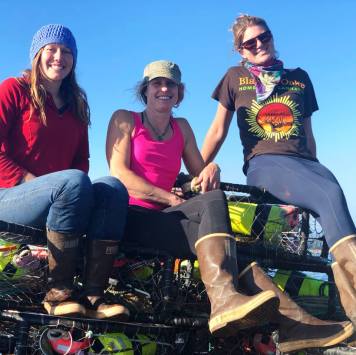 Along the way, she sold the Julie and bought and sold two other boats. In 2009, she purchased a larger vessel with a blast freezer named Princess. Given that she has an all-woman crew, it’s the perfect name. “Because we’re able to freeze the fish on board, we can stay out for 18 days and catch up to 11,000 pounds of salmon. When we return to port, the fish is unloaded into a freezer truck and taken to storage in the Seattle area. After the glut of fresh caught fish is over, we can sell our sashimi grade fish at a higher price. The process we use makes it better than fresh.”
Heather was so excited about her ability to provide the market with this type of seafood that she caught 44,000 pounds of fish her first year. “I started direct marketing and thought people would be knocking down my door, but I didn’t have the connections the other boats with freezers had. I was scared I’d lose my house. I started selling at the Fort Bragg and Ukiah farmers’ markets and off the boat. Most of it went to San Francisco. It took me a year and half to sell it all.”
For four years, the Princess was the only boat in Noyo Harbor with a flash freezer. Recently, another fisherman purchased a boat with this capability, but he only freezes tuna. The Princess is one of only five boats in the lower 48 that freezes salmon at sea.
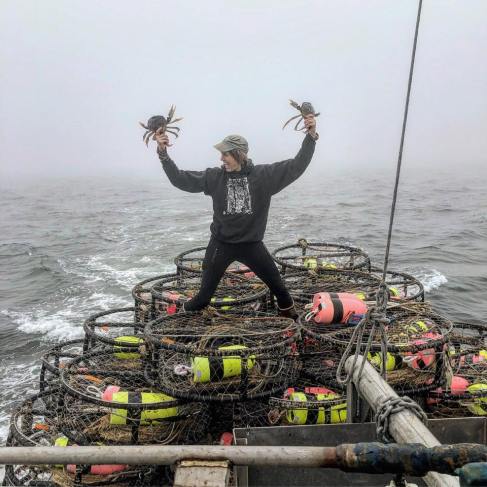
The life of a commercial fisherwoman is often rugged and demanding. “When I go to Alaska for king salmon, it takes 15 days and $3-5,000 to get there. Once there, I only have four to six days to make 80 percent of my income for the year. I’ve always managed to find fish, but because of the stress and long hours there’s no joy in it.”
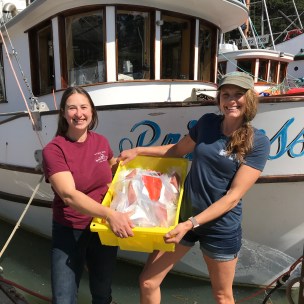 As a woman in this field, Heather is not unique, but rare. “There are a lot more women in Alaska.” She admires her crew which includes Maia and Anna—graduates of Humboldt State. “The salmon season lasts about six months. It requires a great deal of endurance. We get only five to six hours of sleep a night and are away from home so much. I got a crab permit last winter. Catching crab is easier and is a lot more fun.” Maia and Anna also sell the fish at the farmers’ markets.
She’s grateful for the comradery she’s developed among the other fishermen and women who travel up and down the coast. “I can look out and see a boat a mile away and know we have each other’s backs if there’s a problem. Even if we don’t like each other on the dock, we put those differences aside on the water.”
Heather is passionate about educating the public to support sustainable fishing. “All fisheries in the United States are sustainable, which means not harvesting past the point of the stock being able to replenish itself. Since the seventies, the 4000-boat California salmon fleet has been reduced to 100. Our port went from 20 draggers to six—and these are managed very carefully. Every boat has a tracking system that is monitored by a team in Washington DC. All fish stocks are rebounding, but many of the seasons that were closed have not reopened.”
Between seasons, Heather does maintenance on the boat. “A woman once told me we have to repay the boat for the service it gives us.” In 2016, she received a grant from the Mendocino County Air Quality Board and spent that winter installing a clean-running motor.
Heather has recently expanded her business by partnering with friend a former crew woman Wendy Holloway to reopen Nemo’s Fish Market as Princess Seafood Market and Deli in Noyo Harbor. “Wendy was my first crew member back in 2004. Our goal is to make our amazing, west coast wild seafood more accessible to our local community in the most delicious way possible. Sustainably caught sashimi grade fish and shellfish will be our specialty. We also offer healthy cooked food, local beer, wine and a selection of seafood-centric prepared food for take out.”
Despite the challenges of a life at sea, Heather can’t imagine doing anything else. “I love being my own boss and being out on the ocean. The Lost Coast around Shelter Cove is stunningly beautiful. The upsides of this business are so great—like seeing a rainbow at the same time a gray whale leaps out of the water. I love it so much.”
***
Heather offers wholesale and retail sashimi grade king salmon, coho salmon, albacore tuna, lingcod, rockfish and black cod. Live Dungeness crab is available in the winter. You can find her crew at the Ukiah Natural Food Coop, Fort Bragg, Ukiah, Santa Rosa & Sebastopol farmers’ markets and on the boat at Dock A in Noyo Harbor. The food at Princess Seafood Market and Deli is fresh and delicious. If you’re busy, you can get it to go. Better yet, take some time to enjoy the patio and soak in the unique ambience of Noyo Harbor.


 After college, she moved home to Fort Bragg in 2012 to regroup and figure out her next move. She was 22. “I picked up some shifts at Los Gallitos, worked for Carol Millsap for a year, and took on overnight shifts for Andersson Caregiving, caring for elderly and terminally ill people. This was one of the most significant jobs I ever had, getting to care for people in that way. Each experience taught me something and made me a better person. It reminded me we’re all going to grow old and die. It caused me to be less self-centered.”
 She returned in the fall of 2013 to take a full time position at Project Sanctuary as a client advocate and counselor. When the organization received a sexual assault prevention grant, Karina was hired to conduct community outreach with other agencies—Safe Passage, the Children’s Fund, Gang Awareness and Prevention. “We disseminated information about healthy relationships, especially among teens. I provided in-service to groups like the Catholic church’s youth groups and held lunchtime meetings at the middle school and high school. At Fort Bragg High School, I organized the Youth Leadership Team, a group focused on teen education and awareness, which still exists today.”
 Her first year entailed teaching a World Culture and Language class to sixth graders and a couple of Spanish classes to seventh graders. “This year, I had to add a second level Spanish class for the eighth graders. It’s the equivalent of high school Spanish I.” She teaches separate Spanish classes for native speakers. If all that isn’t enough, she also teaches a seventh grade AVID (Advancement Via Individual Determination) class on critical thinking and study skills.






 Sometimes the inspiration to move back to the place you love arrives in the most random of ways. An email sent by your wife, added to the hundreds you received that day, nearly lost until a couple weeks later when you find it and ask why she sent you a link to a house for sale in Fort Bragg. She knows how your long work days often spill into late nights and take a toll on your personal life. Since leaving the Mendocino Coast over 20 years ago, you’ve always said you’d move back. Maybe now is the time.
 Jason was born in Houston, Texas and moved to Elk with his mom Laurie Graham when he was seven years old. “My mom’s whole life was her children, but she was always willing to open her home to a friend in need. She loved nothing more than spending time with family and friends.”
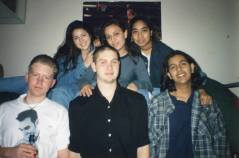 Those were the days before cell phones, when a homesick kid had to pay for long distance calls if he wanted to talk to his mom. Jason didn’t have this luxury. He got an on-campus job as the audio visual tech manager at the student union. He eventually became the building manager.
 He bought a condo near San Jose State and rented out a bedroom, usually to a college student. “In 2009, a friend told me her friend Cate—who lived in Willits—was planning to go to San Jose City College and needed a place to stay. I rented her the room.” They began spending time together and slowly became a couple. They married in 2013.
 Dewey Turner considers himself a positive person. If you’re fortunate to spend time with him you’ll agree with that assessment. There’s a twinkle to his eyes that gives away his friendliness, a quickness to his wit that gets you laughing. He possesses a tender heart and a deep love of family.
 “I was horrible at it, but figured if I practiced enough I’d get good.” He played five nights a week until dark and most weekends. He joined a golf tour and entered tournaments around Northern California. In 2012, he qualified for the national championship tournament at TPC Sawgrass in Florida and came in eighth among 150 entrants. That same year, he earned the title of Sacramento Player of the Year. In 2013 and again in 2017, he won the Little River Inn Golf Club Championship.
 Dewey and Jamie’s first date included Ali. They went to Mackerricher State Park beach and Jenny’s Giant Burger. “I knew I wanted them in my life forever. Ali and I have a special relationship. She’s truly my first daughter.”
 Dewey loves Fort Bragg and the life he’s built since his return. “It seems our town needs to find its identity over and over again. So much of our future depends on how the mill site is developed. We need to keep opening our minds to change.”
 When I first heard Mindy Slaughter on the radio as the voice of Sport Dodge a few months ago, her upbeat tone and energy impressed me. She must have had this effect on others, too, as random people encouraged me to contact her for an interview. Her warmth, intelligence, and easy laughter made me glad I did.
 In January 2000, her dad Mike and business partners bought Jack Smith Dodge in Fort Bragg. She was in the ninth grade, her brother Matt in the seventh. “I was excited about moving to the coast, but stayed in Ukiah with my mom to finish the school year. That summer, Dad introduced me to the high school basketball coaches for Fort Bragg and Mendocino. I got to practice with both teams.”
 “On prom night I got dressed in her hospital room. The nurses decorated it with our prom theme—Mardi Gras—and helped us celebrate.” A month later, Mary was deemed too frail to attend the graduation ceremony. “Her nurse Kathy Lang and Kathy’s policeman husband Joe sprang her from the hospital and took her anyway.” Mindy smiled at the memory.
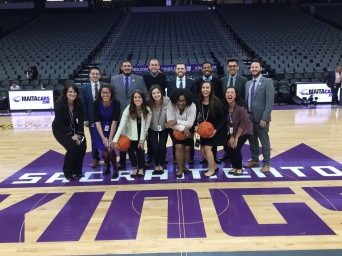 “In June 2008, the Services Coordinator position for the Sacramento Kings became available. I applied and started a week after I graduated.”
 “I got the job and moved to Eugene in November 2011. I was 25—eager to do the work and learn. Professionally, I was fulfilled—I got to help with the Olympic trials and an appearance by the Dali Lama. I had the opportunity to learn and do more than most who spend years in this type of role. But personally something was lacking. It was hard living in a town where people are either college students, young marrieds with children, or retired. My heart was in California. I missed home.”

 On one of my walks with my dog Lucy a few years ago, I discovered a house three blocks west and one block south that had all the hoarding signs—disintegrating drapes that were perpetually closed in downstairs windows, paraphernalia piled against upstairs windows, a backyard that looked like a combination of junkyard and garbage dump. My fascination with it caused Lucy and me to walk by on a regular basis.
 In the late morning of January 20, a friend called to say “my house” was on fire. I rushed to the scene to see firefighters battle toxic smoke spewing from the asbestos-singled structure. It was riveting to watch a firefighter stand high in the air on a truck ladder and spray hundreds of gallons of water on the house. When the smoke dissipated, the spray stopped. Within moments, the smoke started up again. All that water—and still there remained a deep burning that refused to surrender.
 The next day and the day after that and the day after that, I drove by. The house is in shambles—an astounding collection of possessions destroyed and caved into a monstrous heap. I was surprised to discover that underneath the shingles is a wooden gingerbread design. A lifelong coastal friend told me that in the fifties and sixties a number of people covered old houses in this way to make them appear more modern.
 According to







 After graduating in 2002, she entered an 11-month AmeriCorps program. “I wanted to start paying off my loans, and AmeriCorps offered money towards that. I also thought it would be a fun break from life—which it was. It gave me time to decide what I really wanted to do.” She became part of a team of ten people in Denver. “We traveled to a number of states where we did jobs like state park trail maintenance and renovating a playroom for a summer program that offered homeless children a place to learn, play and socialize.”
 She once again worked as a waitress while studying for her California boards, which she passed in March 2010. Shortly afterward, she opened her business in the office complex behind Taka’s Grill. For the first few years, she supplemented her income by working three to four days a week at Lee’s Chinese. “Word of mouth has been a big factor in my growth. When I started accepting health insurance and Medi-Cal, my clientele also grew tremendously. I still work one day a week at Piaci’s. I love my profession, but like getting out and socializing. Waitressing does that for me.”
 She lives on the same property as her parents and shares a home with her partner Garrett Barker and his two children. “Garrett was born in Southern California, but lived in Fort Bragg off and on while he was growing up. He came back in his twenties and has been here ever since. He’s an amazing artist and also works for a machine shop in Comptche.”
 She’s sad that Fort Bragg doesn’t offer the same sense of community as when she was growing up. “I don’t see a lot kids riding bikes. I no longer know nearly everyone. I used to know the names of our homeless people. I don’t anymore. It’s especially hard for single people to live here—there aren’t many places to mingle.” However, she does admit that the Golden West Saloon—purchased a few years ago by a couple in her age group—has helped provide a social outlet for the younger crowd.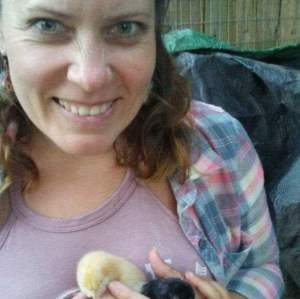

 If you’ve never had a colonoscopy, you may not understand why the term torture is associated with it. This applies to the day before. The patient is allowed to ingest only clear liquids, which by mid-morning sets off a primal alarm in the brain—the process of starving to death has begun. By mid-afternoon the brain partially shuts down and the patient wanders zombie-like through the rest of the day. She occasionally snaps into reality and tries to keep the whining under control by reviewing all the things she should be (but truly isn’t at that moment) grateful for: family, friends, shelter, blah-blah-blah, and good health insurance.
 After a fitful sleep, the following morning begins at four o’clock with another round of the cocktail. Kate wants to cry, but remembers there are a bunch of people in the world suffering a great deal more than her. She tries once again to concoct a gratitude list, but cannot think of a single thing.
 It Happened at Purity