 Apparently many Scandinavians believe that by the time we die, the sum of our possessions should fit into a satchel. I suppose this makes disposal of our property easy for our kids—simply pick up the bag and toss it in the garbage. Being half Scandinavian, I suspect it’s really designed to make us feel guilty for accumulating stuff that makes us happy and comfortable. I was raised with the concept that it’s best to live a life of misery and deprivation.
I’m not planning to leave the planet any time soon, but after learning this I viewed my things differently. What is truly necessary to quality of life and what’s not? If I had to whittle away to the barest minimum, what would I get rid of? How long would it take? I’m a busy person and decided it would take way too long. I tried to banish the idea, but it haunted me.
I know I have too much stuff—things I don’t use, things that if occasionally needed could be borrowed. I finally devised a plan:
Break it down into small steps. Make it a game. Yay! I love games. Call it “Seven on Sundays.” Each Sunday, seven items or more can be tossed, but not less. If I got excited and went for more, the count couldn’t be carried over to the next Sunday. Make it an exercise in moderation. Place each week’s stash either in the garbage, recycle, or a box to haul to a thrift shop at the beginning of each month. By the end of the year, I’d have rid myself of at least 365 things.
I started Sunday, January 7, 2018. Here’s what I learned:
My enthusiasm tempted me to go on a spree, but I knew such obsessiveness would quickly cause burnout and failure. I mostly forced myself to stop at seven.
It took two months to get out of the laundry/utility room! I was shocked to find three full bottles of Murphy’s Oil Soap within the dark recesses of the cupboard’s upper shelves. (I used to take pride in housekeeping and would pick up extra bottles when this was on sale.)
 In my armoire, I found:
- A pair of cute red polka dot slipper socks given by my daughter and worn enough times to create holes in the bottoms. When she was in college, she bought them with her limited funds because she knew I’d like them. The memory of this sweet gesture caused me to hold onto them long past their usefulness. It was sad to throw them out.
- Two little mesh bags that once held forgotten gifts and could be used to present a little treat to someone. I had to concede they would never be filled with anything but air.
- A sweatband I’d tried on only once because it made me look like Keith Richards. I like Keith, but the resemblance gave me the creeps.
- A holder for a lightweight winter jacket that can fold into something resembling a small umbrella. It’s far easier to stuff the jacket into a suitcase.
- A reading light that clips to a book. Years after receiving, it had never been used.
- An expensive bra with straps that can be moved about to create a backless look. I was done with washing it and having the straps come loose only to refit them into the tiny holes where they continually pursued their fight for freedom. What possessed me to buy it in the first place? For the rest of my life I’ll never need a backless bra.
- A sweater I knitted six years ago yet only wore a few times because it didn’t fit properly. It’s beautiful with fabulous buttons and cost me a bundle in yarn. I loved knitting it, which made the decision to relinquish it painful. There was no reason to keep it folded away when someone would find it marvelous and the Hospice Thrift Store would benefit from the sale.

The following week, I determined it would take more than a month of Sundays to clean out the armoire. After the laundry room fiasco, I didn’t have that kind of time. So I modified the rules to seven minutes. I got rid of 24 things. Fifteen went immediately into the trash: socks without matches, panty hose with failed elastic bands and two half-slips bought in the early nineties (when was the last time I wore a dress?).
A week later, I braved the master bathroom. Makeup primer I’d purchased to enliven my aged face for my son’s wedding (two and a half years before) and never used since. Extra buttons that came with clothing purchases. Where was this clothing? Scraps of paper with reminder notes. Yes, apparently I once wrote reminder notes in the bathroom. (Go ahead, judge me. I’ve done worse.) A 10-year old pair of prescription glasses.
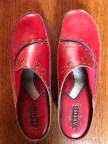 The last Sunday of January, giddy that the dismal month was coming to a close, I celebrated by getting rid of two pairs of expensive, yet uncomfortable, shoes. Toward the end of the day I realized I hadn’t completed my seven. I went to my closet—the perfect place for unused crap to hide. I spied an old gym bag—some swag from two decades ago. I debated over and shoveled five pairs of shoes inside it.
The most difficult pairs to part with were in the back—black velvet shoes with embroidered Christmas decorations—pumps and flats. For years, I wore these during the holiday season. I bought them at Mervyn’s in Santa Rosa shortly after we moved to Fort Bragg (25 years before). They were covered in dust. I felt the heartbreak of bygone Christmas seasons when my kids were little. I cried as I put them into the bag. Our possessions are only things, but some evoke memories that make grief a part of the removal process.
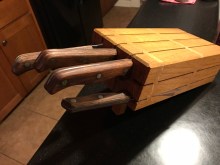
Set of 30-year old knives
I won’t bore you with the details of what I tossed each week. There were weeks when I forgot until evening and went into a panic over finding seven. That was eased by throwing away things as simple as old pencils (Who uses pencils anymore? Certainly not Scandinavians!) and pens with dried up ink. And blurry photographs that don’t make sense to keep. And spices—we all have spices in our cupboards that are long past expiration dates.
A few more revelations:
 If you’d asked me how many pairs of sunglasses I own, I’d have said two: a cheap-ass pair bought about 10 years ago and an expensive pair bought two years ago. Imagine my shock to open a cupboard door in my office and find SEVEN PAIRS OF SUNGLASSES!!!
The red framed pair are fashionable, but bulky and heavy. They’d been replaced with the cheap-ass pair. Don’t ask me why I couldn’t bear to part with them. When I started jogging seven years ago, I bought a pair of lightweight wraparound sunglasses that fogged up as I heated up. I’d bought a funky purple pair in Portland when I visited my son years ago. How could I possibly give those up? And so on…. Five went into a zip-lock bag for the thrift store. (The Portland funky and cheap ass pairs will have to wait for another day.)
One Sunday, I was mumbling curses as I scrubbed an old Pyrex glass casserole stained by years of use. It was so gross that I’d never show it to company. If I moved, I wouldn’t take it with me. If I died, my kids would throw it away. Gone!
A laminated map of San Francisco. How long have I had a smart phone to access for directions? At least six years. Gone!
Christmas decorations. I have many and love every single one except the bunch I don’t take out of the storage bins each year. For the first time, I questioned why I keep them. Perhaps it’s those blasted memories of bygone holidays, avoiding the grief that trashing might bring.
I was sad to give away the little grapevine wreaths I’d wrapped with ribbon and hung about the house when my kids were young. These had not seen the light of Christmas for years. Someone will find them festive and delightful. I cried as I put them in the donation box.
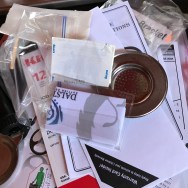
Disturbing find in kitchen drawer
By the end of the year, I’d gotten rid of at least 500 things and don’t miss a single one. When I started this project, I had no idea what a relief it would be to get rid of stuff. More importantly, allowing myself do it systematically instead of manically, where I would quickly tire and give up.
I’m taking a brief hiatus, but will revive Seven on Sundays on March 3rd—a date arbitrarily set because it’s winter and right now my goal is to sleep as much as possible. Yes, there is more to toss, but I don’t aspire to get my possessions down to a satchel. After all, I’m only half Scandinavian.

Old writing projects read one last time before putting in recycling bin

Bought when Lucy was a puppy before learning she did not have the temperament to allow such indignity
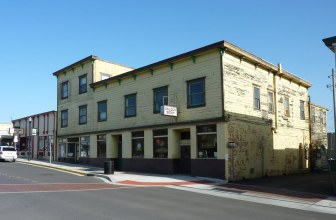
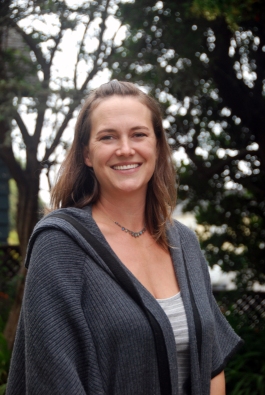 For over 130 years, the Golden West has stood tall on Redwood Avenue in Fort Bragg. Apartments occupy the top two floors and there’s a retail space at ground level, but the building is most noted for its popular saloon.
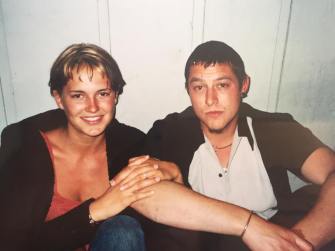 The following summer, she returned to the coast where became friends with Mikael. “We were together for a year and then broke up for a year. After I graduated from college in 2002, I came back and we got together.”
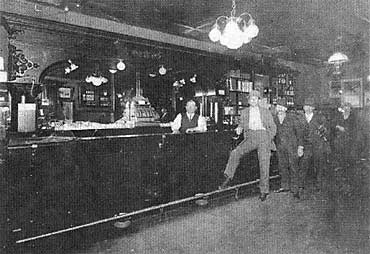 This was when she and Mikael learned that the Golden West was for sale. They lamented they had no money to make their youthful dream of owning it come true. They heard that the Hospitality House was looking to purchase the building to use as a homeless shelter, and felt an urgency to save it and preserve its history.
 -do attitude, Jessica went to work figuring out how to make it happen. “A financial advisor helped me put together a business plan that turned into a three-inch thick document. After pushing hard, it was clear that traditional financing wasn’t an option. The building had 30 years of deferred maintenance. Private investors also turned us down. We made an offer anyway and went into escrow. At the eleventh hour, the sellers agreed to do owner financing and we got it.”
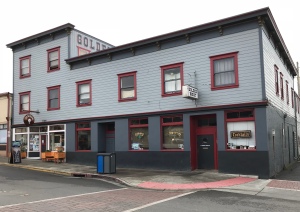 The rooms above the saloon were at different times a hotel, boarding house, and brothel. “There are 26 rooms, some of which are used for storage. We have about 16 tenants. When we took over the building I cleaned out a bunch of rooms. It was fascinating—ancient silk curtains, boudoirs, layers of wall paper telling a chronological history.”
 When she was approached with the idea of running for a seat on the city council, it ignited a passion. “The decisions made in the next four years will affect this town for decades. The future of Fort Bragg is critical to me and my family. It’s important that the town’s growth with the mill site and subsequent expansion of infrastructure be done mindfully, in a forward thinking, responsible manner that keeps the soul of our city intact and leverages its natural and historic beauty.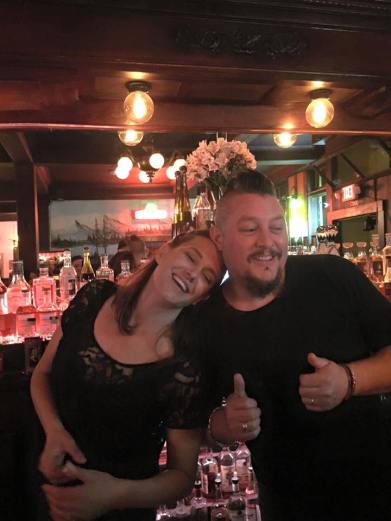

 On the morning of January 20th, I was alerted to a fire at what I called the Hoarder House. I’d never witnessed a fire in real time. It was equally fascinating and disturbing (
 Months went by. Winds and rain caused the waterfall of junk to precariously shift. People started asking me why the City hadn’t torn the place down. I’m flattered they have the impression that I’m privy to the goings on around town. I actually know next to nothing, and often stifle an urge to make things up.
 So what you think Nationstar did?
 A few weeks ago, black tarps were draped over the chain link fence and the demolition began. Within a couple days, the dumpsters supplied by Waste Management were filled to capacity and work paused until they could be hauled inland and emptied.





 Heather grew up in Morro Bay where she learned commercial fishing from her dad. “I moved here in 1999, and immediately began a flaming love affair with Mendocino County.” By 2001, she had saved four thousand dollars and bought a small boat, the Julie. “My idea was to have a floating fish market—to sell fish right off the boat.” She admits that running her own boat was a different experience than crewing with her dad.
 Her dad tried to help her, but she was intent on doing things her way. “At one point, he threw his hands up and said, ‘You’re going to kill yourself,’ and went back to Morro Bay. Bless his heart, he must have been so worried. This strained our relationship, but a few years later, we fished together in Alaska.”
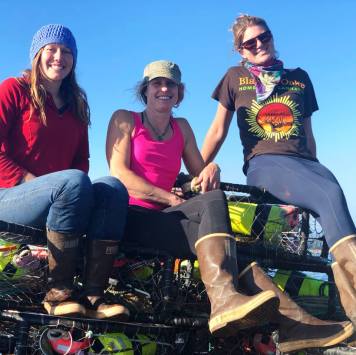 Along the way, she sold the Julie and bought and sold two other boats. In 2009, she purchased a larger vessel with a blast freezer named
 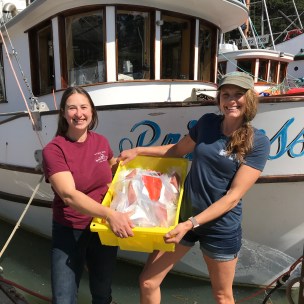 As a woman in this field, Heather is not unique, but rare. “There are a lot more women in Alaska.” She admires her crew which includes Maia and Anna—graduates of Humboldt State. “The salmon season lasts about six months. It requires a great deal of endurance. We get only five to six hours of sleep a night and are away from home so much. I got a crab permit last winter. Catching crab is easier and is a lot more fun.” Maia and Anna also sell the fish at the farmers’ markets.

 Sometimes the inspiration to move back to the place you love arrives in the most random of ways. An email sent by your wife, added to the hundreds you received that day, nearly lost until a couple weeks later when you find it and ask why she sent you a link to a house for sale in Fort Bragg. She knows how your long work days often spill into late nights and take a toll on your personal life. Since leaving the Mendocino Coast over 20 years ago, you’ve always said you’d move back. Maybe now is the time.
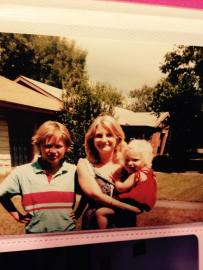 Jason was born in Houston, Texas and moved to Elk with his mom Laurie Graham when he was seven years old. “My mom’s whole life was her children, but she was always willing to open her home to a friend in need. She loved nothing more than spending time with family and friends.”
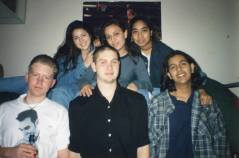 Those were the days before cell phones, when a homesick kid had to pay for long distance calls if he wanted to talk to his mom. Jason didn’t have this luxury. He got an on-campus job as the audio visual tech manager at the student union. He eventually became the building manager.
 He bought a condo near San Jose State and rented out a bedroom, usually to a college student. “In 2009, a friend told me her friend Cate—who lived in Willits—was planning to go to San Jose City College and needed a place to stay. I rented her the room.” They began spending time together and slowly became a couple. They married in 2013.

