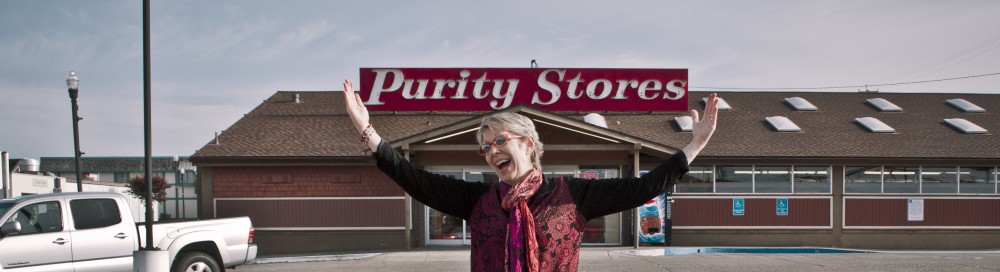
Over the past few years, I’ve interviewed more than two dozen people who grew up along the Mendocino Coast and couldn’t wait to move away, believing they’d never return. But return they did, to establish businesses or professional careers. Some also chose this place to raise children, to nurture them in the small town values that shaped their own childhoods.
These are a new wave of pioneers who, like their forebearers, use intelligence and imagination to forge a vibrant path. In exchange for the privilege of being able to live in one of the most beautiful places on earth, they work long, hard hours.
The shelter in place orders due to Covid-19 have knocked many down, but they are devising ways to get back up and resume their vision of what it means to live here.
They have open minds and are digging deep to find solutions.
They have entrepreneurial spirits that will spawn innovations to move them forward.
We are so fortunate to have them here—especially during this trying time.
***
Tom Butler & Karl Reese – Re-find Home Furnishings

Karl with his QuaranTom Coif & Tom sporting a fresh KovidKut by Karl (with dog Callie)
A native son, Tom returned to the coast in 2009 with his husband Karl to open Re-Find, a second hand store that sells gently used furniture. You can read my initial interview with him here: https://ithappenedatpurity.com/tag/re-find/. The store became an instant success and over the past decade did very well. Today, however, it is suffering along with other local businesses.
Economic hard times are nothing new to these men. While living in Arizona, they experienced the Great Recession of 2008. “This one is different,” Tom says. “It happened overnight. We didn’t know if we’d be shut down for two weeks or two years. How do you make plans for that?”
A week before the shutdown, Tom had hernia surgery. In anticipation, he had purchased enough inventory to last two weeks while he recovered. When they realized his recovery was going to take longer, Karl took their truck to the Bay Area and loaded up another week’s worth of inventory. “As he drove home, the shelter in place orders went into effect.”
“If I’d known it would be the last time we could go out buying,” Karl says, “I would have packed the truck even tighter before heading home.”
Over the following two weeks, they depleted their inventory through private showings while adhering to the protocols of social distancing. With nothing left to sell, their business came to a standstill. The auctions, estate sales and warehouse sales where they source their products are also closed.
While they wait for their sources to reopen, Tom says they’re devising strategies to move forward. “We promote our business through Facebook, but don’t sell online. We might develop a website that will allow us to sell online and offer curbside pickup. This will be in addition to our physical store. At the end of the day, I’m a brick and mortar guy at heart.
“We’ve also used this time to paint the inside of the store and clean the carpets so when we reopen we’ll have a fresh new look.”
Tom is grateful their store serves the local population and isn’t dependent on tourists. However, he acknowledges the pain suffered by those businesses who are dependent upon this trade. “Our coast is a tourist-based economy and now we’re afraid of them. We’re going to have to figure out how to survive with a reduced tourist base. At this point there are far more questions than answers.”
Before the crisis hit, Karl had been working part-time at the hospital and recently went full time. He splits his time between the surgery department and materials management. “This has been a major benefit to our ability to survive,” Tom says.
According to Karl, “I’ve always been grateful that our community’s support of Re-Find provides us with a decent living here on the coast. Upping my game at the hospital is the least I can do to keep us afloat during these times”
As they await their reopening, Tom encourages local people to contact him if they have gently used furniture they’re willing to donate or sell. www.re-findhome.com
“It’s easy to figure out how to sell stuff. Our challenge now is to figure out how to acquire.” In the spirit of a true entrepreneur, Tom says, “If our old channels of acquiring inventory don’t work out, we’ll find new ones. We’re going to roll with whatever happens.”






 On January 12, 2019, a fire broke out at Chapel by the Sea, the mortuary that’s been our next-door neighbor for 27 years. It was a terrible, surreal thing to witness. Wisps of light gray smoke from the open upstairs doorway quickly grew into roaring flames that exploded windows and engulfed the structure. Our property was never in peril, but that didn’t keep the fire from reaching across the alley to shake the core of my well-being.
 I woke each morning to the ruins of what was once a stately building. In addition to a mortuary, it housed an upstairs apartment. The Blair and then the Reynolds families resided there during our early years in Fort Bragg, and allowed us to create friendships that endure to this day. We share a common grief over the loss of this beloved place.
 I looked forward to the day—September 17—when the process of tearing down the building would begin. That morning, I headed over there with my camera phone. I vaguely felt like I had when the fire broke out—too terrible to watch, yet demanded to be witnessed. I was relieved it would soon be gone, yet mourned the finality. Over the course of four days, a piece of equipment that looked like a Tyrannosaurus Rex crunched walls, chewed them into pieces, and loaded the debris into massive dumpsters to be carted off.





 Haley was born with an adventurous spirit nurtured by her parents Christine Samas and Curt Berry. They encouraged her to explore the avant garde over opting for convention. She loved to dance and became an accomplished local performer, often featured in the annual Second Story Studio Spring Dance Concert. “Growing up, my parents taught me to be happy and interested in the world,” she said. In 2006, her junior year, she dropped of school and spent four months in India.
 In 2008, they moved to Portland, Oregon. It was there that she met Nathan Cann, her future husband. “He’s incredibly intelligent, a deep thinker, and funny. I felt he and his friends were my people.” In 2009, Nathan, who had grown up on the East Coast, moved to New York City to pursue a career in film and art. In 2010, Haley broke up with her boyfriend and followed.
 “In researching the history of snake oil, I learned that the bitters in these concoctions have their origins in medicine. This sparked my interest in cocktails and I started bartending. Cocktails are a totally American invention.” Their stay in the Big Easy lasted a year. During this time, Erica also moved to New Orleans where she added to her knowledge of Southern cooking.
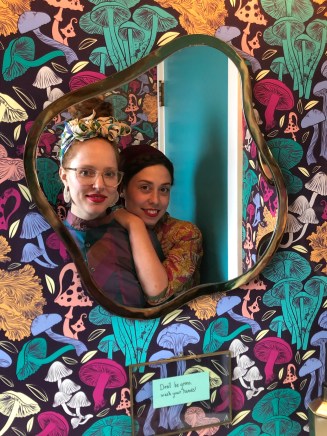 In the summer of 2017, they showcased their culinary talents in a series of pop-up restaurants at the Nye Ranch, Fortunate Farms, and Ellie’s Farmhouse. “We offered cocktail pairings with each course. For example, a carrot cocktail with carrot salad, huckleberry cocktail with huckleberry cobbler. Every drink had one common ingredient from the dish it was paired with.”
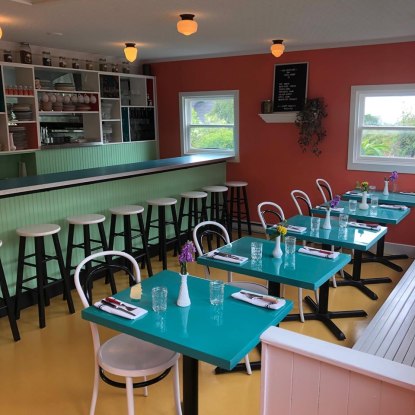 Haley loves being able to once again call Fort Bragg home. “It’s going through a renaissance and attracting new, amazingly talented people. Places like the Larry Spring Museum are being revitalized. The Noyo Center for Marine Science, CV Starr Center, the coastal trail—all of these things are great. There’s support and space for people to be creative, carve out a niche for themselves and open businesses. It’s an exciting time to live here.”

 Carolina grew up fifth in a family of ten children. She has great respect for her parents and their ability to provide for and raise such a large family. Her father has worked in the logging industry for decades and at the age of 65 is a timber faller. Her mother has been a housekeeper at Stanford Inn since 1997. Her father came to this country when he was 15 years old and worked to send money to help is widowed mother and his siblings in Mexico. He eventually made his way to Fort Bragg and in 1979 brought his young bride.
 Carolina wasn’t the first of 50 first cousins to attend college, but she was the first to graduate. Since then, eight others have obtained degrees. Two of her brothers are currently working and going to college, one scheduled to graduate next spring with a degree in mechanical engineering. Her other siblings are gainfully employed; her youngest sister is a senior year in high school.
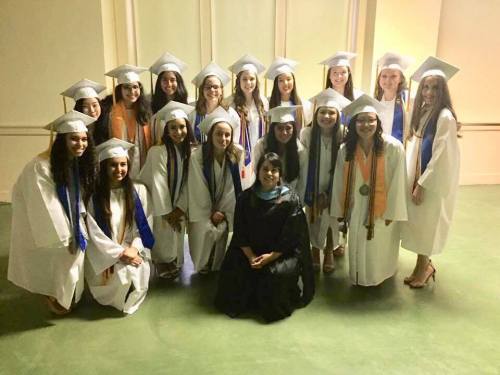 This once shy girl grew into a woman who thoroughly enjoys teaching. “It can be very creative.” During her Master’s program, she became an expert in



 Apparently many Scandinavians believe that by the time we die, the sum of our possessions should fit into a satchel. I suppose this makes disposal of our property easy for our kids—simply pick up the bag and toss it in the garbage. Being half Scandinavian, I suspect it’s really designed to make us feel guilty for accumulating stuff that makes us happy and comfortable. I was raised with the concept that it’s best to live a life of misery and deprivation.
 In my armoire, I found:
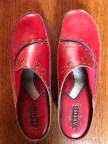 The last Sunday of January, giddy that the dismal month was coming to a close, I celebrated by getting rid of two pairs of expensive, yet uncomfortable, shoes. Toward the end of the day I realized I hadn’t completed my seven. I went to my closet—the perfect place for unused crap to hide. I spied an old gym bag—some swag from two decades ago. I debated over and shoveled five pairs of shoes inside it.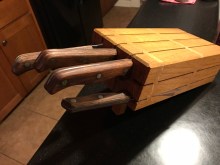
 If you’d asked me how many pairs of sunglasses I own, I’d have said two: a cheap-ass pair bought about 10 years ago and an expensive pair bought two years ago. Imagine my shock to open a cupboard door in my office and find SEVEN PAIRS OF SUNGLASSES!!!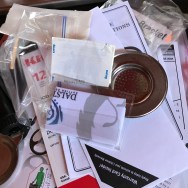


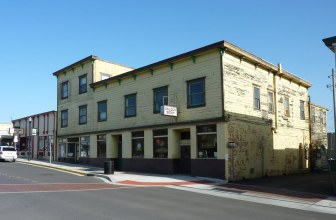
 For over 130 years, the Golden West has stood tall on Redwood Avenue in Fort Bragg. Apartments occupy the top two floors and there’s a retail space at ground level, but the building is most noted for its popular saloon.
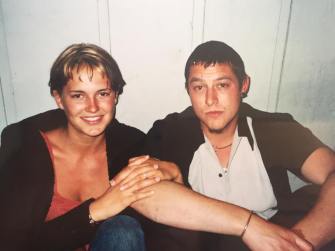 The following summer, she returned to the coast where became friends with Mikael. “We were together for a year and then broke up for a year. After I graduated from college in 2002, I came back and we got together.”
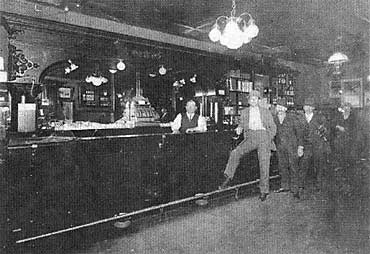 This was when she and Mikael learned that the Golden West was for sale. They lamented they had no money to make their youthful dream of owning it come true. They heard that the Hospitality House was looking to purchase the building to use as a homeless shelter, and felt an urgency to save it and preserve its history.
 -do attitude, Jessica went to work figuring out how to make it happen. “A financial advisor helped me put together a business plan that turned into a three-inch thick document. After pushing hard, it was clear that traditional financing wasn’t an option. The building had 30 years of deferred maintenance. Private investors also turned us down. We made an offer anyway and went into escrow. At the eleventh hour, the sellers agreed to do owner financing and we got it.”
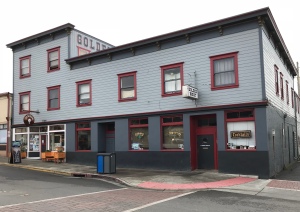 The rooms above the saloon were at different times a hotel, boarding house, and brothel. “There are 26 rooms, some of which are used for storage. We have about 16 tenants. When we took over the building I cleaned out a bunch of rooms. It was fascinating—ancient silk curtains, boudoirs, layers of wall paper telling a chronological history.”
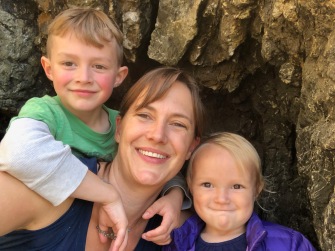 When she was approached with the idea of running for a seat on the city council, it ignited a passion. “The decisions made in the next four years will affect this town for decades. The future of Fort Bragg is critical to me and my family. It’s important that the town’s growth with the mill site and subsequent expansion of infrastructure be done mindfully, in a forward thinking, responsible manner that keeps the soul of our city intact and leverages its natural and historic beauty.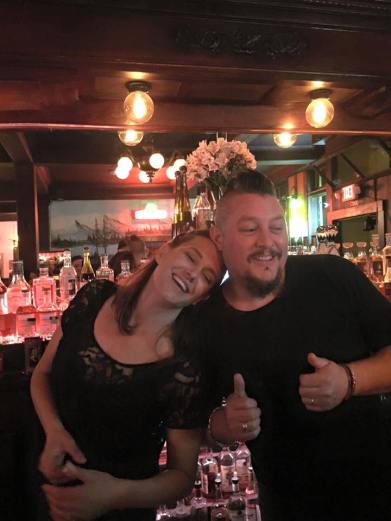

 It Happened at Purity