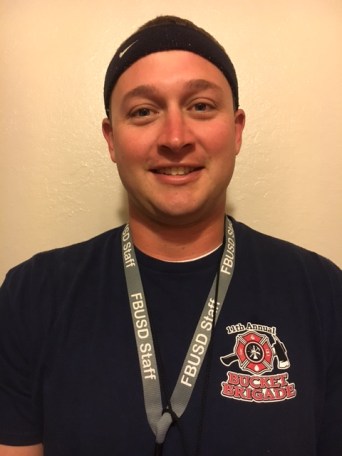
 I’ve known Mark since he was a child, but don’t know him well. He had a good reputation, and I was always warmed by his delightful smile. Five years ago, when I heard he was hired to teach PE at Fort Bragg High School, I thought, “Oh, how nice—local boy goes away to gain education and experience and returns to share with his hometown.” Until I sat down to talk with him, I had no idea the deep level of dedication he brings to the youth of our community.
Mark grew up playing football and baseball, but he loves all sports. This makes him ideally suited to the many hats he wears at Fort Bragg High—PE teacher, athletic director and assistant football coach. “I’m so lucky to work in an environment where I can be myself, teach what I’m passionate about, and have fun.” The sparkle in his eyes grew brighter as he spoke. “I can’t believe I get paid for doing this.”
When this fourth generation Fort Bragg native graduated from high school in 2004, his present life was not on his radar. A star high school running back, Mark was recruited to play for Santa Rosa Junior College. A few years later, a shoulder injury permanently sidelined him. “Byron Craighead, the school’s head athletic trainer, taught me how to work as a student trainer with the baseball teams. I really liked it and started taking classes in kinesiology. I also took a couple of education classes, which sparked my interest in teaching.”
 Mark went on to San Diego State and got a degree in kinesiology with an emphasis in physical education. He wanted to stay in San Diego and earn his teaching credential, but it was expensive and he needed a job. Lars Larson, his friend and former counselor at Fort Bragg High, told him about a local long-term substitute position. Mark could live with his parents, save some money, and figure out his next step.
The position was with the Lighthouse School—an alternative education high school. “It was an amazing experience,” Mark said. “Claire Hundley, the teacher on leave, is remarkable. We were in touch every day through email. The classroom was a revolving door of students going in and out of juvie. Claire taught me important lessons—these kids need support, love and a safe environment where they feel a sense of belonging. She helped me find that special something in each kid. I loved the job.”
Mark was not immediately comfortable with the return to his hometown. “I’d been away six years, living in cities and said I’d never come back, but I eventually embraced it. The stillness, calmness, the air feels different here—all of this allows me to breathe. My years away made me appreciate this as a special spot. Community support for our kids is incredible. Students and teachers don’t have to deal with big city problems.” He smiles when he adds, “I can also walk to work.”
 In 2011, Mark applied for and got the PE position. During the school year, Mark’s workday begins at six-thirty and often doesn’t end until eight at night. “I was the assistant baseball coach for four years. After that, I began assisting with football. Three years ago, I became the Athletic Director.”
There are 24 sports teams at Fort Bragg High. Over half the student body plays a sport. Mark assists with scheduling games and gym practice times. He helps monitor players’ grades, acts as a liaison between the school and parents, and handles complaints.
Mark also participates in the Assets Program, which offers after school weight training sessions once a week. Six years ago, he started a lunchtime intermural sports program that rotates between dodge ball, tennis, badminton, basketball and indoor soccer.
During the summer, he supervises the high school football players who run football camps for second through eighth graders and their coaches. “The high school kids are in charge and it’s great to watch them interact with the younger kids.”
Mark admits that teaching PE is a challenge. “Most kids view it negatively. It’s my job to find ways to allow them to enjoy it. I believe it’s important to be physically active—it brings about body awareness and builds confidence. I tell kids that the key is to a find form of activity that suits them. I try to make PE fun. I adhere to the basic curriculum, but sometimes I shake it up and we do things like have water balloon fights. Other times we go outside and walk around. I especially like walking the zero period [early morning] class so we can watch the sunrise.”
Mark is grateful to those who mentored him when he was new to the job, especially Becky Walker. “She was the high school principal when I started and is now the district superintendent. She was also one of my sixth grade teachers. Her obvious love of her job inspires me. I appreciate being in a district where the administration has created a safe environment for kids to develop together.”
One student in particular made a lasting impact on Mark. “He graduated in 2015 and was diagnosed with cancer,” Mark said. “It just wasn’t right– he was the most polite, caring, respectful kid. I stayed in touch with him and did what I could to boost his spirits.”
His cancer grew and he became wheelchair bound. Mark sent him a badminton racquet. “I told him to keep fighting and when he beat this we would play badminton just like we used to. Throughout his sickness, he was always positive and cheerful.”
Two years later, out of the hospital and back in Fort Bragg, Mark visited this young man. “As I listened to how he had died twice and his mother saved him, how he almost lost his hand to an infection, about chemotherapy, and physical therapy, I was blown away by the fact he had a smile on his face and was interested in how I was doing.”
During this visit, he handed Mark a bag. “Inside were a San Francisco Giants hat and baseball, both signed by Buster Posey, one of my favorite players. He met a lot of professional athletes during his time in the hospital and remembered I liked the Giants. His selfless act of kindness melted my heart. Here was a kid fighting for his life, and he thought of others. He taught me that we can all make a difference by our positive interactions with one another. Even the smallest gesture can mean so much to a person.”
 This past summer, Mark married long-time girlfriend Jessica Alguinaldo. “We dated in high school. When I went away to college, she was starting her junior year, and it was hard to stay together. We broke up in 2005, but started dating again in 2010 when she graduated from Oregon State and moved back to Fort Bragg.” Jessica works as an audiologist for Audiology Associates. She runs their three offices—Mendocino, Santa Rosa and Mill Valley.
The one downside to their return is the lack of entertainment available for young people. “We have to be more proactive in seeking out things to do than when we lived in cities. Jessica and I have created a life that works for us. We hike, kayak, camp and hang out with friends. I don’t see us being as happy anywhere else.”
Our community is fortunate that Mark has brought his energy and passion home where he will have a positive impact on generations to come.



 A year later, she returned to her previous job in Sacramento. “In January 2003, I moved back to Fort Bragg. For a boy,” she added with a laugh. This boy was Vince Caccamo who she’d known from kindergarten, but lost touch with after high school. He’d graduated from UC Berkeley and returned to work in his dad’s construction business. “I was home for a visit in 2002 and ran into him at the Caspar Inn. I remember I was wearing jeans sprinkled with pink glitter.” She smiled at the memory.
 After she moved to Fort Bragg, she worked with her dad and found she really liked it. “My favorite time of year is prom when guys get fitted for tuxedos. There are so few chances for them to get dressed up, which makes this time of year so special.” While dating Vince, she took classes at the local College of the Redwoods campus. In 2005, she enrolled in Humboldt State. “I went to school during the week and came home on weekends to work. I finished my BA in Cultural Anthropology in three semesters.”
 In February 2015, she decided to take Reynolds’ Men’s Wear back to its roots and spin off the women’s section into its own store across the street—Wren’s (a play on Women’s Reynolds). Then came the shock of her life—a diagnosis of non-Hodgkin’s lymphoma. The new store opened in April. A week later, she discovered she was pregnant.

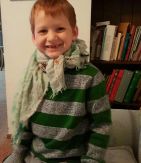
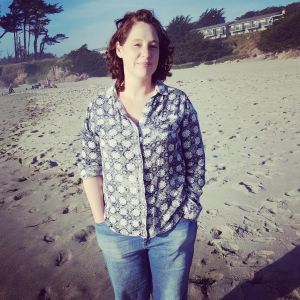
 At the age of 27, Gus is like a man from another era. He is extraordinarily polite, respectful, quietly self-confident, and a hard worker. In high school, he entertained the idea of going to college and majoring in marine biology. By his senior year, he realized this wasn’t his passion, and he didn’t want to waste money on an education he might never use. At the age of 18, he went to work for a building contractor. After two months, he was recruited by Williams Electric in Mendocino where he remained for nine years. “I learned to wire anything from a small shed to a smart home that can be controlled with a cell phone.” Through this experience, he discovered his true passion—electricity.
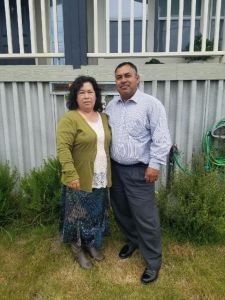 Gus’s work ethic is inherited from his parents. When he was a year old, they moved to Fort Bragg from Mexico to work in the fish processing industry. “This was in 1990 when fishing was booming,” he said. “My parents made minimum wage, but sometimes worked 40 to 50 hours of overtime a week. For a number of years, we lived in an apartment with another family while my parents saved enough money to buy a house.”
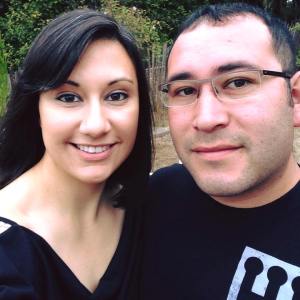 Gus’s wife Sierra works for Harvest Market. They’ve been married five years. “I met her in 2011 when our local Jehovah’s Witness Kingdom Hall needed a major renovation. Three hundred volunteers from throughout the state showed up and over the course of two weekends, we gutted the place and rebuilt it.” Sierra, who lived in Chico at the time, was one of those volunteers.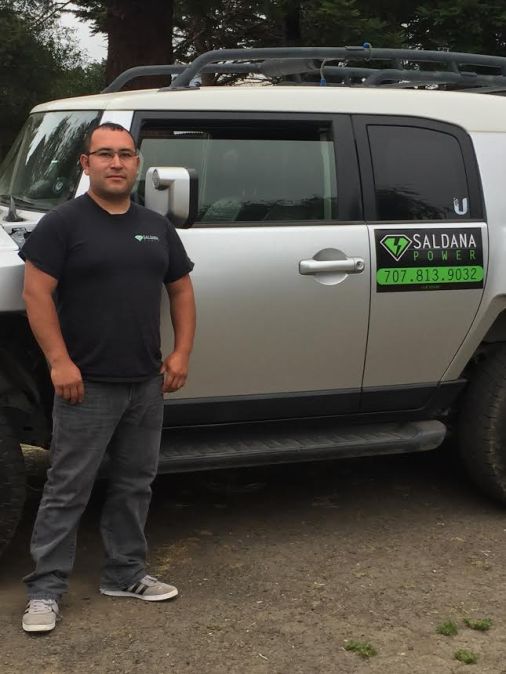
 When Sarena unlocked the doors to the Frame Mill Artworks on the morning of March 22, 2017, she excited and nervous. The previous owner Robyn Koski had helped make the transition as smooth as possible, but there was so much Sarena didn’t know, like the flow of the business or the nuances of her employees. Her nerves were further rattled when a supply truck pulled up to make a big delivery.
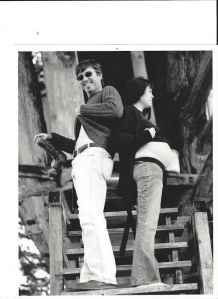 w much he loved the area. I liked him, but wasn’t interested in a serious relationship. I was considering an MFA program at Mills College. Instead, I moved back to Fort Bragg in 2003 to live with my parents. I needed time to think about what I wanted to do with my life. Within six months, Sean also moved here and was hired by Western ACI as an arborist.”
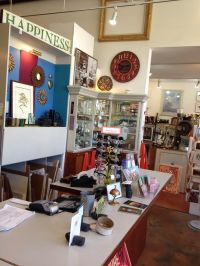 The Frame Mill had been on the market for a few years. Sarena’s background in framing allowed her to imagine buying it. She spoke to friends who own businesses and they assured her becoming a business owner was one of the best things they’d ever done. She looks back on this now and chuckles. “It’s like talking to parents when you’re considering having a child. They tell you how wonderful it is, but leave out the part about sleepless nights.”
 Sarena is pleased to discover her business is part of a little neighborhood hub. “People bring in family photos and art projects. It’s fun to help design a way to display them. I’ve been warmly welcomed by the downtown business community.” She plans to evolve the Frame Mill Artworks into a maker’s space. “So few places make what they sell. I want to eventually create affordable art that people can buy to furnish their walls.” In the meantime, she’s learning how to merchandise the store with items that appeal to locals and tourists. “It’s hard because people have a variety of tastes, some very different from mine.”
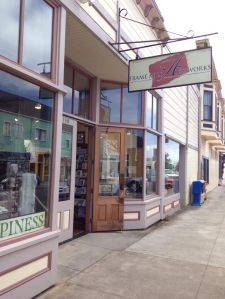 Returning to the town where she once felt like an outsider has been a positive experience for Sarena. “It used to be ‘What family are you from?’ Now many people live here who don’t have roots going back generations. New people are moving in and young ones are moving back, some bringing families with them. The more our town can do to be a place people are attracted to—like the opening of the coastline via the coastal trails—the more it will encourage young people to move here.”
 Aspen Logan did not grow up in Fort Bragg. Neither did her husband Jeremy. But she has roots here that extend back to the 1920s when her maternal great grandparents built a house on Perkins Way. In addition to having traveled the world, the couple has lived in Los Angeles, Scotland, and Canada. Self-proclaimed risk takers, with backgrounds in the video gaming industry, they never imagined one day they would buy Beckman Printing and Black Bear Press in Fort Bragg.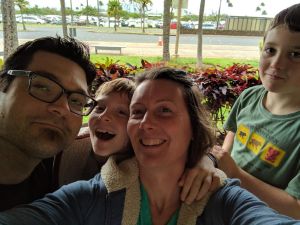
 “Beckman Printing fit our skill set—mine as an animator and illustrator and Aspen’s as a project manager,” Jeremy said. “My mom has been in printing for 30 years. When I walked through Beckman’s doors the first time and smelled the ink, it felt familiar, I felt at home. It appealed to us to run a business that did work for other businesses. It would give us the chance to learn what was going on.”
 Their business has grown, especially in the areas of design and branding. To reflect the broad spectrum of all they do—graphic design, web design and printing—they’ve changed the name to The Color Mill.
 Myles is a fourth generation logger who has loved being in the woods for as far back as he can remember. However, a decision made the year before he was born might have sent his life on a different course.
 “In 1975, my grandpa was a silent partner with Bud Eastman and they decided to liquidate part of their logging business and put some equipment up for auction. Grandpa wanted to invest in a hotel and bar, but my dad [Mike] had just graduated from Humboldt State and wanted to start a logging business with him. Dad convinced him to buy a truck and some equipment from that auction.” Thus, Anderson Logging was born.
 While he was in high school, the guys in the shop taught Myles how to grease and maintain trucks. He did this after school and during summers. When he turned 18, he got to fulfill his dream of working in the woods. “I set a lot of chokers,” he said with a smile. A choker is a small piece of cable used to attach logs to cable systems, allowing trees to be harvested without dragging them along the ground. “I really liked it and would have kept at it, but Dad had me work all the jobs so I could learn what the business entailed.”
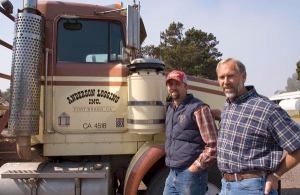 Mike didn’t want Myles to jump right into the business. “It would have been easy for me to head straight into it after high school,” Myles said, “but Dad wanted me to see other places and learn other things before deciding how to spend my life. He knew how much work is involved in this and hoped I would find something easier, but every time I was away all I wanted was to get back to logging. I really enjoy being out in the woods working with the guys. However, I’ve learned there’s a lot more behind the scenes to keep the business going, and that part is not as much fun.”
 Myles enjoyed college where he majored in Ag Engineering. When he was a senior, he and two friends wanted to build a tractor—from the ground up. “Each year, students in the department would build a sled to be used in tractor pulls. All prize money goes to student scholarships. The dean approved the tractor as long as we found sponsors to cover the cost.” Myles and his buddies were often in the machine shop until two or three in the morning. “We got to know all the campus cops. A woman cop sometimes brought us pizza.” Over the past 18 years, the tractor has been driven by 70 different people in 300 pulls.
 During the logging season, Myles routinely works 13-hour days. “The season used to be about seven months, but now it’s often eleven. Since the recession, logging capacity has shrunk. In order to fulfill the needs of the mills, our seasons have gotten longer. The ability to work during the winter has always been there, however regulation requires rocked roads. In the past, landowners haven’t wanted the additional cost that brings to the process.”
 Myles isn’t the only one in his family who works hard. He’s married to Stacey, a dynamic young woman who he knew in high school. They reconnected in 2003 when her son Wyatt (by a previous relationship) was two years old. Their son Lane was born in November 2006.
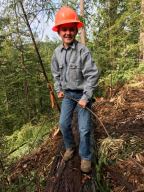
 When Josh’s girlfriend Lia Wilson told me what he does for a living, I simply had to meet him.
 Josh worked three part-time internships. He monitored the news and developed press kits for Environmental Media Services, a non-profit environmental public relations firm. He worked for filmmaker John de Graaf in coordinating the first Equinox Environmental Film Festival (later named for Hazel Wolf), soliciting in-kind donations and arranging other details. At
 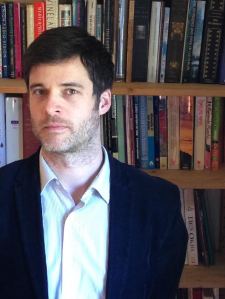 In August 2011, he moved to Berkeley and became a private investigator with the Mintz Group, a multinational firm. A friend referred him, but he got the job because of his law office and writing experience. “We conduct a variety of investigations, none having to do with cheating spouses.” He laughs. “We focus mainly on three areas: due diligence, including extensive background checks on candidates for high level corporate jobs, and background checks prior to business deals; disputes, which means uncovering whatever it is lawyers need to know for a given lawsuit; and anticorruption. Under the Foreign Corrupt Practices Act, it is illegal for American companies to pay bribes to win job bids in foreign countries. Sometimes companies will contact us to investigate the practices of their employees abroad. We have offices in Asia, Latin America and Africa, as well as the U.S., Canada and London.”
 As a teenager, Kerry devoured Vogue magazine. “Fashion is an art form—not just something to cover your body with,” she said. “From runway couture to black yoga pants, it gives you an opportunity to express your inner self in ways large and small, obvious and subtle.”
 Because of her deep love of fashion, it makes sense that Kerry would eventually own a clothing store. But first she would graduate from high school and tear out of town to travel the country before returning to hold two to three jobs at the same time in order to make a living.
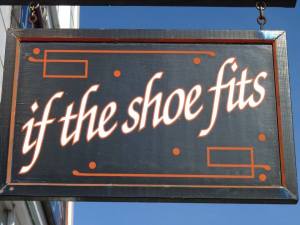 In 2011, Hilary White asked her to work one day a week at If the Shoe Fits—a consignment clothing shop on Franklin Street. “A year later, Hilary took me to dinner and said she was buying Understuff. She added, ‘I want you to buy If the Shoe Fits.’
 and taproom with food currently under construction on Elm Street (north of town near the old bowling alley). They hope to open in early summer 2017. When that happens, she’ll work three to four evenings a week in addition to running her store. When I marvel at her ambition, she says, “I’ve never been afraid of having multiple jobs.”
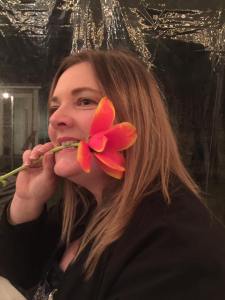 I met Laura Lee 24 years ago when she was 19 years old. I was captivated by her name—one that seems suited to a line of specialty dairy products—perhaps yogurts and cheeses—some type of creamery to reflect her wholesome sweetness. From our very first meeting, I could tell she is a person who leads from the heart.
 Laura is sometimes astonished that she’s worked at Feet First for over 20 years. “It’s given me a chance to build cherished friendships. I’ve met a lot of people in our community and returning visitors. One of my favorite parts is watching the kids grow up. There are kids I’ve known since I helped tie their shoes who now bring their own children into the store.”
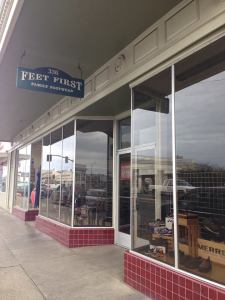 Like most businesses, Feet First has changed over the years. “I remember when athletic shoes were mostly white with a little color pop. Now it’s all about the colors. Right now, leisure shoes are taking on a look inspired by athletic shoes. When the [Georgia Pacific] mill was open, work boot sales were steady. We still sell them, but hiking boots are more popular among men.”
 Recently, she’s started calling friends and arranging gatherings. “You know how it is when you run into people and say ‘We have to get together soon’ and you never do? Well, I’m telling people, ‘Now’s the time.’ When the weather improves, I’m going to invite people to bonfires at the beach after work.”
 It Happened at Purity