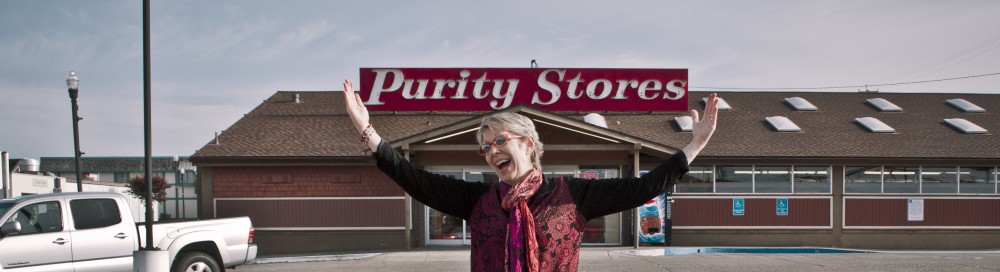
The Reluctant Spartan – Part I

I’ve never considered myself a competitive person—unless you count growing up with four siblings and competing for the attention of my overwhelmed parents. During my first five decades on the planet, I also never considered myself an athlete or remotely fond of physical activity.

earth dayOn Earth Day 1971, I was a junior in high school. My sister (a sophomore) and I decided to honor the day by walking instead of driving the five miles to school. We stopped for three cigarette breaks and once to smoke a joint. At the end of the day, we walked eight blocks, decided the trek home would be too arduous, and stuck out our thumbs to hitch a ride. Our Spanish teacher picked us up and gave a lecture on the dangers of hitchhiking until he deposited us on the curb outside our house. We crept to the backyard to enjoy a smoke before going inside.

I smoked off and on for the next 30 years, entertaining myself during the off years with Dance Aerobics in the eighties and walking my dogs in the nineties. At the age of 50, my teenage son needed me to sign consent for him to join a gym. Before I knew it, I’d also signed up. I’ll admit I fell for the sales pitch of the family discount, but also hoped that exercise classes might help shed the 15 pounds menopause had piled on and make me feel less like a sausage packed into my clothing.

photo(1)My friend Kathleen and I took classes, worked out on our own, and eventually, with a personal trainer. We grew stronger and, I dare say, a little cocky. Six years into this regimen, she suggested we do a triathlon. I agreed before I fully knew what it meant (or how to spell it)—a half-mile swim, 22-mile bike ride, and 5k run. We worked out six days a week, and created a motto: To finish is to win.

We finished.

This race taught me: (1) I’m more physically capable than I think I am; and (2) I will never do it again (the open water swim was terrifying). But the experience was a tipping point—it made me yearn to challenge my body and expand my capabilities.

I started entering local 5k races. The year I turned 60, I won first place in my age category in two races—not because I’m fast, but because I was either the only woman in that category or the few others were a lot older. The year I turned 61, I ran five races, motivated by the fact that my friend Sandy would turn 60 the next year and she’s much faster than I am. That would be my last year to collect ribbons and medals. (I got four.)

spartan1This past January, a group of fellow gym rats—Beth, Yvette, and Jan—invited me to join their Spartan team for the May race at AT&T Park. My personal trainer Bethany had done a number of these and always came back battered and bruised, but high on accomplishment. I watched a YouTube video and told the group, “What kind of crazy would do such a thing? I’m 62 years old for God’s sake. I work out four times a week and run 5k races. Leave me alone.”

They kept me on their email thread. A few weeks later, I asked Bethany if she thought, with proper training, I was capable of the challenge. “You could do it today,” she said.

I signed up.

Fear of failure and letting my teammates down became major motivators. I was two, eight, and thirteen years older than the other three members of my group. I pushed myself—strength training and running six times a week. I won’t lie, training wasn’t easy. For example, I’d never run more than 3.10 miles (5k) in my life. Each quarter mile beyond that was exhausting, but I kept at it until four, four and a half, and five miles wasn’t so bad. Six point two miles (10k) was—and still is—a bitch, but I know I can do it and I’ll do it again.

I grew stronger, but no matter how hard I trained, I was the slowest and weakest of the team. In many areas of my life, I’ve excelled or been at least average. It pissed me off that I’d slipped to the lower end of the bell curve. I tried to avoid bitterness and accept my weaknesses. I succeeded about a quarter of the time. Many days I wanted to quit, but kept going. It felt good to be part of a group working toward a common goal.

Panic-in-Needle-Park-WinnI had four months to obsess on the Spartan Race. Each time I thought about it, a bolt of fear struck my heart, ricochet down to my stomach, and left me feeling nauseated.

This held true until the morning of the race as my team and I watched young hard-bodied competitors rush through the course while we waited for our 9:30 start time. We’d arrived early to watch Bethany run the competitive race. (We weren’t considered competitors—we were “fun” runners.)

TUNE IN NEXT WEEK FOR PART IIspartan4

Bethany Brewer

bethany8Like all Warrior Princesses, Bethany came from humble beginnings. Growing up, she had little supervision, which allowed her to roam free, picking up habits hardly recommended for a child. As a teenager, she delved into a world of drug and alcohol abuse. On the outside, she was a swaggering party girl. On the inside, her soul was dying.

***

bethany7By the time she was a freshman in high school, she was plagued by a sense that she didn’t fit into this life. She left home, lived with a revolving door of friends, and only went to school a couple of hours a day. In her sophomore year, she transferred to Mendocino, hoping to do better.

She continued to fail.

“Teachers tried, but nobody knew what to do with me. By my senior year, I was told I wasn’t going to graduate unless I hustled. I went to Noyo High from eight to noon, took a journalism class at Fort Bragg High in the afternoon, and went to the adult school at night. I was able to graduate with my age group in 1998.”

bethany9Bethany immediately moved to Medford, Oregon to care for her ailing father and grandparents. “My dad died in October, my grandpa three weeks later, and my grandma in February. They were the last of my family on that side.” Those losses were devastating. She dealt with her grief in the only way she knew—using her inheritance to douse her feelings with alcohol, drugs and cavort with people who mooched off her.

Broke by 21, she returned to Fort Bragg and worked at Laurel Deli. By 24, she was married and moved to Yuma, Arizona. “I was a bartender at an Indian Casino and loved it. I learned how to stand up for and defend myself.” The marriage was tumultuous and broke up after four years. “I lived alone for the first time in my life. I really liked being independent and having responsibilities.”

bethany6In 2010, she learned her maternal grandmother had dementia. Bethany moved back to Fort Bragg to help care for her, and worked again at Laurel Deli. “I continued to party and be irresponsible. I eventually left Grandma’s house and isolated myself from my family. At one point, I lived in my truck for three months. I felt like I had a big hole”—she makes a circle with the fingers of both hands and places it over her heart—“that I tried to fill up with drugs, alcohol, and violence.”

Bethany’s mother had moved to Willits and encouraged her to live with her. “On November 3, 2012, I started detoxing on her couch. I was really sick, but managed to go to a twelve-step meeting every day. Everything seemed less, less, less. Little did I know my life would change to more, more, more.”

bethany5Two weeks later, her friend Amie McGee encouraged her to apply for work at the Mendocino Sports Club. Bethany didn’t feel strong enough to hold a job, and was relieved when it took a month before she was invited for an interview. In January 2013, she moved back to Fort Bragg and started working at the club. A trainer approached her and said, “There’s an athlete inside you and if you want to see her, I’ll train you.”

She worked out with him six days a week for six months. The gym owner gave her a personal trainer’s manual and encouraged her to study for the certification exam. On November 2, 2013, she passed the test.

The Warrior Princess was born.bethany1

Two and a half years later, her business has grown from five clients to 140. She continues to study and receive certifications. “I love the process of learning.”

***

Bethany spends a few hours a week at Noyo High School “just chillin’” with the kids. “By the time kids get to Noyo, a lot of people have given up on them. I want them to know they can be there and be someone of worth.” She shares the story of her stormy teenage years, her recovery, and hands out gym passes. It was through this outreach that she met a teenager who would have a major impact on her life.

“She called one night [in February 2015] to say she’d been locked out of her house. I let her spend the night on my sofa. Before I knew it, I had bunkbeds with Ninja Turtle sheets in my spare bedroom. I became the mother of a 15-year old kid.” The girl had quietly struggled with her gender identity most of her life. “I know what’s it’s like to feel alone,” Bethany said. “When she told me she wanted to dress like a boy, I took her to a thrift shop and bought her clothes.”

kellenWith the support of Bethany, the staff at Noyo, and a tribe of fairy Godmothers, the girl continued her journey, embracing her male identity. Her grades improved and in the fall of 2015, she enrolled in Fort Bragg High. By this time, the girly clothes had been discarded and a masculine name chosen. Life was not without its challenges (imagine being a transgender teen in a small town) but he thrived academically and socially.

It was difficult for Bethany to be an instant mother and tough for the kid to refrain from being a mildly rebellious teen. In January 2016, he moved in with his girlfriend’s family. He and Bethany maintain a close, heartwarming bond.

***

Bethany2The hole that once scarred Bethany’s soul has healed. “I’m so lucky to wake up every morning and spend the day doing what I love. My goal is to help people realize their strength. It’s payback for all that’s been given to me.”

Bethany’s most recent project is training people to participate in Spartan Races. Some, like me, start out believing we aren’t capable of such physical demands. Over time, the Warrior Princess shakes that doubt out, turning it around until, before we know it, we’re crossing the finish line and accepting medals.

Thank you, Warrior Princess for your willingness to grab hold of life, seek challenges and share your experiences. The lives you touch are forever changed for the better.bethany4bethany11

Maureen Leahy Koller—the bookstore & vinyl café

maureen3As a teenager, Maureen was beset by restlessness. She wanted to get out of Fort Bragg, experience the world, and seek adventure. After graduating from high school, she seized the opportunity to go to Venezuela. The problem was that this ticket out of town meant becoming an exchange student—a uniform-wearing Catholic school student.

“It wasn’t the freedom I expected,” she said. “I lived in Valencia, a dangerous city, and couldn’t go anywhere unchaperoned.” (I imagine schoolgirls in two straight lines, ala “Madeline,” under the watchful eyes of a nun as they walk from place to place.)

After that lackluster adventure, she returned to California in 1997, and attended Mills College in Oakland. This wasn’t enough to satisfy her restlessness. “My boyfriend and I wrote the names of cities on scraps of paper and put them in a hat. We pulled out Madison, Wisconsin. At the end of the school year, we packed up and moved.”

In Madison, she started what would become a career in book selling. “I worked for Canterbury Books, a sweet little independent.” After a year, she and the boyfriend split and she “decided to get in my car and drive around the country until I found somewhere to live.” She landed in North Hampton, Massachusetts, taking another bookstore job. “It felt like home. I loved the beauty of the East Coast and all of the culture Northampton manages to smash into one little town. After a while it felt too far away from home and family.”

maureen1In 2002, Maureen moved to the Bay Area where she worked in bookstores in Berkeley. At Half Price Books she meet fellow co-worker Tony Koller, who would eventually become her husband. They enjoyed living in Oakland for nearly a decade. During this time, she returned to Mills and finished a degree in English Literature.

Her love of the Berkeley/Oakland area shifted when she became pregnant. “I could deal with the high crime rate—the muggings and burglaries—but I couldn’t stand the thought of bringing up a child in that environment.” She was drawn back to her place of birth, to the hub of family.

Like Tom and Karl of Re-Find, Maureen and Tony didn’t have a plan for what they would do once they landed in Fort Bragg.

Maureen6Shortly after baby Carolyn was born in late 2010, they learned that Jennifer Wolfman, the owner of a used bookstore on Redwood Avenue, wanted to retire. “She had liquidated inventory, and by the time we bought it, there wasn’t much left. We scouted estate and library sales to build it back up.”

Six months later, they relocated the store to Franklin Street. In May 2016, they moved to their current location on Laurel. “Fifteen volunteers helped us on a Sunday and we were open for business on Monday.”

Tony works for Thanksgiving Coffee during the day, but enjoys late afternoons and Saturdays at the store. “It’s his passion,” Maureen said. “He loves being surrounded by books and touching everything. It’s his time to relax and ‘play.’ He also likes cleaning, which is good because I’m a slob.”

maureen4

Mom, Patty Leahy Carvet, enjoys reading by the sunlit window.

Maureen doesn’t have any employees, but allows selected people to work in exchange for store credit. “After Margot was born [eight months ago], my mother started mysteriously showing up every day. She works on Sundays so Tony and I can have a family day.”

Maureen has been a voracious reader all her life, reading two to three books a week. Owning the bookstore is a perfect fit. “I tend to be autocratic, and like not having to answer to a boss. I can control what comes in and what goes out. There’s a certain amount of pride that comes with owning a store—it reflects who I am.”

Now that she has two children, she doesn’t have time to scout estate and library sales for inventory and must depend upon what people bring to her. “I’m very picky about the condition of what I buy. I feel bad whenever I have to tell someone I won’t take their books because of poor condition or a musty smell. I try to stock the store with the best that can fit into the space I have.”

After Maureen says this, I notice a lack of basement storage room odor that I associate with used bookstores. The aroma of freshly-brewed coffee entices people to pour a cup and browse the store.

maureen5Some of her inventory is new, like North Coast guide books and children’s books. She makes special orders for people who don’t have internet access. Her clientele is mostly tourists, many of whom visit year after year. However, a handful of locals visit the store often.

“I came back to Fort Bragg because I no longer cared about living a glamorous life. I didn’t want to raise my kids in a big city. We could buy a house here—something we couldn’t do in Oakland—and be near family.” A bonus was being able to buy the bookstore and make a go of it. “At the time, Kindle was growing in popularity. Because of this, I thought the store would fail after two or three years. But I’ve never experienced a decline in sales—things just keep getting better.”

Maureen’s youthful restlessness is reminiscent of Dorothy in The Wizard of Oz. She left this small town and had her adventures. Substitute the ruby slippers with a new baby, supportive family and a slower pace of life, and you’ll understand how she came to realize “There’s no place like home.”Maureen7

Soul Mate

I guide my grocery cart away from the checkout stand at The Purity. I greet a friend standing at the onion bins. A middle aged woman with dark auburn hair, stylish makeup and a Guatemalan shoulder bag enters the store and collects a cart.

As she passes, she gives me a shining smile and direct eye contact. I smile back, thinking I might know her, but realize I do not. She takes a few steps toward the first aisle before whipping a U-turn and nearly colliding her cart with mine.

She’s excited, like a racehorse anxious to be released from the starting gate. I suspect something interesting is about to happen.

“We were meant to meet,” she says in a conspiratorial tone, her face beaming.

“Really?” I say.

“Yes.” She’s nearly breathless. “I saw you walking your dog yesterday. Then today, my husband drove me to the store and we pulled up next to a car and I saw your dog and I said to him, ‘There’s that woman’s dog! She must be in the store!’ And here you are!”

“Wow.” I feel like a celebrity.

celestine_prophecy_B_ARTWORK.qxd:Layout 1She leans in closer, a little too close. “Have you ever read The Celestine Prophecy?”

I’ve read a lot of stuff over the years. I search my memory banks. “No.”

“It says that if two people continue to encounter one another, they either share a past life or have something in this life they are destined to learn from each other.”

“Wow.”

“Don’t you see? I saw you yesterday and then again today. We were meant to meet.”

No one has ever been so excited to see me. “May I ask your name?”

“Lauren Conroy [not her real name]. I live on the corner of Lincoln and Whipple [not her real address].”

I hold out my hand. “Nice to meet you.”

She shakes my hand. “And what’s your name?”

“Kate.” I deliberately skip my last name and Google Map location.

She looks astonished. “Kate is the name I give when I make orders to go! You know like when you place a sandwich order at a deli counter?”

I nod.

“I give the name Kate!” Her dark brown eyes glisten.

As farfetched as I find this encounter, the fake name for take-out orders doesn’t faze me. For years, my Starbucks name has been Hazel. I receive many compliments on it.

“It’s so nice to meet you, Lauren. Thank you for stopping to introduce yourself.” I walk away, but not before noticing her expression drop into disappointment.

“Hopefully we’ll see each other again,” she calls after me.

I assume she’s a recent transplant. We live in a small town. She hasn’t learned that the chances of repeated people sightings are approximately 99.9%.

Lucy and I will have to start wearing hats and dark glasses on our daily walks.

Despite the potential danger of being stalked, Lucy cannot be talked into wearing a hat and sunglasses.

Tom Butler

Tom tore out of Fort Bragg in 1988, at the age of 17. If anyone had asked if he’d ever move back, he would have said, “Not in a million years!”

I suppose this is an appropriate response from a guy who hated school so much that he spent the first 10 days of his sophomore year at the beach. “I’d ride the bus each morning. The other kids got off and took a right into the school. I veered left and walked away.” When he got caught, he quit Fort Bragg High and enrolled in the alternative school (now known as Noyo High) where he completed the graduation requirements in a little over a year. He wasted no time in heading to Santa Rosa.

tom1

Karl (left) & Tom (right)

Twenty-eight years later, he’s back. He lives with his longtime partner and husband Karl, owns a house, and runs a wildly successful business—Re-Find, which sells high quality used furniture and men’s clothing.

***

After 10 years in Santa Rosa, Tom got disheartened one gloomy January day, went to the internet, and looked up the warmest place in the United States. It was Phoenix. He and Karl spent a week there and liked what they saw—lots of sunshine and a lower cost of living. A year later, they moved.

In Phoenix, Tom held a variety of jobs, mostly in retail. He also sold real estate for a few years and later worked for Wells Fargo as a mortgage underwriter. When he and Karl bought a mid-century ranch house, they decided not to furnish it with their Craftsman-style furniture. They sold everything but a bed and two plastic Adirondack chairs.

The hunt was on to find period pieces to fit their new home. The collection quickly grew larger than they needed, and Tom sold the extras on eBay. He continued to buy and sell, and before long, he and Karl quit their jobs to manage the business fulltime. They enclosed a back patio to hold a growing inventory of sofas, chairs, and tables. They eventually turned their rental house into a warehouse.

By 2004, mid-century furniture became trendy. In 2005, they opened a store—Phoenix Metro Retro. They grew rapidly, moving the store twice and doubling their space each time.

The 2009 recession hit and business slowed dramatically. They relocated to a warehouse and were open only on weekends. “We lowered our prices, and actually made more money because our overhead was less.”

tom3During this time, Tom and Karl had grown weary of the Phoenix heat and discussed their next move. Tom likes big cities, but Karl is partial to small towns, especially Fort Bragg (where they often visited Tom’s family). They both enjoy the ocean and nature. Tom notes that the town has changed since the days of his youth, which helped his decision to move back. “There was a deep divide between us and Mendocino. We were the redneck, working class while Mendocino was the hippy town. That’s not so true anymore. With the influx of new people and businesses, Fort Bragg has a different flavor.”

During a trip to the coast in the summer of 2009, they bought a house on an acre of land (they figured if the economy went bust, they could feed themselves by growing a vegetable garden), sold their Phoenix house and business, and moved.

Looking back, Tom notes the potential folly. “We weren’t sure how we were going to make a living.”  One day, while driving to Mendocino, they stopped at a garage sale at the Prentice Gallery on Highway One. “When I was a kid, this was Hopper’s Market.” They discovered the gallery was leaving that location. They liked the space and thought it would make a great store. “The next day, I called Bud Hopper who said he was planning to convert it to a mini-storage. He rented it to us instead.”

Employee Whitney takes a month off each spring to travel the alpaca shearing circuit.

Employee Whitney takes a month off each spring to travel the alpaca shearing circuit.

Tom designed the logo before he had a name. He liked the idea of the recycling symbol in the shape of a house. His sister Joanie suggested Re-Find.

“We opened with minimal fanfare. I’d missed the deadline for a newspaper ad. As it turned out, we didn’t need one. We sold nearly all our inventory that first weekend.” Two weeks later, Karl quit his job at Suburban Propane to focus on bookkeeping, taxes, payroll, and cleaning furniture as it comes in. They eventually hired three employees.

To keep the store stocked, Tom and Karl make one or two trips a week to the Bay Area. They attend auctions and have a network of contacts who invite them to shop estate sales before they’re open to the public.

“I know what I want in my house, but that’s not necessarily what my customers want. I initially said I’d never put recliners in my store—I think they represent everything that’s wrong with America.” Tom laughs. “After two weeks, the store had recliners. Each year, leading up to the Super Bowl, I stock up, put them out in the parking lot and sell every one.”

tom9Tom loves to shop and loves a deal. This propensity is shared by his loyal customers. Some visit the story daily, many stop by three times a week. On Thursdays—the day new inventory is revealed—people wait outside, clamoring to get in. He takes great delight in offering beautiful items at reasonable prices. “People get joy out of buying something to make their house look nice. They’re proud of their purchases.”

tom4Two years ago, Karl partitioned part of the shop into a men’s used clothing store. “There are few options for men’s clothing on the coast.” Like the furniture business, it’s been a hit.

Tom does what he can to give back to the community. He was on the board of Big Brothers/Big Sisters until the agency left the area. He’d like to join another board, but his busy schedule won’t permit it. He’s generous with fundraisers, donating hundreds of dollars a year in gift certificates.

He describes his return to the coast as awesome. “I was hesitant at first, worried that I’d have to take medication to survive the fog and cold. But my biggest adjustment was having to buy heavy socks to stay warm during that first winter.” Between his business, friends and large extended family, he’s busy and happy.

We’re happy it didn’t take him a million years to come back.

Callie loves to ride in the work truck.

Callie loves to ride in the work truck.

Brittney Tuomala Harris

brittney4The first time I walked into A Sweet Affair, I clutched my chest and swooned. It’s like entering an art gallery, each pastry crafted by a master. You hesitate to destroy the creation, but after the first bite, you learn that the visual is only part of the divine feast. Hopefully, you’re sitting down because as you eat you will drift into semi-conscious nirvana.

***

In fourth grade at Dana Gray Elementary, Brittney’s research for a report on the human heart influenced her decision to become a cardiovascular surgeon. By fifth grade, she developed a chronic childhood illness that caused her to spend nearly a decade in and out of hospitals. “The thought of working in one for the rest of my life sickened me.”

By high school, she struggled with where to go to college. “I had a hard time justifying going to a standard four year school. What was I supposed to major in?”

Her decision to attend the Culinary Institute of America in Hyde Park, New York, was prompted by years spent in the kitchen baking with her mother. “As kids, my sister and I had a business called ‘The Sisters Cookie Company’ where we would sit outside our house and sell homemade cookies.”

brittney8By December 2010, she had an Associate’s Degree in Baking and Pastry and a Bachelor’s Degree in Business Management. Her future husband Beau also attended the school, but majored in Culinary. They met while working at the same restaurant.

Beau graduated in 2009 and took a chef’s job in New York City. On weekends, Brittney commuted from Hyde Park to work as a server at Brasserie 8 1/2. “In a few short months, I moved to the back of the house as a pastry cook. Immediately, the executive chef went on vacation. She left me in charge during New York Restaurant Week. I worked over 160 hours during the two weeks she was gone.”

brittney6In June, Brittney discovered she was pregnant. Her executive chef quit in July, and she ran the kitchen until two weeks before son Avery was born in January 2012. She left on maternity leave and never went back.

Life in New York City was exciting, but expensive. Beau worked long hours to support the family. Brittney longed to return to California where she’s a fifth generation Fort Bragg native. In the spring of 2012, Beau was hired by celebrity chef Michael Chiarello to work at Bottega in Yountville.

“I worked for Thomas Keller at Bouchon Bakery as a pastry commis [a fancy French term for cook].” But the prestige of the job was in name only. “I was like a robot, making the same stuff every day. When chefs work in a restaurant, they want to learn new techniques. I learned nothing there.”

Nine months later, they moved to San Francisco to help Chiarello open Coqueta. They were building remarkable resumes, but their lives were consumed by work. Each morning, Brittney took public transportation from Alameda to start her 7:00 shift. In the afternoon, Beau put Avery in the car and drove into the city for his evening shift. At 3:00, he’d get out of the car and Brittney would get in to drive home. “The restaurant is only a couple of blocks from the Bay Bridge but during Giants baseball season, it could take two hours to travel that distance.”

For eight months, they struggled through this schedule and the high cost of living in the Bay Area before deciding to move to Fort Bragg where they could be near her family. Beau was hired by the Heritage House in Little River and Brittney started a home business where—in between keeping up with a toddler—she baked and sold cakes, pastries, and handmade chocolates.

brittney7In July 2014, she opened A Sweet Affair. “I love being my own boss, making whatever my heart desires, and creating specialty orders.” By August, she was pregnant. In April 2015, she gave birth to another son, Addison.

Brittney works insane hours to balance family with running a business. She possesses the face of a Renaissance beauty, a surface serenity that belies her underlying stress.

Time is a precious commodity and Brittney has little to spare. The morning of our interview, she answered questions while putting together a batch of French macarons. I marveled at the confident way she folded Oreo crumbs with buttercream, scooped it into a pastry bag, squeezed a dollop onto several dozen cookie halves, and topped each with a matching half.

Her shop is open 10:00-4:00 Thursday through Sunday, but she spends the early morning hours—often starting at 4:00—either baking or doing paperwork. Monday is her only day off. Her husband has Tuesday and Wednesday off, which allows her to work from early morning until noon to stock the bakery. Those afternoons are spent together as a family. During holiday seasons, she works seven days a week, often 14 hours a day.

brittney5Her grandparents watch her boys two days a week. Mother Ronda staffs the counter at the bakery on the weekends and helps at charity functions. Brittney’s macarons are a favorite among food stations at Winesong, Mendocino Film Festival, Art in the Gardens, and other venues. She estimates she donates about $4,000 a year to these events.

Brittney is passionate about her craft. “I love making beautiful, edible art—to make people happy with dessert. A cake can be the center of someone’s celebration—birthday, wedding, or baby shower. Desserts can create a great memory. I want to be a part of that memory. When I see someone’s face light up at the sight or taste of something I made, it makes all my hard work, sleepless nights, blood, sweat and tears worth it.”

brittney2

Brittney created these cakes to help Chriss Zaida celebrate her store’s anniversary and relocation.

Brittney is encouraged by the network of small business owners who support one another. She hopes this support system will inspire others to open businesses. “There are a lot of empty storefronts downtown. This can discourage tourists from coming back. Understandably, a lot of locals can’t afford the high quality items we sell. We depend upon tourists to survive.”

Like many before her, Brittney couldn’t wait to graduate and get far away from this small town. She ventured into the world, gathered what it had to offer, and brought back the gems to a place the years away had taught her to love.

A Brittney creation made this guy happy to turn 30.

A Brittney creation made this guy happy to turn 30.

Hilary White

understuff3Hilary White is one of a handful of thirty-somethings who have returned to their hometown of Fort Bragg to run small businesses. Over the next few months, I hope to interview each of them and find out what motivated their return.

I met Hilary years ago when my daughter Laine was in high school and frequented her clothing consignment store, If the Shoe Fits. I was impressed by her gentle kindness and aura of professionalism. A few weeks ago, we sat down for a chat.

Hilary believes people deserve to feel good and surrounded by beauty. “These things bring value to our lives.” This belief lured her back to her hometown and keeps her here. It is also the basis of her business and the goal of her community advocacy. She and three other downtown business owners started the group Go Fort Bragg, which promotes progressive involvement in our town. “When people participate in their communities, it adds value to their lives.”

Go Fort Bragg encourages people with diverse opinions to attend city council meetings. Hilary claims that large audiences give council members opportunities to listen to citizens. She believes one of the values of democracy is that it allows people to express themselves and to hear differing opinions.

When asked to confirm or deny the rumor that she will run for Fort Bragg City Council in the next election, Hilary answered “No.”

“You won’t confirm or deny?”

“No, definitely not.”

“So you’re leaving it open to speculation.”

She laughed. “I will not run for city council in the next election.”

***

After graduating from Colorado College in 2002, Hilary came home to work for a few months at Out of This World in Mendocino. Her plan was to move to New York (where she would rent a room from friends and figure out what to do with her life).

understuff5As fate would have it, she developed the hots for coworker Martin Nakatani. A romance blossomed and she abandoned her New York plans. They eventually married and settled in Fort Bragg.

Like many people along the Mendocino Coast, Hilary had to hold two or three jobs in order to make ends meet. In 2004, she began working at If the Shoe Fits. A mere three years later, she bought the business.

understuff1In 2012, she bought Understuff, an intimate apparel boutique. I wondered what prompted her to make a career in under garments. (Her answer wasn’t nearly as titillating as I’d hoped.) The owner of the store wanted to retire and encouraged Hilary to buy it. Hilary knew it was a viable business and didn’t want to see it close. After a few months, she sold If the Shoe Fits to Fort Bragg native Kerry Hagan and bought Understuff.

Over the years, Hilary has experimented with her inventory to include a variety of clothing—coats, jackets, pants, swim suits and practical pajamas. After the shop moved to Main Street, it gained more tourist traffic. “That’s been fun because it allows me to stock things that might not be affordable for the local market, but are beautiful for everyone to see.”

understuff2

Hilary and her equally discreet employee Nicole.

I tried to get Hilary to share funny stories about her customers, but she declined. Because of the nature of intimate apparel, she must be discreet. I find this reassuring. My brassiere preferences are stored in her computer. I hesitate to think of the stir this would cause should that information be leaked to the public.

Hilary is grateful that owning a business allows her to live in a place she loves. She appreciates being part of a community of downtown business owners who support each other. For example, when she relocated her store, Chriss Zaida of Toto Zaida was part of her moving crew. As Chriss prepares to move her store to Main Street later this month, Hilary and Martin have pitched in to help.

understuff4

Downtown crew helps Toto Zaida prepare to move to its new digs.

As a small business owner, Hilary has learned to adapt to changing conditions and trends. She feels the same holds true for the entire Fort Bragg community. “We don’t have to despair over what we once were [a thriving logging and fishing town] but we can make new things happen, like coastal trails and marine science centers. We can evolve while continuing to respect our heritage.”

Hilary is every bit as great as everyone says. On the surface, she exhibits a grace from a gentler era, dresses with panache, and has excellent posture. I’m happy to let you know that she’s also warm, vibrant, and generous with her laughter. Our town has benefited by her return.

41 Days

At 9:30 last Saturday evening, I shut off the television and turned off lights before heading upstairs to bed. My husband Gary was already asleep. I heard a yowling outside that sounded familiar. It started at the sidewalk, gained momentum up the walkway, and came to a fevered pitch on the front porch. I looked out the door’s window and was convinced the nachos I’d eaten for dinner had been laced with peyote. Our cat Little Mister stood poised like a bullet ready for the door to open.

I yelled at Gary. “Little Mister’s home!”

“What?” he said in drowsy confusion.

Little Mister had been gone 41 days. I thought he was gone forever. Yet there he was howling at the door. I opened it and he ran halfway up the stairs before stopping. I stood, frozen, transported to an alternate universe where I was staring into the eyes of a pet that I’d given up for dead.

Water!

I ran to the kitchen, poured water into a bowl and raced upstairs. I lightly petted him as he took a few sips.

Food!

Store! Go to the store!

I wrestled a jacket over my pajamas. Wait! Marcia has a cat and it’ll take less time to get to her than to the store. I prayed she was still awake. She was, and met me outside her house with a sandwich bag full of cat food. I sped back home, filled a bowl with food and ran upstairs.

LMRECOVERY4I sat with Little Mister and petted him while he munched on the kibble. He looked at me and meowed. It was pathetic and weak. I picked him up and felt the literal interpretation of the phrase “bag of bones.” His eyes were bright, but his coat was disheveled and dull.

For weeks after he disappeared, I expected to hear his meow when I passed by the front door, to find him in the middle of my bed when I went upstairs. I missed him most at night, cuddling at my side.

I didn’t miss his 3:00am—every 3:00am—insistence upon being let outside. And I especially didn’t miss having to keep him and our dog Lucy separated because he hated her puppy energy.

LMRECOVERY3I got into bed, tried to relax and pretend everything was normal. Little Mister, as is his custom, sat on my chest, wedging himself between me and my book. For the first time in 41 days, I cried. “You poor, poor thing, I can’t imagine where you were and how you suffered. I’m so grateful you’re back.”

Weeks earlier, in the midst of the Christmas holidays, I’d resigned myself to his disappearance by thinking he’d been ill and wandered off to die. My tears were a mixture of compassion for his plight and guilt over having so easily dismissed him.

His return was a cosmic slap in the face, making me realize his is a life that matters. I took responsibility for nurturing that life when he came into our home eleven and a half years ago.

The next morning, I got up at six and Little Mister wanted to go outside. We had no litter box and I took this as a sign that he was well enough to return to his familiar routines. (I now realize that I was still in the throes of suspended reality.)

A few hours later, I called him, but he didn’t show up. I walked to the sidewalk and heard a faint meow coming from next door. I found him crouched behind a bush in the neighbor’s yard. It broke my heart to see him looking so helpless, unable to traverse the short distance home.

I picked him up and scolded myself for having let him outside. His ordeal had drained much of the life out of him. His eyes, bright at his return the night before, were dull. He ate a bit of food and I settled him on the bed.

Gary and I speculate what might have happened. On that rainy night of December 20, Little Mister must have sought shelter, perhaps in someone’s rarely used garage or shed, and got locked in. He must have had access to water and maybe some critters. His frantic yowls upon his return convinced me that after 41 days he’d gotten his first chance to escape.

LMRECOVERY2I’ve set up a litter box and will keep him inside. He’s been to the vet who discovered that he has the “reddest throat and biggest tonsils I’ve ever seen on a cat.” She gave him a little IV hydration boost, some antibiotics, and a shot of what she called “cat morphine” to ease the pain in his throat. “Cats tend to like opiates,” she said. Little Mister agrees.

I’m happy that Little Mister is back. I promise to do everything in my power to return him to his normal fatty, demanding, Lucy-hating self.

Goodbye Little Mister

LilMrEleven and a half years ago, our son Harrison graduated from high school. That summer, he was left alone for a week while his sister, dad and I went out of town. We returned to a house wiped clean of any evidence of partying and a fluffy gray kitten to add to our menagerie of two dogs and three cats. (While we were gone, he’d encountered someone outside a restaurant with a box of kittens.)

We had more than enough cats. Harrison was, technically, the owner of one. As a child, he’d been given a short-haired, half feral kitten that he named Indiana Jones Riley. (Indiana turned out to be a girl.) He argued that Indiana was far from friendly and he’d always wanted a fluffy gray cat. We explained that he was going off to college in a couple months and we’d be stuck with it. In order to sway us, I think he finally said please or something nice. But I really don’t remember.

He named her Pancake. Laine called her Lily. I called her Harrison’s Parting Gift.

Lily was a feisty little thing that hated physical contact. In an effort to domesticate her, she was required to eat while sitting on someone’s lap and being petted. It didn’t take long before she begrudgingly relaxed. She lurked about with jaunty confidence, and tortured our two older females with surprise pounce attacks. Laine’s male cat Figaro would have none of that, whacking Lily with a paw whenever she got close. I nicknamed her Little Sister—the obnoxious baby of the pack.

When it came time for her to be spayed, the vet discovered that, under all that fluffy fur, Little Sister was actually a Little Mister.

Over the next few years, as the older cats died off, Little Mister reigned supreme. Our two large dogs gave him a wide berth whenever he strutted about the house. He was a talker and not shy about asking for what he wanted. “I need food!” “Let me in!” “Let me out!” “Pet me!” “Stop petting me!”

Two years ago, we were given a puppy and Little Mister’s dictatorship came to an end. All Lucy ever wanted was to establish a playful relationship with him. All he ever wanted was for her to go away. My efforts to integrate them failed. Relative peace was finally established by erecting a baby gate on the stairs. Little Mister spent his indoor time upstairs, safe from intolerable puppy energy.

***

On an early evening nearly four weeks ago, I put him out. He’d been sleeping all day and company was coming over. If he didn’t go out then, he’d insist upon it later and wake me in the middle of the night to get back in.

Before going to bed, I opened the front door, expecting him to rush in, scold me for leaving him out for three hours in the wet cold, and race upstairs with a chirp which translated, “I’ll never speak to you again!”

He wasn’t there. I called and called, but he didn’t show up. It wasn’t the first time he’d failed to come home. It was no longer raining. He’d probably show up howling in the middle of the night.

But he didn’t.

cat(7)It was the week of Christmas. We had a house full of people and activities. I was concerned about Little Mister, but consoled by the knowledge that he’d sometimes disappear for two to three days at a time. On our walks around the neighborhood, Lucy and I looked for him. Several times a day, I’d open the door and call his name.

As time went by, I wondered if he’d been ill. For the past few months, he slept a great deal. Unless it was three o’clock in the morning, he rarely demanded to go outside. I’d have to hunt him down in the afternoons to put him out where he’d usually spend less than an hour.

The day after Christmas, Laine suggested we check the Humane Society to see if someone found him. I agreed, but wasn’t surprised when he wasn’t there. Little Mister would never, ever let a stranger capture and transport him.

It’s an odd feeling to have a pet disappear. I’m sad, but not emotionally broken. Over the years, I’ve experienced the heart-wrenching grief of watching five dogs and three cats deteriorate to the point where they had to be taken to the vet to end their suffering. I suspect Little Mister wandered off to die, but carry the hope that he’ll return. A tad of wishful thinking allows me to fantasize that he found another home—one with a sweet little lady who doesn’t have a puppy and lets him lounge on her lap all day.

At times, I hear his chirp at the front door only to open it and find the porch empty. Whenever I go upstairs, I anticipate him nestled in the middle of the bed. I miss his insistence upon being petted as I read at night, wrestling his way onto my chest, between my face and book, purring and drooling.

I’ve finally washed his bowls, taken his remaining food to the Humane Society, and removed the baby gate from the stairs.

Four weeks ago, I watched his gray fluff scurry out the front door. If I’d known it was going to be the last time I’d see him, I would have at least said goodbye.LilM