
The receptionist looks like she’s ready to tell my friend—let’s call her Kate—some terrible, awful, apocalyptic news like her colonoscopy appointment has been canceled because the raging wildfires in Sonoma and Mendocino counties prevented the doctor, who lives in San Francisco, from driving to Fort Bragg.
Kate blurts out the “F” word—not because she’s upset with the bearer of the worst news she’s received in a long time, nor because the doctor wasn’t willing to risk his life to save her the horror of repeating the colon prep, but because yesterday she’d thought once or twice about contacting the hospital to verify her appointment. Her nutritionally deprived brain prevented her from following through.
She wants to collapse to her knees and scream, “Noooooooooooooo!” She wants to pound her forehead into the carpet until security arrives to escort her to the preemie ward where grandma types comfort fussy babies along with people whose colonoscopy appointments are cancelled at the last minute. A grandma will gather her into soft arms, rock her gently back and forth, pat her back and whisper, “Shhhhhh…at least you have good health insurance.”
The receptionist explains that because the local phone service is down, the hospital is unable to contact patients.
***
A few months previously, Kate showed true Big Girl Grit when she scheduled that appointment. Given she’d experienced two colonoscopies and knew the torture she’d be subjected to, this was a very brave thing indeed.
 If you’ve never had a colonoscopy, you may not understand why the term torture is associated with it. This applies to the day before. The patient is allowed to ingest only clear liquids, which by mid-morning sets off a primal alarm in the brain—the process of starving to death has begun. By mid-afternoon the brain partially shuts down and the patient wanders zombie-like through the rest of the day. She occasionally snaps into reality and tries to keep the whining under control by reviewing all the things she should be (but truly isn’t at that moment) grateful for: family, friends, shelter, blah-blah-blah, and good health insurance.
As the sun begins its descent into the Pacific Ocean, the day is finished off with a cocktail of Drano and Liquid Plummer disguised under the label “Suprep.” Kate refuses to detail what this does to the human body, and will only say that body must remain within sprinting distance of a toilet.
 After a fitful sleep, the following morning begins at four o’clock with another round of the cocktail. Kate wants to cry, but remembers there are a bunch of people in the world suffering a great deal more than her. She tries once again to concoct a gratitude list, but cannot think of a single thing.
At seven o’clock, debilitated and literally empty, she says to her husband—let’s call him Gary—and her dog—let’s call her Lucy—that the only thing keeping her going is the promise of drugs administered at the hospital. Not much of a drug user, Kate was pleasantly surprised by the gentle euphoria they provided on her two previous colonoscopy occasions. They nearly made the hours leading up to the procedure worth it.
Kate’s friend—let’s call her Marcia—picks her up at seven forty-five and listens to Kate pretend to put her misery into perspective in light of the devastating inland fires. Marcia escorts her into the hospital to get an estimated time of when to return.
***
Kate apologizes for saying the “F” word. The receptionist kindly says if she were in the same situation that is exactly the word she would choose.
As Marcia drives her to Homestyle Café for the best breakfast ever—two eggs, smashed fried potatoes and biscuits—Kate suspects the cancelation of her procedure is some kind of karmic due or payback for her sins. She’s not religious, but was raised by a former Catholic (once a Catholic, always a Catholic). Whenever something goes awry, she can never fully shake feelings of God’s retribution for her bad behavior.
Let’s see—what could it be this time? Her bossiness when working with a group? Her whininess when things don’t go her way? Her petty judgement of others? That the previous day she was dull to the pain of those who lost so much in the fires? Well now she’s simpatico with that pain. There you go karma or God. Point taken; you win.
Kate leaves breakfast expressing gratitude for solid food, family, friends, her dog, and good health insurance. The words ring hollow with the dread of having to go through the entire colon prep experience again—hopefully before the end of the year so she doesn’t have to pay a new deductible.
Marcia drops her off with a note of positivity: “Schedule it in December. You can give yourself a clean colon for Christmas!”
 If you’re walking east along the 200 block of Redwood Avenue, you’ll notice a difference in the
 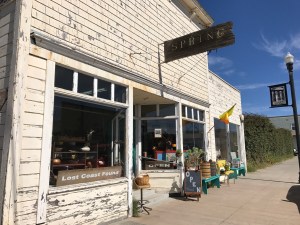 Part of this renaissance is due to the opening of the vintage shop Lost Coast Found, housed in the same location and owned by Megan Caron—a homegrown girl who returned after living in Petaluma for 16 years. “When Larry died [in 2009], he left the building to Heather Brown, a well-known Canadian artist,” said Megan. “In exchange for reasonable rent, I help out with the museum.
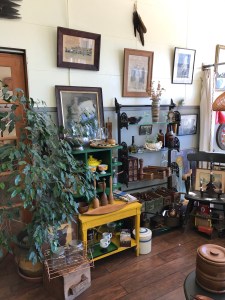 When Megan speaks of something she’s passionate about—her store, the museum, kids spending too much time on screens, or the lack of housing on the coast—her hazel eyes blaze. She’s articulate and quick to laugh, flashing a sly look whenever she makes fun of something or herself. As I listen, I understand why Fort Bragg once had a hard time holding onto her intense energy.
 Over the next 16 years, Megan and Ben settled into life in Petaluma. They bought a house and had two sons—Addison (9) and Arias (5). “As the boys grew older, I became uneasy about raising them in a suburban environment where there’s a disconnect with nature. I drove 15 minutes just to go to the park. I regularly took them to Fort Bragg where they could play in the forest and we could be at the beach within five minutes. They seemed happiest in the wild.
 During that time, Megan looked for a storefront in Fort Bragg. In November 2016, she was walking by the Larry Spring Museum and saw a slip of paper with Heather Brown’s phone number written on it. “I called and within twenty minutes, I had the keys.”

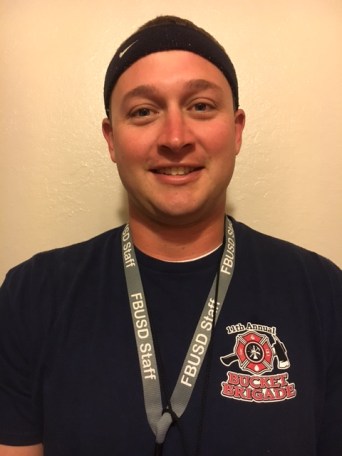 I’ve known Mark since he was a child, but don’t know him well. He had a good reputation, and I was always warmed by his delightful smile. Five years ago, when I heard he was hired to teach PE at
  Mark went on to
  In 2011, Mark applied for and got the PE position. During the school year, Mark’s workday begins at six-thirty and often doesn’t end until eight at night. “I was the assistant baseball coach for four years. After that, I began assisting with football. Three years ago, I became the Athletic Director.”
 This past summer, Mark married long-time girlfriend Jessica Alguinaldo. “We dated in high school. When I went away to college, she was starting her junior year, and it was hard to stay together. We broke up in 2005, but started dating again in 2010 when she graduated from Oregon State and moved back to Fort Bragg.” Jessica works as an audiologist for Audiology Associates. She runs their three offices—Mendocino, Santa Rosa and Mill Valley.

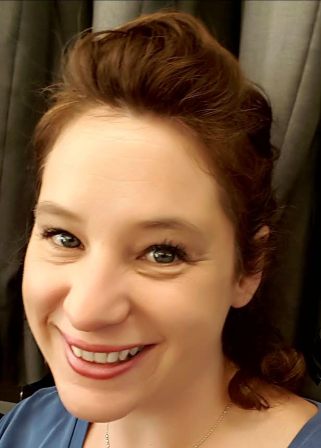

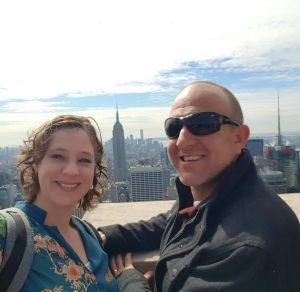 A year later, she returned to her previous job in Sacramento. “In January 2003, I moved back to Fort Bragg. For a boy,” she added with a laugh. This boy was Vince Caccamo who she’d known from kindergarten, but lost touch with after high school. He’d graduated from UC Berkeley and returned to work in his dad’s construction business. “I was home for a visit in 2002 and ran into him at the Caspar Inn. I remember I was wearing jeans sprinkled with pink glitter.” She smiled at the memory.
 After she moved to Fort Bragg, she worked with her dad and found she really liked it. “My favorite time of year is prom when guys get fitted for tuxedos. There are so few chances for them to get dressed up, which makes this time of year so special.” While dating Vince, she took classes at the local College of the Redwoods campus. In 2005, she enrolled in Humboldt State. “I went to school during the week and came home on weekends to work. I finished my BA in Cultural Anthropology in three semesters.”
 In February 2015, she decided to take Reynolds’ Men’s Wear back to its roots and spin off the women’s section into its own store across the street—Wren’s (a play on Women’s Reynolds). Then came the shock of her life—a diagnosis of non-Hodgkin’s lymphoma. The new store opened in April. A week later, she discovered she was pregnant.

 When Sarena unlocked the doors to the Frame Mill Artworks on the morning of March 22, 2017, she excited and nervous. The previous owner Robyn Koski had helped make the transition as smooth as possible, but there was so much Sarena didn’t know, like the flow of the business or the nuances of her employees. Her nerves were further rattled when a supply truck pulled up to make a big delivery.
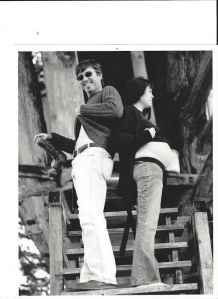 w much he loved the area. I liked him, but wasn’t interested in a serious relationship. I was considering an MFA program at Mills College. Instead, I moved back to Fort Bragg in 2003 to live with my parents. I needed time to think about what I wanted to do with my life. Within six months, Sean also moved here and was hired by Western ACI as an arborist.”
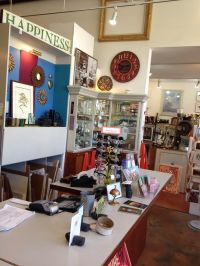 The Frame Mill had been on the market for a few years. Sarena’s background in framing allowed her to imagine buying it. She spoke to friends who own businesses and they assured her becoming a business owner was one of the best things they’d ever done. She looks back on this now and chuckles. “It’s like talking to parents when you’re considering having a child. They tell you how wonderful it is, but leave out the part about sleepless nights.”
 Sarena is pleased to discover her business is part of a little neighborhood hub. “People bring in family photos and art projects. It’s fun to help design a way to display them. I’ve been warmly welcomed by the downtown business community.” She plans to evolve the Frame Mill Artworks into a maker’s space. “So few places make what they sell. I want to eventually create affordable art that people can buy to furnish their walls.” In the meantime, she’s learning how to merchandise the store with items that appeal to locals and tourists. “It’s hard because people have a variety of tastes, some very different from mine.”
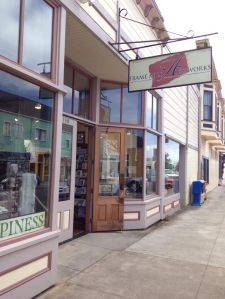 Returning to the town where she once felt like an outsider has been a positive experience for Sarena. “It used to be ‘What family are you from?’ Now many people live here who don’t have roots going back generations. New people are moving in and young ones are moving back, some bringing families with them. The more our town can do to be a place people are attracted to—like the opening of the coastline via the coastal trails—the more it will encourage young people to move here.”
 Aspen Logan did not grow up in Fort Bragg. Neither did her husband Jeremy. But she has roots here that extend back to the 1920s when her maternal great grandparents built a house on Perkins Way. In addition to having traveled the world, the couple has lived in Los Angeles, Scotland, and Canada. Self-proclaimed risk takers, with backgrounds in the video gaming industry, they never imagined one day they would buy Beckman Printing and Black Bear Press in Fort Bragg.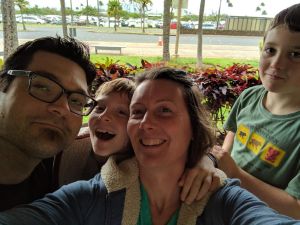
 “Beckman Printing fit our skill set—mine as an animator and illustrator and Aspen’s as a project manager,” Jeremy said. “My mom has been in printing for 30 years. When I walked through Beckman’s doors the first time and smelled the ink, it felt familiar, I felt at home. It appealed to us to run a business that did work for other businesses. It would give us the chance to learn what was going on.”
 Their business has grown, especially in the areas of design and branding. To reflect the broad spectrum of all they do—graphic design, web design and printing—they’ve changed the name to The Color Mill.
 Myles is a fourth generation logger who has loved being in the woods for as far back as he can remember. However, a decision made the year before he was born might have sent his life on a different course.
 “In 1975, my grandpa was a silent partner with Bud Eastman and they decided to liquidate part of their logging business and put some equipment up for auction. Grandpa wanted to invest in a hotel and bar, but my dad [Mike] had just graduated from Humboldt State and wanted to start a logging business with him. Dad convinced him to buy a truck and some equipment from that auction.” Thus, Anderson Logging was born.
 While he was in high school, the guys in the shop taught Myles how to grease and maintain trucks. He did this after school and during summers. When he turned 18, he got to fulfill his dream of working in the woods. “I set a lot of chokers,” he said with a smile. A choker is a small piece of cable used to attach logs to cable systems, allowing trees to be harvested without dragging them along the ground. “I really liked it and would have kept at it, but Dad had me work all the jobs so I could learn what the business entailed.”
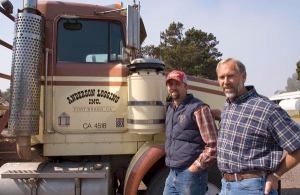 Mike didn’t want Myles to jump right into the business. “It would have been easy for me to head straight into it after high school,” Myles said, “but Dad wanted me to see other places and learn other things before deciding how to spend my life. He knew how much work is involved in this and hoped I would find something easier, but every time I was away all I wanted was to get back to logging. I really enjoy being out in the woods working with the guys. However, I’ve learned there’s a lot more behind the scenes to keep the business going, and that part is not as much fun.”
 Myles enjoyed college where he majored in Ag Engineering. When he was a senior, he and two friends wanted to build a tractor—from the ground up. “Each year, students in the department would build a sled to be used in tractor pulls. All prize money goes to student scholarships. The dean approved the tractor as long as we found sponsors to cover the cost.” Myles and his buddies were often in the machine shop until two or three in the morning. “We got to know all the campus cops. A woman cop sometimes brought us pizza.” Over the past 18 years, the tractor has been driven by 70 different people in 300 pulls.
 During the logging season, Myles routinely works 13-hour days. “The season used to be about seven months, but now it’s often eleven. Since the recession, logging capacity has shrunk. In order to fulfill the needs of the mills, our seasons have gotten longer. The ability to work during the winter has always been there, however regulation requires rocked roads. In the past, landowners haven’t wanted the additional cost that brings to the process.”
 Myles isn’t the only one in his family who works hard. He’s married to Stacey, a dynamic young woman who he knew in high school. They reconnected in 2003 when her son Wyatt (by a previous relationship) was two years old. Their son Lane was born in November 2006.
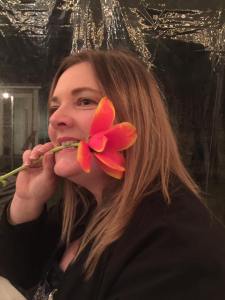 I met Laura Lee 24 years ago when she was 19 years old. I was captivated by her name—one that seems suited to a line of specialty dairy products—perhaps yogurts and cheeses—some type of creamery to reflect her wholesome sweetness. From our very first meeting, I could tell she is a person who leads from the heart.
 Laura is sometimes astonished that she’s worked at Feet First for over 20 years. “It’s given me a chance to build cherished friendships. I’ve met a lot of people in our community and returning visitors. One of my favorite parts is watching the kids grow up. There are kids I’ve known since I helped tie their shoes who now bring their own children into the store.”
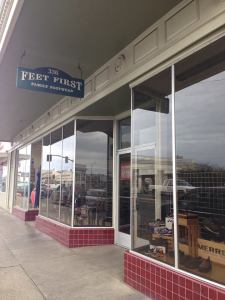 Like most businesses, Feet First has changed over the years. “I remember when athletic shoes were mostly white with a little color pop. Now it’s all about the colors. Right now, leisure shoes are taking on a look inspired by athletic shoes. When the [Georgia Pacific] mill was open, work boot sales were steady. We still sell them, but hiking boots are more popular among men.”
 Recently, she’s started calling friends and arranging gatherings. “You know how it is when you run into people and say ‘We have to get together soon’ and you never do? Well, I’m telling people, ‘Now’s the time.’ When the weather improves, I’m going to invite people to bonfires at the beach after work.”
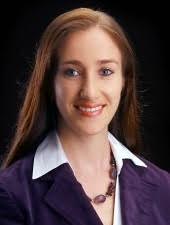 I sat down with Justine Lemos, owner of at
  Justine was awarded a prestigious Fulbright Scholarship in 2003 which allowed her and Grady to live in India for 10 months while she researched ancient forms of Indian dance. “We lived in remote village in the southwestern part of the country. In order to buy anything refrigerated, we had to travel an hour and a half by local bus.”
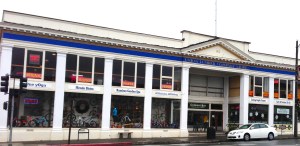 Justine taught online classes—Cultural Anthropology, World Dance, Linguistic Anthropology, Anthropology of Art—through colleges in Southern California. She often worked on her laptop at The Company Store. When the flower shop in the building went of business, she thought, “That should be a yoga studio.”
 Justine has mixed feelings about being back home. “I was gone for fifteen years and never thought I’d return. But I compared everywhere I lived to here and those places always came up short.” She feels limited career-wise, but grateful to be able to raise her son near her parents. “I had a special relationship with my grandparents, and I’m happy Ravel is having the same experience.”

