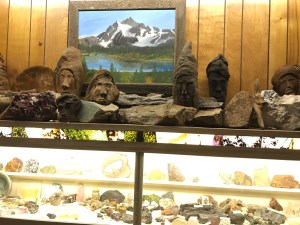
 If you’re walking east along the 200 block of Redwood Avenue, you’ll notice a difference in the Larry Spring Museum. The storefront, once a bizarre display of things like rocks that resemble food—ham, peas, and yes, even cauliflower—has become more polished, evolving to reflect the unique man who created it.
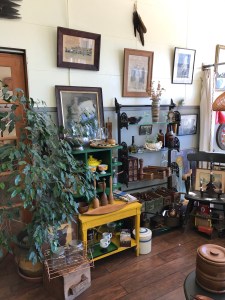
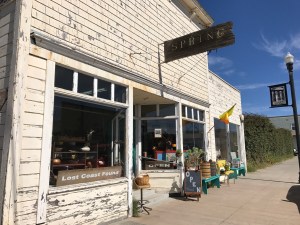 Part of this renaissance is due to the opening of the vintage shop Lost Coast Found, housed in the same location and owned by Megan Caron—a homegrown girl who returned after living in Petaluma for 16 years. “When Larry died [in 2009], he left the building to Heather Brown, a well-known Canadian artist,” said Megan. “In exchange for reasonable rent, I help out with the museum.
“I’ve always loved rocks and all things wood and was in awe of this secret little museum full of rocks, wood, creativity and character. I was excited not only about finding a storefront, but also the prospect of helping the world meet Larry Spring. He was a proponent of solar energy back when the technology barely existed. My husband’s career has been in the solar industry.”
 When Megan speaks of something she’s passionate about—her store, the museum, kids spending too much time on screens, or the lack of housing on the coast—her hazel eyes blaze. She’s articulate and quick to laugh, flashing a sly look whenever she makes fun of something or herself. As I listen, I understand why Fort Bragg once had a hard time holding onto her intense energy.
On her father’s side, Megan hails from the Caron family. “My grandmother grew up in Finland and immigrated to Canada. Winnipeg was too cold for her. Like many Finns at the time, she ended up in Fort Bragg. In the late fifties, she started the first licensed beauty salon on the coast—Kirsty’s Kut and Kurl. She hoped I’d take over the business. I worked as a receptionist for a while, but I’m not good at making people look beautiful.” She laughed.
By 1993, Megan felt stifled by Fort Bragg and was eager to leave. “Imagine feeling stifled by beautiful redwood forests and the ocean.” She laughs. “I moved to Eureka and enrolled in classes at College of the Redwoods, but didn’t always attend. While working as a route driver for Figureidos, I spent most days driving around and admiring the old architecture.”
She returned briefly to Fort Bragg in 1994. “I worked as a front desk person at Vista Manor. I’d been cleaning rooms there during the summers since I was 14 years old. I had some friends who were moving to Chico and needed a roommate, so I moved and enrolled in Butte Community College. I took classes in interior design because it meant I could tour other people’s homes. I’ve always been interested in how people create their space. I spent a good portion of my childhood rearranging my room. My walls were giant collages of pictures and posters.”
In Chico, she worked as a caregiver. “One of my favorite clients was an elderly Texas Belle. Her bedroom was like a Hollywood set. Everything was red and gold—red velvet walls, gold furniture, gold bedspread, everything. She wanted to get rid of some ‘evidence’ before she died—massive amounts of lingerie she’d acquired over the years. She gave me garbage bags full to take to a thrift store.”
Megan was a kid, intimidated by the contents of the bags and the thought of delivering them. “I drove around for weeks with elderly contraband in the trunk of my car, hoping no one would find it.”
When she finally mustered the courage to enter a store with the donations, she spotted a jacket. “I thought it looked cool and bought it. That started my interest in vintage and collecting. From then on, I stopped going to new clothing stores. I don’t want to support industries that make inferior products overseas. Except for technology and a few other things, I rarely buy anything new.”
By 1997, Megan decided college wasn’t for her, moved back to the coast and the hospitality industry. Through friends, she met Ben Tuke who would eventually become her husband. “He grew up in Mendocino. Like me, he couldn’t wait to ‘get out of Dodge.’”
In 2000, tired of small town living and looking for adventure, 24-year old Megan and Ben tossed everything they owned into the back of Ben’s pickup and headed south. “As we approached Petaluma, Ben asked if I’d ever been there. I only knew it had an outlet mall. My requirement for where we lived was that the downtown have a bakery, record store, and bookstore. Petaluma had it all, including great architecture. We signed a lease on an apartment that day.”
Ben went to work for Sun Power Geothermal, a startup solar company. “We knew solar was the wave of the future. He started as an installer and worked his way up to quality manager.”
Megan got a job in the magazine department of Copperfield’s Books. “Growing up, my grandmother Julia Tidwell and my parents supplied me with books. My dad is a book collector and indulged me at bookstores. When I saw the help wanted ad for Copperfield’s, I ran down there with my non-impressive resume and got the job.” She later found out she was hired because they were impressed by her answer to the question of who are her favorite authors—Richard Brautigan and Tom Robbins.
 Over the next 16 years, Megan and Ben settled into life in Petaluma. They bought a house and had two sons—Addison (9) and Arias (5). “As the boys grew older, I became uneasy about raising them in a suburban environment where there’s a disconnect with nature. I drove 15 minutes just to go to the park. I regularly took them to Fort Bragg where they could play in the forest and we could be at the beach within five minutes. They seemed happiest in the wild.
“In Petaluma, everything is neat and tidy. The downtown slowly became gentrified, pushing out the interesting eccentric folk and funky taquerias. It was harder for me to engage with people. How many nail salons and upscale restaurants can you have in one place? I yearned for the funky places where there are things that need to get done. In Fort Bragg, we have blemishes and unconventional people. I wanted to raise our boys here amongst the salt.”
Megan’s years of working in a bookstore gave her a good understanding of the many facets of retail—ordering merchandise, arranging floor space and in-store displays. “All six window displays had to be changed regularly. I was always thinking of themes and digging through basements, dumpsters and estate sales for props.” Copperfield’s customers often asked to buy items in the windows.
“For two years, Ben and I talked about moving back to Fort Bragg. I thought the town needed a vintage shop that sold useful as well as decorative items. After years of my picking and hunting, our garage was full and retail space became a must.”
 During that time, Megan looked for a storefront in Fort Bragg. In November 2016, she was walking by the Larry Spring Museum and saw a slip of paper with Heather Brown’s phone number written on it. “I called and within twenty minutes, I had the keys.”
Ben went to work for Nextracker, a solar tracking manufacturer, which enables him to work remotely. They sold their house in the spring of this year and bought a house in Fort Bragg. In June, Megan opened her store.
“I’ve met countless young people, some with young families and existing businesses who want to live here and invest in our community, but they can’t find a place to live. We need people to move here. There’s so much to be done and I feel we’re running out of people to do it. Without a push for housing projects, we will never have a sustainable economy.”
I’m grateful to Megan for returning with her family. She will use the energy that once drove her away to improve our community while preserving its charm.
***
Here’s a little preview of the Larry Spring Museum. Give it a visit. You’ll be glad you did.


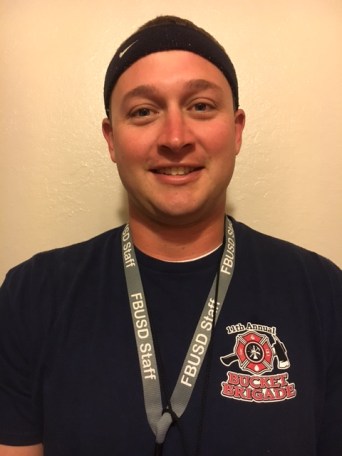 I’ve known Mark since he was a child, but don’t know him well. He had a good reputation, and I was always warmed by his delightful smile. Five years ago, when I heard he was hired to teach PE at
  Mark went on to
  In 2011, Mark applied for and got the PE position. During the school year, Mark’s workday begins at six-thirty and often doesn’t end until eight at night. “I was the assistant baseball coach for four years. After that, I began assisting with football. Three years ago, I became the Athletic Director.”
 This past summer, Mark married long-time girlfriend Jessica Alguinaldo. “We dated in high school. When I went away to college, she was starting her junior year, and it was hard to stay together. We broke up in 2005, but started dating again in 2010 when she graduated from Oregon State and moved back to Fort Bragg.” Jessica works as an audiologist for Audiology Associates. She runs their three offices—Mendocino, Santa Rosa and Mill Valley.

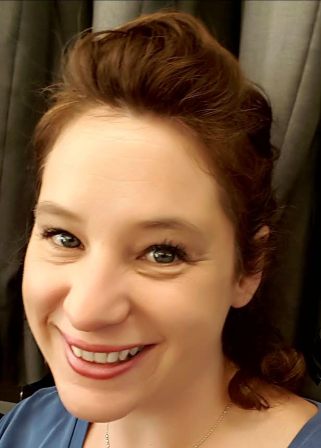

 A year later, she returned to her previous job in Sacramento. “In January 2003, I moved back to Fort Bragg. For a boy,” she added with a laugh. This boy was Vince Caccamo who she’d known from kindergarten, but lost touch with after high school. He’d graduated from UC Berkeley and returned to work in his dad’s construction business. “I was home for a visit in 2002 and ran into him at the Caspar Inn. I remember I was wearing jeans sprinkled with pink glitter.” She smiled at the memory.
 After she moved to Fort Bragg, she worked with her dad and found she really liked it. “My favorite time of year is prom when guys get fitted for tuxedos. There are so few chances for them to get dressed up, which makes this time of year so special.” While dating Vince, she took classes at the local College of the Redwoods campus. In 2005, she enrolled in Humboldt State. “I went to school during the week and came home on weekends to work. I finished my BA in Cultural Anthropology in three semesters.”
 In February 2015, she decided to take Reynolds’ Men’s Wear back to its roots and spin off the women’s section into its own store across the street—Wren’s (a play on Women’s Reynolds). Then came the shock of her life—a diagnosis of non-Hodgkin’s lymphoma. The new store opened in April. A week later, she discovered she was pregnant.


 At the age of 27, Gus is like a man from another era. He is extraordinarily polite, respectful, quietly self-confident, and a hard worker. In high school, he entertained the idea of going to college and majoring in marine biology. By his senior year, he realized this wasn’t his passion, and he didn’t want to waste money on an education he might never use. At the age of 18, he went to work for a building contractor. After two months, he was recruited by Williams Electric in Mendocino where he remained for nine years. “I learned to wire anything from a small shed to a smart home that can be controlled with a cell phone.” Through this experience, he discovered his true passion—electricity.
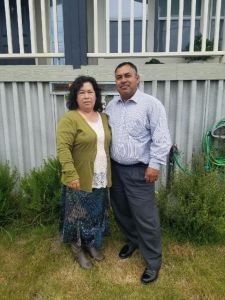 Gus’s work ethic is inherited from his parents. When he was a year old, they moved to Fort Bragg from Mexico to work in the fish processing industry. “This was in 1990 when fishing was booming,” he said. “My parents made minimum wage, but sometimes worked 40 to 50 hours of overtime a week. For a number of years, we lived in an apartment with another family while my parents saved enough money to buy a house.”
 Gus’s wife Sierra works for Harvest Market. They’ve been married five years. “I met her in 2011 when our local Jehovah’s Witness Kingdom Hall needed a major renovation. Three hundred volunteers from throughout the state showed up and over the course of two weekends, we gutted the place and rebuilt it.” Sierra, who lived in Chico at the time, was one of those volunteers.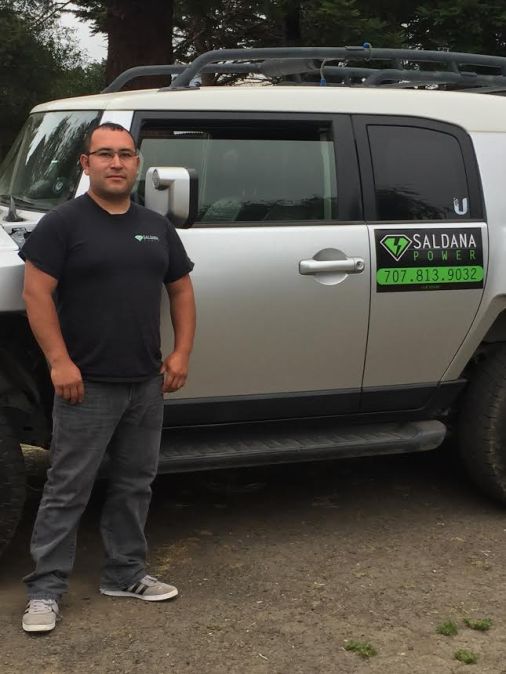
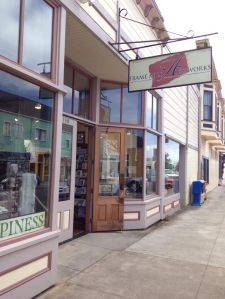
 When Sarena unlocked the doors to the Frame Mill Artworks on the morning of March 22, 2017, she excited and nervous. The previous owner Robyn Koski had helped make the transition as smooth as possible, but there was so much Sarena didn’t know, like the flow of the business or the nuances of her employees. Her nerves were further rattled when a supply truck pulled up to make a big delivery.
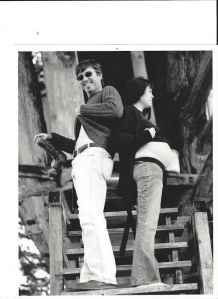 w much he loved the area. I liked him, but wasn’t interested in a serious relationship. I was considering an MFA program at Mills College. Instead, I moved back to Fort Bragg in 2003 to live with my parents. I needed time to think about what I wanted to do with my life. Within six months, Sean also moved here and was hired by Western ACI as an arborist.”
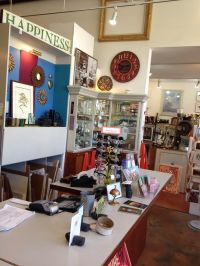 The Frame Mill had been on the market for a few years. Sarena’s background in framing allowed her to imagine buying it. She spoke to friends who own businesses and they assured her becoming a business owner was one of the best things they’d ever done. She looks back on this now and chuckles. “It’s like talking to parents when you’re considering having a child. They tell you how wonderful it is, but leave out the part about sleepless nights.”
 Sarena is pleased to discover her business is part of a little neighborhood hub. “People bring in family photos and art projects. It’s fun to help design a way to display them. I’ve been warmly welcomed by the downtown business community.” She plans to evolve the Frame Mill Artworks into a maker’s space. “So few places make what they sell. I want to eventually create affordable art that people can buy to furnish their walls.” In the meantime, she’s learning how to merchandise the store with items that appeal to locals and tourists. “It’s hard because people have a variety of tastes, some very different from mine.”
 Returning to the town where she once felt like an outsider has been a positive experience for Sarena. “It used to be ‘What family are you from?’ Now many people live here who don’t have roots going back generations. New people are moving in and young ones are moving back, some bringing families with them. The more our town can do to be a place people are attracted to—like the opening of the coastline via the coastal trails—the more it will encourage young people to move here.”
 Aspen Logan did not grow up in Fort Bragg. Neither did her husband Jeremy. But she has roots here that extend back to the 1920s when her maternal great grandparents built a house on Perkins Way. In addition to having traveled the world, the couple has lived in Los Angeles, Scotland, and Canada. Self-proclaimed risk takers, with backgrounds in the video gaming industry, they never imagined one day they would buy Beckman Printing and Black Bear Press in Fort Bragg.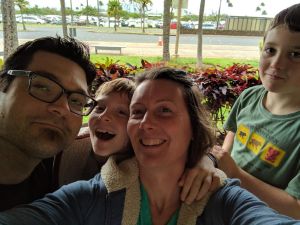
 “Beckman Printing fit our skill set—mine as an animator and illustrator and Aspen’s as a project manager,” Jeremy said. “My mom has been in printing for 30 years. When I walked through Beckman’s doors the first time and smelled the ink, it felt familiar, I felt at home. It appealed to us to run a business that did work for other businesses. It would give us the chance to learn what was going on.”
 Their business has grown, especially in the areas of design and branding. To reflect the broad spectrum of all they do—graphic design, web design and printing—they’ve changed the name to The Color Mill.
 “Why of course I know
 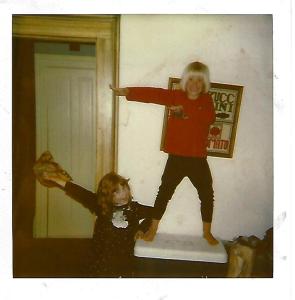 Regular play dates ensued, alternating between the Turner house and ours. It didn’t take Packie long to abandoned them for the rough and tumble company of boys.
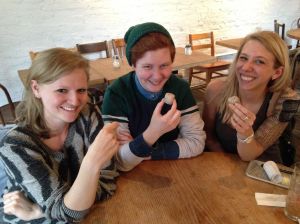 In the fall of 2008, Bryna left Fort Bragg to attend Mount Holyoke in western Massachusetts where she earned a BA in Theater. She went on to obtain an MFA from Rutgers in New Jersey. At the tender age of (almost) 27, she’s written six plays. She lives in Brooklyn where Laine and I met her and their long-time friend Britt Calder for lunch. Afterward, we walked around the area, Bryna and Britt touring us through a neighborhood where mature trees break up the concrete landscape. Raised among the Northern California redwoods, they have a special appreciation for trees.
 We parted with hugs, disappointed we wouldn’t see Bryna at the play that evening. In the first few weeks of the run, she’d hide in the back of the theater, near the light board, and spy on the audience. It was nerve-wracking to anticipate their reaction. Would they laugh at the right moments? Were they paying attention or were some reading their programs? Overall, the response was positive. Still, she found it stressful to watch her work being performed. She’d wait for the closing show to see it again.
 At the end of the performance, Laine and I stayed in our seats for a few minutes, overcome by the brilliance we had witnessed. “My friend wrote this,” Laine said, her eyes filling with tears. “I’m so in awe of her.”
 Myles is a fourth generation logger who has loved being in the woods for as far back as he can remember. However, a decision made the year before he was born might have sent his life on a different course.
 “In 1975, my grandpa was a silent partner with Bud Eastman and they decided to liquidate part of their logging business and put some equipment up for auction. Grandpa wanted to invest in a hotel and bar, but my dad [Mike] had just graduated from Humboldt State and wanted to start a logging business with him. Dad convinced him to buy a truck and some equipment from that auction.” Thus, Anderson Logging was born.
 While he was in high school, the guys in the shop taught Myles how to grease and maintain trucks. He did this after school and during summers. When he turned 18, he got to fulfill his dream of working in the woods. “I set a lot of chokers,” he said with a smile. A choker is a small piece of cable used to attach logs to cable systems, allowing trees to be harvested without dragging them along the ground. “I really liked it and would have kept at it, but Dad had me work all the jobs so I could learn what the business entailed.”
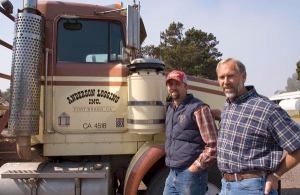 Mike didn’t want Myles to jump right into the business. “It would have been easy for me to head straight into it after high school,” Myles said, “but Dad wanted me to see other places and learn other things before deciding how to spend my life. He knew how much work is involved in this and hoped I would find something easier, but every time I was away all I wanted was to get back to logging. I really enjoy being out in the woods working with the guys. However, I’ve learned there’s a lot more behind the scenes to keep the business going, and that part is not as much fun.”
 Myles enjoyed college where he majored in Ag Engineering. When he was a senior, he and two friends wanted to build a tractor—from the ground up. “Each year, students in the department would build a sled to be used in tractor pulls. All prize money goes to student scholarships. The dean approved the tractor as long as we found sponsors to cover the cost.” Myles and his buddies were often in the machine shop until two or three in the morning. “We got to know all the campus cops. A woman cop sometimes brought us pizza.” Over the past 18 years, the tractor has been driven by 70 different people in 300 pulls.
 During the logging season, Myles routinely works 13-hour days. “The season used to be about seven months, but now it’s often eleven. Since the recession, logging capacity has shrunk. In order to fulfill the needs of the mills, our seasons have gotten longer. The ability to work during the winter has always been there, however regulation requires rocked roads. In the past, landowners haven’t wanted the additional cost that brings to the process.”
 Myles isn’t the only one in his family who works hard. He’s married to Stacey, a dynamic young woman who he knew in high school. They reconnected in 2003 when her son Wyatt (by a previous relationship) was two years old. Their son Lane was born in November 2006.
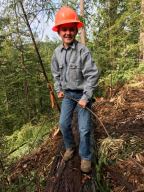
 When Josh’s girlfriend Lia Wilson told me what he does for a living, I simply had to meet him.
 Josh worked three part-time internships. He monitored the news and developed press kits for Environmental Media Services, a non-profit environmental public relations firm. He worked for filmmaker John de Graaf in coordinating the first Equinox Environmental Film Festival (later named for Hazel Wolf), soliciting in-kind donations and arranging other details. At
  In August 2011, he moved to Berkeley and became a private investigator with the Mintz Group, a multinational firm. A friend referred him, but he got the job because of his law office and writing experience. “We conduct a variety of investigations, none having to do with cheating spouses.” He laughs. “We focus mainly on three areas: due diligence, including extensive background checks on candidates for high level corporate jobs, and background checks prior to business deals; disputes, which means uncovering whatever it is lawyers need to know for a given lawsuit; and anticorruption. Under the Foreign Corrupt Practices Act, it is illegal for American companies to pay bribes to win job bids in foreign countries. Sometimes companies will contact us to investigate the practices of their employees abroad. We have offices in Asia, Latin America and Africa, as well as the U.S., Canada and London.”
 It Happened at Purity