Going, Going, Gone

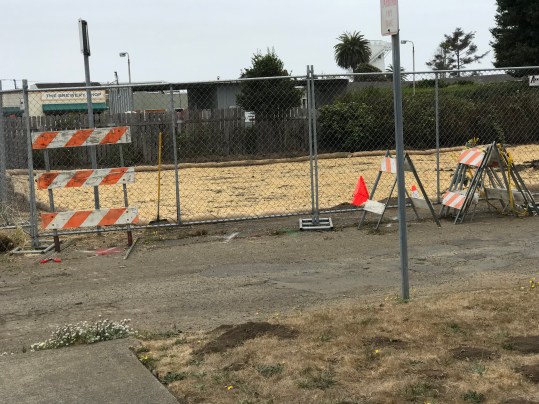
hoarding1On the morning of January 20th, I was alerted to a fire at what I called the Hoarder House. I’d never witnessed a fire in real time. It was equally fascinating and disturbing (see January 31 blog post). When the burning finally stopped, the property was surrounded by barricades and crime scene tape. Eventually, a chain link fence was erected to keep passersby safely away from the crumbling mass of charred rubbish.

rubbleMonths went by. Winds and rain caused the waterfall of junk to precariously shift. People started asking me why the City hadn’t torn the place down. I’m flattered they have the impression that I’m privy to the goings on around town. I actually know next to nothing, and often stifle an urge to make things up.

Due to my years-long obsession with this house and people counting on me to know stuff, I recently took precious time and energy away from watching “Judge Judy” and launched an investigation. City Manager Tabitha Miller eased the burden of this task by sending a press release dated July 9, 2018.

Apparently, the City had a heck of a time getting someone to take responsibility for clearing the property. None of the parties involved—the owner, mortgage holder or insurance company—would cooperate. In April, Nationstar (the mortgage holder) received an insurance payout of $175,000. In May, they foreclosed on the property, which made them the official owner.

House2bSo what you think Nationstar did?

  1. Acted like grownups, admitted their liability, and offered to immediately clean up their property that stood like a gaping wound on the edge of downtown just off Main Street.
  2. Acted like juvenile delinquents, stuffed the money in their pockets, and ran.

Sadly, they chose number two. The City diligently tried to contact Nationstar, but they would not return phone calls or respond to letters.

On June 8—nearly six months after the fire—the Community Development Director sent a certified letter to Nationstar informing them that they had until July 10 to start cleaning up the property. For each day of delay, they would be assessed a $1,000 fine.

The threat of $1,000 a day seemed to catch the attention of the suits at Nationstar. By July 3rd, the contractor hired for cleanup applied to the City for a permit.

House3aA few weeks ago, black tarps were draped over the chain link fence and the demolition began. Within a couple days, the dumpsters supplied by Waste Management were filled to capacity and work paused until they could be hauled inland and emptied.

As the process unfolded, I finagled my way around the tarps to snap photos. For decades, this house stood as a shameful monument to hoarding. Within days, it was no more.

I find it hard to say goodbye.

House4b

House4or5a

House5b


House4or5b

House6b


House7

Heather Sears

HeatherHead2Heather grew up in Morro Bay where she learned commercial fishing from her dad. “I moved here in 1999, and immediately began a flaming love affair with Mendocino County.” By 2001, she had saved four thousand dollars and bought a small boat, the Julie. “My idea was to have a floating fish market—to sell fish right off the boat.” She admits that running her own boat was a different experience than crewing with her dad.

“I made a lot of mistakes. The first time I took the boat out, I went on the wrong side of the red can [at the entrance to the harbor]. Kelp got tangled in the wheel and killed the engine. I was able to reverse the boat a few times and got untangled. Another time, on my way to Eureka, I ran into bad weather. I thought the boat was going to roll and I was going to die.”

HeatherDogsHer dad tried to help her, but she was intent on doing things her way. “At one point, he threw his hands up and said, ‘You’re going to kill yourself,’ and went back to Morro Bay. Bless his heart, he must have been so worried. This strained our relationship, but a few years later, we fished together in Alaska.”

As she worked towards saving money for a larger boat, she took classes at College of the Redwoods. “In 2001 a friend said, ‘You can go to college anytime, you’ll never see fishing like this again.’ I literally walked out of my English class, went down to the boat, and started fishing.”

The local commercial salmon season closed in 2006, and she fished in Alaska. “When the season reopened in 2013, I came back to Fort Bragg and vowed to do whatever it takes to stay.” After living on her boat for years, she bought a house that same year, anchoring herself to the area.

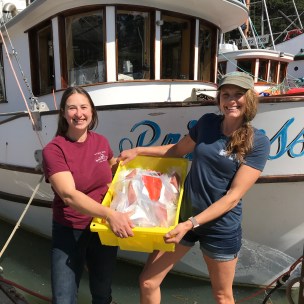
HeatherCrew2Along the way, she sold the Julie and bought and sold two other boats. In 2009, she purchased a larger vessel with a blast freezer named Princess. Given that she has an all-woman crew, it’s the perfect name. “Because we’re able to freeze the fish on board, we can stay out for 18 days and catch up to 11,000 pounds of salmon. When we return to port, the fish is unloaded into a freezer truck and taken to storage in the Seattle area. After the glut of fresh caught fish is over, we can sell our sashimi grade fish at a higher price. The process we use makes it better than fresh.”

Heather was so excited about her ability to provide the market with this type of seafood that she caught 44,000 pounds of fish her first year. “I started direct marketing and thought people would be knocking down my door, but I didn’t have the connections the other boats with freezers had. I was scared I’d lose my house. I started selling at the Fort Bragg and Ukiah farmers’ markets and off the boat. Most of it went to San Francisco. It took me a year and half to sell it all.”

For four years, the Princess was the only boat in Noyo Harbor with a flash freezer. Recently, another fisherman purchased a boat with this capability, but he only freezes tuna. The Princess is one of only five boats in the lower 48 that freezes salmon at sea.

The life of a commercial fisherwoman is often rugged and demanding. “When I go to Alaska for king salmon, it takes 15 days and $3-5,000 to get there. Once there, I only have four to six days to make 80 percent of my income for the year. I’ve always managed to find fish, but because of the stress and long hours there’s no joy in it.”

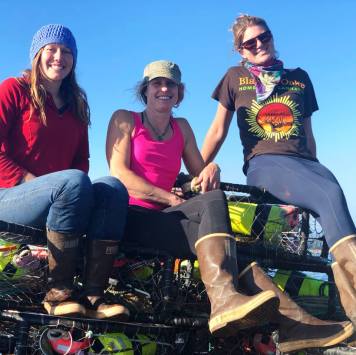
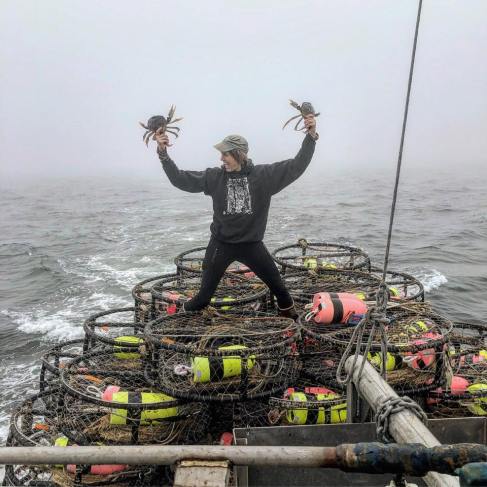
HeatherCrewAs a woman in this field, Heather is not unique, but rare. “There are a lot more women in Alaska.” She admires her crew which includes Maia and Anna—graduates of Humboldt State. “The salmon season lasts about six months. It requires a great deal of endurance. We get only five to six hours of sleep a night and are away from home so much. I got a crab permit last winter. Catching crab is easier and is a lot more fun.” Maia and Anna also sell the fish at the farmers’ markets.

She’s grateful for the comradery she’s developed among the other fishermen and women who travel up and down the coast. “I can look out and see a boat a mile away and know we have each other’s backs if there’s a problem. Even if we don’t like each other on the dock, we put those differences aside on the water.”

Heather is passionate about educating the public to support sustainable fishing. “All fisheries in the United States are sustainable, which means not harvesting past the point of the stock being able to replenish itself. Since the seventies, the 4000-boat California salmon fleet has been reduced to 100. Our port went from 20 draggers to six—and these are managed very carefully. Every boat has a tracking system that is monitored by a team in Washington DC. All fish stocks are rebounding, but many of the seasons that were closed have not reopened.”

Between seasons, Heather does maintenance on the boat. “A woman once told me we have to repay the boat for the service it gives us.” In 2016,  she received a grant from the Mendocino County Air Quality Board and spent that winter installing a clean-running motor.

Heather has recently expanded her business by partnering with friend a former crew woman Wendy Holloway to reopen Nemo’s Fish Market as Princess Seafood Market and Deli in Noyo Harbor. “Wendy was my first crew member back in 2004. Our goal is to make our amazing, west coast wild seafood more accessible to our local community in the most delicious way possible. Sustainably caught sashimi grade fish and shellfish will be our specialty. We also offer healthy cooked food, local beer, wine and a selection of seafood-centric prepared food for take out.”

Despite the challenges of a life at sea, Heather can’t imagine doing anything else. “I love being my own boss and being out on the ocean. The Lost Coast around Shelter Cove is stunningly beautiful. The upsides of this business are so great—like seeing a rainbow at the same time a gray whale leaps out of the water. I love it so much.”

HeatherFinal

***

Heather offers wholesale and retail sashimi grade king salmon, coho salmon, albacore tuna, lingcod, rockfish and black cod. Live Dungeness crab is available in the winter. You can find her crew at the Ukiah Natural Food Coop, Fort Bragg, Ukiah, Santa Rosa & Sebastopol farmers’ markets and on the boat at Dock A in Noyo Harbor. The food at Princess Seafood Market and Deli is fresh and delicious. If you’re busy, you can get it to go. Better yet, take some time to enjoy the patio and soak in the unique ambience of Noyo Harbor.

HeatherPatio

Karina Becerra

Karinaheadshot

Karina loved growing up in Fort Bragg and, unlike many of her contemporaries, never longed to escape. “People here are good to each other. The setting is amazing.”

The second oldest of 16 grandchildren of her mother’s side, Karina was also the second in her family to go to college. “I chose Saint Mary’s in Moraga because they offered a good financial aid package, and my second cousin Mimi was going there.”

Karina has a passion for language and chose to major in Spanish. She took a second major in International Area Studies where she focused on Latin America. She also minored in Italian.

“My first language was Spanish, but my parents stressed literacy in both Spanish and English. I love studying language.” She spent the second semester of her sophomore year in Cuernavaca, Mexico. “I took classes in Spanish and the history of Mexico.” Growing up, she spent a lot of time in Mexico with her family. Her experience as a college student allowed her to delve more deeply into the culture.

The second semester of her junior year, she was able to study in Rome. “I lived in an apartment along the Vatican Wall,” she said with a smile.

karinafamilyAfter college, she moved home to Fort Bragg in 2012 to regroup and figure out her next move. She was 22. “I picked up some shifts at Los Gallitos, worked for Carol Millsap for a year, and took on overnight shifts for Andersson Caregiving, caring for elderly and terminally ill people. This was one of the most significant jobs I ever had, getting to care for people in that way. Each experience taught me something and made me a better person. It reminded me we’re all going to grow old and die. It caused me to be less self-centered.”

Karina also became and remains a volunteer after-hours crisis counselor for Project Sanctuary. “I’ve been blessed with an amazing family and this has given me a different perspective on the human experience. It allows me to step into the shoes of another whose life is in chaos because of sexual assault or being controlled by another person.” Project Sanctuary eventually hired her as a part time bilingual advocate.

In February 2013, she was returning from spending the day in Santa Rosa. “It was ten o’clock at night and I hit a patch of black ice. My car flew off the road, rolled 300 feet down a hill and landed on the roof. I had a gash in my leg and a head wound. I was able to get out and crawl up to the road. Eventually a man in a pickup, returning to Fort Bragg with his young son, stopped and helped me.”

She’s grateful to have survived the ordeal. “The accident made me realize how our lives can change or end in an instant. I used to think I had to stick to a timeline in terms of academic and life goals. I had hoped to be home for a short while, return to the Bay Area, and try to get into grad school. I realized it’s okay for plans to be out of order as long as I’m moving forward and doing things that help me grow.”

When her friend Katrina Caukwell suggested they take a trip to Asia that summer, Karina to readily agreed. Since her time in Italy, she hadn’t done any traveling. “It was a perfect time in my life to spend nearly two months in a faraway place completely out of my comfort zone. It was another amazing look at how people in other countries live.”

karinamexicoShe returned in the fall of 2013 to take a full time position at Project Sanctuary as a client advocate and counselor. When the organization received a sexual assault prevention grant, Karina was hired to conduct community outreach with other agencies—Safe Passage, the Children’s Fund, Gang Awareness and Prevention. “We disseminated information about healthy relationships, especially among teens. I provided in-service to groups like the Catholic church’s youth groups and held lunchtime meetings at the middle school and high school. At Fort Bragg High School, I organized the Youth Leadership Team, a group focused on teen education and awareness, which still exists today.”

Katrina also helped develop the Latino Coalition, an organization that provides a community forum for Spanish speakers. “Our goal is to empower and educate the Latino community and share our beautiful culture with the rest of our community. The Jewish community has guided us in organizing. We eventually want to become a service club. As of now our fundraising efforts support five to seven college scholarships for Hispanics each year.”

In 2016, Katrina was encouraged to apply to establish and teach Spanish and World Culture classes that would be offered at the middle school that fall. She was excited to get the job, but overwhelmed with the idea of creating a curriculum. Her mentor and friend Gail Porcelan came to her rescue. “Gail was my middle school history teacher and my parents’ ESL teacher. She basically handed me everything I needed from materials she’d used over the past 20 years.”

karinasillyHer first year entailed teaching a World Culture and Language class to sixth graders and a couple of Spanish classes to seventh graders. “This year, I had to add a second level Spanish class for the eighth graders. It’s the equivalent of high school Spanish I.” She teaches separate Spanish classes for native speakers. If all that isn’t enough, she also teaches a seventh grade AVID (Advancement Via Individual Determination) class on critical thinking and study skills.

“My first year, I felt like a blind person, feeling my way around. Thankfully everyone was very supportive. This second year I’m more relaxed and the experience is more rewarding. I love that I get to be silly with the kids—they keep me young. I also love that I can be creative  and make engaging lessons. ”

Karina continues her involvement with the Latino Coalition and is also a Partnership Scholars mentor. “I’ve been matched with three girls since they were in seventh grade. They’re sophomores in high school now. I offer them enrichment experiences by taking them on trips. Last year, we went to New York City.”

She attributes her drive and ambition to her upbringing. “My parents instilled in me the sense of doing my best. My dad reminds us that anyone can be average and we should never be content with being mediocre. I was raised to be an optimist who finds beauty and value in every experience.”

Karina has recently been given the opportunity to expand her skill set and gain further education. Unfortunately for us, this means leaving the area. “This summer, I’ll wrap up my Master’s in Spanish at Sonoma State. My alma mater Saint Mary’s granted me a scholarship to get my teaching credential and I’ll start that in the fall. I’ll also teach Spanish at Saint Mary’s College High School in Berkeley.”

She hopes to one day return to Fort Bragg. “That’s the beauty of home—it will always be here and there will always be something for me to help out with. Ideally, I see myself teaching but we shall see where the road leads.”

karinafinal

Lucy – A Year in Review

I originally posted this on our one-year anniversary with Lucy. That was before we knew of her extensive orthopedic problems, before her two complicated knee surgeries, before she’d learned to sail over fences to discover places a lot more interesting than our yard, before we spent many, many dollars to repair her body and erect taller fencing.

Today, Lucy turns five. We celebrate a life we didn’t anticipate sharing, a life we’ve become grateful to share.

1185822_10151983487546844_1659436086_n

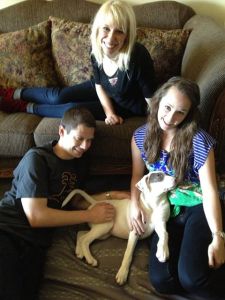
When our adult children came to town Labor Day weekend 2013—two weeks after our fifteen-year-old dog Wilson died—they despaired at our empty nest and gifted us with what they felt was the perfect “filling”—a puppy. My husband Gary was elated. I wanted to curl up into a ball and be taken to an asylum.

When Lucy was brought into the house, all I could think of—as I pasted a smile on my face and screamed with what I hoped sounded like excitement—was how much work she was going to create.

destructionOver the course of thirty-five years, we’ve raised four puppies. Gary might have forgotten, but I knew the drill. Even with obedience training and supervision, Lucy would learn about life mainly through the destruction of property—sofa pillows, socks, underwear, plants, holes dug so deeply in the yard that a visitor asked if we’d had trees removed. Given Gary’s disabilities, the majority of transforming her into a “good” dog would fall on me.

My obsession with wanting to skip the puppy stage of her development caused me two weeks of insomnia and vertigo.

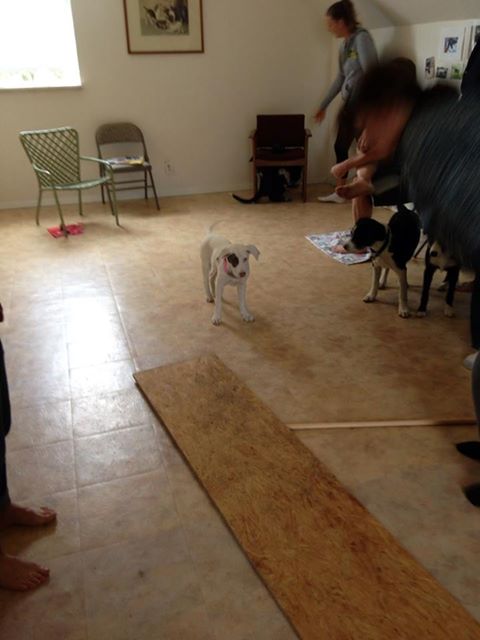
559798_10152017172491844_2118415971_nThank God I found Puppy Kindergarten where every Saturday morning for ten weeks, Lucy had the chance to play with other puppies and sweet Elaine Miksak gave me direction on how to calm the hell down and enjoy my baby girl. For the first month, both Lucy and I returned home after class to take naps. After an hour, I’d awake to find my open mouth drooling on the pillow.

By January, Lucy had grown too large for the class (forty-five pounds), and we found Julie Apostolu, who convinced me Lucy was ready for AKC Canine Good Citizenship (CGC) training. I had no idea what that was, but hoped the eight-week course would help me continue to learn patience and understanding.

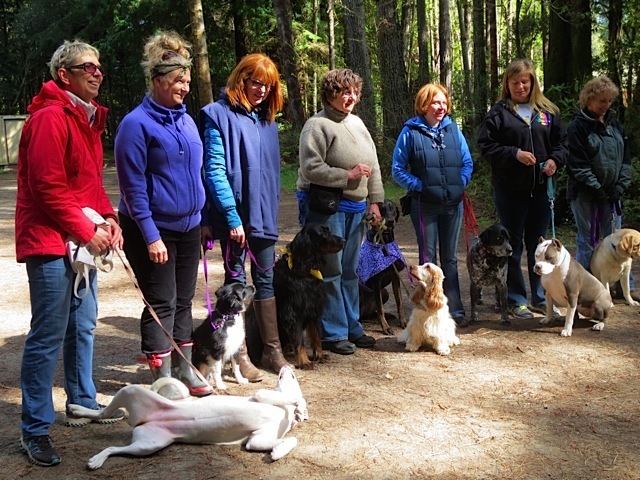
The CGC class was held in a clearing in the woods next to the Mendocino Coast Humane Society. The first day, Lucy kept tugging on the leash and gagging. She thought she was at a new Puppy Kindergarten and wanted to be free to play with other dogs. When that didn’t happen, she discovered the pine needles covering the ground hid buried cat poop that could be rooted out while pretending she was deaf to the command, “Leave it!” (She waited to come home to vomit on the carpet.)

The first few weeks of class were brutal. Lucy would not listen, jerked at her leash, and when she got tired, rolled onto her back and refused to move. Julie offered encouragement and direction, but I felt inept and humiliated.

dirt

After a particularly rigorous digging session in the yard.

One afternoon, as Lucy headed off for the fiftieth time in one direction while I tried to coax her into another, Julie’s assistant, DeeDee, came to my rescue and took the leash. Her expert handling and swift corrections got Lucy’s attention. I watched in awe as my dog looked at her and obeyed commands. Tears filling my eyes, I wanted to get into my car and drive away.

Eight weeks after we started CGC training—Lucy was nine months old—came the test. The dogs had to do things like heel (yeah, right), sit and stay (maybe), down (Lucy liked to lie down because it put her closer to the cat poop), and remain calm when left with a stranger (this would be easy—she loves everyone). All of this had to happen without benefit of treat reinforcement.

We were doomed.

My anxiety grew as I watched others go through the course while Lucy jerked on her leash and gagged. While we were on deck, she calmed down to watch the dog being tested. I looked at her sitting with such dignity and my heart surged with love. I crouched and hugged her, petting her neck and chest, and whispered, “I don’t care if we pass. I love you and am so proud of you. Let’s have fun with this.”

Lucy rose to the occasion, messing up on only a couple of things. At the end of the course, I had to hide behind a crop of redwoods while she stayed with a stranger for a couple of minutes. When I was called back, Julie held out her hand—“Congratulations, she passed.”

Shortly after the photo was snapped, she tried to eat her ribbons.

Shortly after the photo was snapped, she tried to eat her ribbons.

“What? Really?” I grabbed Julie in a hug and howled with laughter.

I looked at Lucy who sat wearing her calm snowy fur like a halo. “Good girl! Good, good girl!”

I wish I could say from that moment on, Lucy sprang from puppyhood to maturity, but no. She’s a work in progress, a spirit we enjoy despite or maybe because of her quirks (pretending she’s deaf to commands, the ability to destroy any toy in less than twenty-four hours, and a need to prune fuchsia bushes).

Since CGC, we’ve taken at least 30 weeks of other classes (Rally Obedience, Jumps and Tunnels, Nose Work) where we learn, have fun, and meet wonderful people and dogs.

I’m happy that our empty nest has been filled with fresh, rambunctious life and grateful to our children who filled a need we didn’t know we had.

Rally O class picture. After hundreds of dollars spent on enrichment classes, this is how Lucy interpreted the command "Sit!"

Rally O class picture. After hundreds of dollars spent on enrichment classes, this is how Lucy interprets the command “Sit!”

Jason Fruth

JasonFheadshotSometimes the inspiration to move back to the place you love arrives in the most random of ways. An email sent by your wife, added to the hundreds you received that day, nearly lost until a couple weeks later when you find it and ask why she sent you a link to a house for sale in Fort Bragg. She knows how your long work days often spill into late nights and take a toll on your personal life. Since leaving the Mendocino Coast over 20 years ago, you’ve always said you’d move back. Maybe now is the time.

Thus began the journey of Jason Fruth and his wife Cate who uprooted their lives in the Silicon Valley to create a new, fulfilling one here.

***

JasonF&momJason was born in Houston, Texas and moved to Elk with his mom Laurie Graham when he was seven years old. “My mom’s whole life was her children, but she was always willing to open her home to a friend in need. She loved nothing more than spending time with family and friends.”

He loved growing up in the tiny coastal enclave. “Through the fifth grade, I went to the Elk School which only had about 20 kids. My friends and I had the freedom to hike the bluffs, roam the beach and camp by the river. I couldn’t have asked for a better childhood. It shaped who I am. I didn’t realize how special it was until I went to college and met kids who went to school with 2,000 or more students.”

He graduated from the Mendocino Community High School in 1995. “I grew up in a working class family. I wasn’t college oriented, but my paternal grandparents in Texas insisted I go. I applied to San Francisco State, San Jose State and Cal Poly Pomona.” He was accepted by all, did some research, found Cal Poly Pomona was the most highly rated, and decided to go there. His grandparents and father paid for tuition and housing.

When asked to declare a major, he asked, “What’s a major?” He laughed at the memory. “I had no idea. I was fascinated by airplanes and watched the NASA channel a lot so decided on Aerospace Engineering.

“I’d never heard of Pomona. I’d been to Disneyland once when I was a kid. I packed my two huge stereo speakers into my old Mazda 626LX and stuffed the rest of my meager belongings around them. A friend from high school made the trip with me. When I dropped her off at the airport a week later, I broke down crying.”

JasonFcollegeThose were the days before cell phones, when a homesick kid had to pay for long distance calls if he wanted to talk to his mom. Jason didn’t have this luxury. He got an on-campus job as the audio visual tech manager at the student union. He eventually became the building manager.

In 1999, friends who were riding the dot-com wave encouraged him to join them in the Silicon Valley. He moved into an apartment in Palo Alto with Joseph Huckaby, a friend from Elk. “I got a job in tech support with Connectix. When I looked at my first paycheck, I thought, ‘Are you serious?’ I’d never made this much money at one time in my life.” After a year, he was promoted to quality assurance engineering. In 2000, the dot-com bust began and Jason survived numerous rounds of layoffs. The company was bought by Microsoft which laid off 90 percent of the employees. Jason remained.

At Microsoft, he spent two years as a quality assurance engineer. “We tested code for the Mac Business Unit—the unit that creates Word, Excel and PowerPoint.” He was promoted to lab manager where he remained for eight years before becoming a regional information technology (IT) manager—a job that required long hours. “I’d work all day and go home to spend hours answering emails. I was part of a global team and often on conference calls in the middle of the night.”

JasonFCateHe bought a condo near San Jose State and rented out a bedroom, usually to a college student. “In 2009, a friend told me her friend Cate—who lived in Willits—was planning to go to San Jose City College and needed a place to stay. I rented her the room.” They began spending time together and slowly became a couple. They married in 2013.

Cate earned a degree in Anthropology from San Francisco State. She worked for a number of companies before becoming a business manager at Stryker, a medical technology company.

“My fourteen years with Microsoft was a good experience, but intense. It was a great company to work for in my twenties and thirties, but it kept me away from home.” Over time, he and Cate grew more stressed and less happy with living the city corporate life.

They hadn’t talked about moving until Cate emailed him that link to a house for sale in Fort Bragg. It turned out to be the catalyst that put in motion his desire to one day return to the coast.

Jason contacted a friend since middle school—Sage Statham—who had recently become the manager of Mendocino Community Network (MCN). There were no openings at MCN, but this didn’t deter Jason and Cate’s decision to move. “I called my sister and asked if we could live with her and her husband until we got settled. She was thrilled.

“We moved in late 2016. A month later, Sage called to say a guy at MCN had decided to retire. He encouraged me to apply for the job of field technician and I got it.”

The house Cate found on the internet was still on the market. They made an offer, but the deal fell through. They looked at many others, but none appealed to them. Three months later, they made the same offer on the original house and it was accepted.

“Cate and I kept going back to this house because it was newer, well-constructed, in town, with city utilities. It had a serendipitous feeling given that it popped up so randomly in our lives. It was meant to be.”

As he settles in to his new life, Jason contemplates how he might become involved with his community. Growing up, he attended Camp Rubber Soul, which brought groups of able-bodied and disabled kids together for a week at a time in an effort to foster understanding between the two. “It gave me an appreciation for not judging people.” By age 11, he became a camp counselor. “I used all my vacation time to return each summer until I was 28 when the camp shut down due to lack of funding. I’d love to see something like that again.”

Jason enjoys his job at MCN, which is far different from what he did before. “There’s a nice mix of being out in the field to fix problems and doing office work. At the end of the day, I leave it behind and go home to spend time with my wife and play fetch with our dog Cassie. It’s a pretty good gig.”

Welcome home, Jason.

JasonFFamily

Mindy Slaughter

MindyWhen I first heard Mindy Slaughter on the radio as the voice of Sport Dodge a few months ago, her upbeat tone and energy impressed me. She must have had this effect on others, too, as random people encouraged me to contact her for an interview. Her warmth, intelligence, and easy laughter made me glad I did.

It’s been nearly 14 years since Mindy graduated from Mendocino High and went away to college. That entire time, she felt compelled to return home. “Even though I was born in Ukiah and lived most of my childhood there,” Mindy said, “I say I’m from the Mendocino Coast.”

MindyDadIn January 2000, her dad Mike and business partners bought Jack Smith Dodge in Fort Bragg. She was in the ninth grade, her brother Matt in the seventh. “I was excited about moving to the coast, but stayed in Ukiah with my mom to finish the school year. That summer, Dad introduced me to the high school basketball coaches for Fort Bragg and Mendocino. I got to practice with both teams.”

Mindy felt a kinship with the Mendocino team and decided to attend their high school. “It was the best decision. There were 72 in my graduating class. We were like a big extended family.”

In 2004, during her senior year, Mindy was accepted to Saint Mary’s College. Her mom Mary fell gravely ill with a fifth bout of breast cancer—a disease she’d been battling for 10 years.

MindyMom“On prom night I got dressed in her hospital room. The nurses decorated it with our prom theme—Mardi Gras—and helped us celebrate.” A month later, Mary was deemed too frail to attend the graduation ceremony. “Her nurse Kathy Lang and Kathy’s policeman husband Joe sprang her from the hospital and took her anyway.” Mindy smiled at the memory.

Mindy deferred her admission to Saint Mary’s and enrolled in Mendocino College in Ukiah. “This allowed me to come home on the weekends to be with my mom in the hospital.” The love and tenderness with which this was said broke my heart.

In October 2004, Mary passed away.

“I stayed at Mendocino College and got my AA degree in Business Administration. By that time my brother had graduated from high school. He was headed to Sacramento State and I went with him.

“My plan was to finish college and come back to Fort Bragg.” A click of a computer button derailed that plan for over a decade.

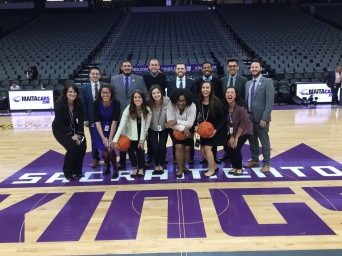
“In 2007, Jeep was sponsoring a Tim McGraw and Faith Hill concert at Arco Arena in Sacramento. My dad got sponsor tickets and gave them to me. I went on the Arco website to check the seat locations and saw an announcement for a marketing internship with the Sacramento Kings. I applied and got a call that the positon had been filled, but there were other unpaid internships available in Sales and Service.

“I was hired and the part time internship quickly grew to 30-40 hours a week. I did this for about seven months while also going to school fulltime. I finally told my boss I needed a paying job. A couple weeks later, I was hired as his assistant.

MindyKings“In June 2008, the Services Coordinator position for the Sacramento Kings became available. I applied and started a week after I graduated.”

During her years with the Kings, she was able to learn many aspects of running an NBA team—marketing, event operations, fan experiences, sales, membership services, and public relations. Although the work was challenging and required long hours, she loved it.

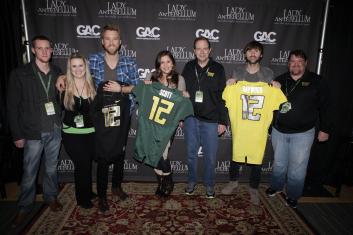
In the fall of 2011, she got a call from a former mentor who was working for the University of Oregon Ducks. “He encouraged me to apply for the athletic department’s Event Manager job at the new Matthew Knight Arena. I love doing events. At the time, there was talk of the Kings moving to Los Angeles or Seattle. Employees were leaving and not being replaced.

MindyDucks“I got the job and moved to Eugene in November 2011. I was 25—eager to do the work and learn. Professionally, I was fulfilled—I got to help with the Olympic trials and an appearance by the Dali Lama. I had the opportunity to learn and do more than most who spend years in this type of role. But personally something was lacking. It was hard living in a town where people are either college students, young marrieds with children, or retired. My heart was in California. I missed home.”

In June 2013, Mindy’s former Kings boss called to say the team had sold and was staying in Sacramento. He offered her the job of Manager of Membership Development and Sales (a department she’d helped start). She jumped at the chance to return to California and be closer to her family.

Her return coincided with the building of Golden 1 Center—the new Kings arena in downtown Sacramento—which was slated to open for the 2016-17 season. “We had to move 12,000 season ticket holders to seats in an arena which wasn’t laid out like the old one. We were prepping for the upcoming season at Golden 1 Center while closing out the last season at Arco Arena. There was so much adrenaline, it was so much fun. There were times I spent the night in my office. Looking back, someone should have stopped me.” She laughed.

With the new arena open, season ticket holders happily seated, and her eighth basketball season under her belt, Mindy began talking with her dad about wanting to apply the knowledge she’d gained to something new and challenging. “I always said I’d move back to the coast and work alongside my dad at the dealership. He suggested this might be the time to do that.”

When Mindy gave her notice, her boss asked what she needed in order to stay. “I told him this wasn’t about money or my job title. It was time for a change. I wanted to go home.”

In September 2017, Mindy became General Manager of Sport Dodge. “I feel like a great weight has been lifted from my shoulders. I feel grounded. It makes me happy when people come into the dealership to meet me after hearing my voice on the radio.”

MindyRotary

With step-mom Clara and dad Mike.

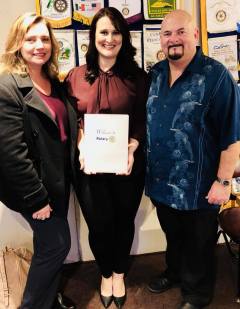
One of her favorite aspects of small town living is how people have a vested interest in the well being of others. “You can make a true hands-on difference here. Dad has been a Rotarian for years. In January, I had the privilege of being inducted into the club. It was such a proud moment. It’s important for us to give back to this wonderful community.”

Mindy is delighted to find that the concept of shopping local is more widely accepted than it was years ago. However, she’s concerned that we’re not an active youth community. “I’m in favor of youth leaving for education and experience. There’s so much to learn and observe in the world. I’d like to see more of them return to share their knowledge. We have such great potential to become a thriving economy while maintaining our small town feel.”

She’s proud that the dealership employs 21 people, most of whom were born here or have been members of this community for a long time. She looks forward to helping the business continue to expand and grow.

“After my mom passed, I steered away from having a personal life. I put all my time into school and work. It’s all I really wanted to do.” Returning to her beautiful hometown is helping Mindy find a balance between the two.

MindySport

With the Sport Dodge crew.


Emily Head, L.Ac. MAOM

emilyheadshot

I rushed across the parking lot behind Taka’s Grill on Main Street, through the brisk autumn chill, into Pacific Healing Acupuncture. The warm, softly lit interior wrapped me in a cocoon of serenity so intoxicating that I was nearly too relaxed to get out of my chair after my 90-minute chat with owner Emily Head.

***

As a teenager, Emily had few aspirations outside of staying and working in Fort Bragg. Her parents, Marie and Lewey, had other ideas. They’d moved here from the Bay Area in 1977 and felt it important for their daughter to experience life outside this small community.

After graduating from high school in 1998, Emily agreed to go to Sonoma State but moved home after a year to figure out what path she wanted to take in life. For the next few years, she worked as a waitress and took classes at College of the Redwoods. She also got her esthetician and massage licenses. She worked briefly as a massage therapist, but found she didn’t enjoy it. “I was having wrist problems, and didn’t want to make that worse.”

A few years later, Emily realized she didn’t want to be a career waitress. She applied to her dream school—UC Santa Cruz—and got accepted in 2000.  She majored in sociology with a minor in psychology. “I thought I’d become a child counselor.”

emily bunnyAfter graduating in 2002, she entered an 11-month AmeriCorps program. “I wanted to start paying off my loans, and AmeriCorps offered money towards that. I also thought it would be a fun break from life—which it was. It gave me time to decide what I really wanted to do.” She became part of a team of ten people in Denver. “We traveled to a number of states where we did jobs like state park trail maintenance and renovating a playroom for a summer program that offered homeless children a place to learn, play and socialize.”

During her AmeriCorps experience, her mother suggested she chose a career in the healing arts, perhaps as an acupuncturist. “I’ve always been intrigued by natural healthcare and figured it was a great career for me to pursue. Growing up in a household that didn’t depend on doctors taught me what was available that didn’t include synthetic cures. I always looked to Mother Nature for healthcare and acupuncture seemed the follow that concept of staying healthy.

“I came back to Fort Bragg and took anatomy and other science classes at College of the Redwoods and Mendocino College, which helped get me into the Masters Program at Oregon College of Oriental Medicine in Portland.” She entered the school in 2006 where she attended daylong classes and practicum sessions five days a week. She loved living in Portland and studying traditional acupuncture. During the last two years, she also worked as an intern in various clinics.

She graduated in September 2009 with a Masters in Oriental Medicine and stayed for a couple of months to take three exams to earn her national acupuncture practitioner certificate before moving back to Fort Bragg. “I always knew I wanted to live and raise my future family here. My parents are here and I love the area.”

emilystudioShe once again worked as a waitress while studying for her California boards, which she passed in March 2010. Shortly afterward, she opened her business in the office complex behind Taka’s Grill. For the first few years, she supplemented her income by working three to four days a week at Lee’s Chinese. “Word of mouth has been a big factor in my growth. When I started accepting health insurance and Medi-Cal, my clientele also grew tremendously. I still work one day a week at Piaci’s. I love my profession, but like getting out and socializing. Waitressing does that for me.”

In addition to private sessions, Emily provides reduced priced drop in sessions on Tuesday and Wednesday evenings from 4:00-6:00 pm. Her fees for all sessions are based on a sliding scale given a patient’s ability to pay. Most treatments are covered by insurance. “Stress is a major component of illness,” she said. “I don’t want people to stress out over the cost of trying to get well.”

Emily is glad her parents encouraged her to leave her hometown and get a different perspective on life. “I learned I don’t want to live in a big city. I’m not a commuter. I don’t even like to drive to Mendocino.” She laughed.

emilygarrettShe lives on the same property as her parents and shares a home with her partner Garrett Barker and his two children. “Garrett was born in Southern California, but lived in Fort Bragg off and on while he was growing up. He came back in his twenties and has been here ever since. He’s an amazing artist and also works for a machine shop in Comptche.”

“I grew up on the land where we still have a large garden. We raise rabbits, chickens, turkeys, and ducks. I raise a pig each year. I don’t do the killing of the larger animals, but I can butcher the meat. We also have beehives.”

Emily finds great satisfaction in helping people. “It sometimes amazes me that I can stick needles in people and it makes them better,” she said. “The body wants to heal and by using acupuncture, one can balance out the blockages caused by everyday life, including stress, injury, emotional upsets and illness.”

emilyhensShe’s sad that Fort Bragg doesn’t offer the same sense of community as when she was growing up. “I don’t see a lot kids riding bikes. I no longer know nearly everyone. I used to know the names of our homeless people. I don’t anymore. It’s especially hard for single people to live here—there aren’t many places to mingle.” However, she does admit that the Golden West Saloon—purchased a few years ago by a couple in her age group—has helped provide a social outlet for the younger crowd.

Emily laments the loss of the traditional workers who were once employed by the logging and fishing industries. “We’re more of a tourist community now.” She hopes more people who have left our community will return. “Many in my age group have already come back. It’s fun to hang out with people I went to high school with.”

Emily is pleased with the growth of Pacific Healing Acupuncture. Her ultimate goal is to establish a wellness center which would include a Naturopath, midwife, body workers and anyone devoted to alternative healthcare who is willing to help people regardless of their income.

emilychicks

Megan Caron

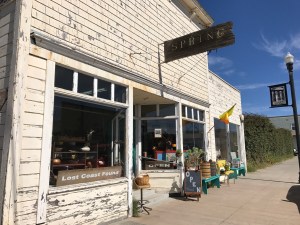
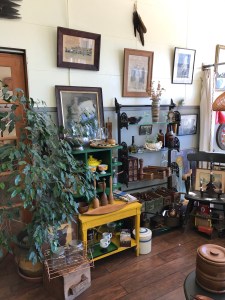
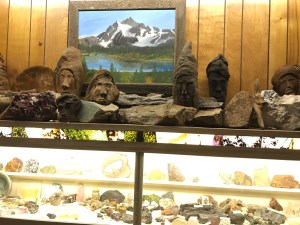
meganheadshotIf you’re walking east along the 200 block of Redwood Avenue, you’ll notice a difference in the Larry Spring Museum. The storefront, once a bizarre display of things like rocks that resemble food—ham, peas, and yes, even cauliflower—has become more polished, evolving to reflect the unique man who created it.

meganstorePart of this renaissance is due to the opening of the vintage shop Lost Coast Found, housed in the same location and owned by Megan Caron—a homegrown girl who returned after living in Petaluma for 16 years. “When Larry died [in 2009], he left the building to Heather Brown, a well-known Canadian artist,” said Megan. “In exchange for reasonable rent, I help out with the museum.

“I’ve always loved rocks and all things wood and was in awe of this secret little museum full of rocks, wood, creativity and character. I was excited not only about finding a storefront, but also the prospect of helping the world meet Larry Spring. He was a proponent of solar energy back when the technology barely existed. My husband’s career has been in the solar industry.”

megan6When Megan speaks of something she’s passionate about—her store, the museum, kids spending too much time on screens, or the lack of housing on the coast—her hazel eyes blaze. She’s articulate and quick to laugh, flashing a sly look whenever she makes fun of something or herself. As I listen, I understand why Fort Bragg once had a hard time holding onto her intense energy.

On her father’s side, Megan hails from the Caron family. “My grandmother grew up in Finland and immigrated to Canada. Winnipeg was too cold for her. Like many Finns at the time, she ended up in Fort Bragg. In the late fifties, she started the first licensed beauty salon on the coast—Kirsty’s Kut and Kurl. She hoped I’d take over the business. I worked as a receptionist for a while, but I’m not good at making people look beautiful.” She laughed.

By 1993, Megan felt stifled by Fort Bragg and was eager to leave. “Imagine feeling stifled by beautiful redwood forests and the ocean.” She laughs. “I moved to Eureka and enrolled in classes at College of the Redwoods, but didn’t always attend. While working as a route driver for Figureidos, I spent most days driving around and admiring the old architecture.”

She returned briefly to Fort Bragg in 1994. “I worked as a front desk person at Vista Manor. I’d been cleaning rooms there during the summers since I was 14 years old. I had some friends who were moving to Chico and needed a roommate, so I moved and enrolled in Butte Community College. I took classes in interior design because it meant I could tour other people’s homes. I’ve always been interested in how people create their space. I spent a good portion of my childhood rearranging my room. My walls were giant collages of pictures and posters.”

In Chico, she worked as a caregiver. “One of my favorite clients was an elderly Texas Belle. Her bedroom was like a Hollywood set. Everything was red and gold—red velvet walls, gold furniture, gold bedspread, everything. She wanted to get rid of some ‘evidence’ before she died—massive amounts of lingerie she’d acquired over the years. She gave me garbage bags full to take to a thrift store.”

Megan was a kid, intimidated by the contents of the bags and the thought of delivering them. “I drove around for weeks with elderly contraband in the trunk of my car, hoping no one would find it.”

When she finally mustered the courage to enter a store with the donations, she spotted a jacket. “I thought it looked cool and bought it. That started my interest in vintage and collecting. From then on, I stopped going to new clothing stores. I don’t want to support industries that make inferior products overseas. Except for technology and a few other things, I rarely buy anything new.”

By 1997, Megan decided college wasn’t for her, moved back to the coast and the hospitality industry. Through friends, she met Ben Tuke who would eventually become her husband. “He grew up in Mendocino. Like me, he couldn’t wait to ‘get out of Dodge.’”

In 2000, tired of small town living and looking for adventure, 24-year old Megan and Ben tossed everything they owned into the back of Ben’s pickup and headed south. “As we approached Petaluma, Ben asked if I’d ever been there. I only knew it had an outlet mall. My requirement for where we lived was that the downtown have a bakery, record store, and bookstore. Petaluma had it all, including great architecture. We signed a lease on an apartment that day.”

Ben went to work for Sun Power Geothermal, a startup solar company. “We knew solar was the wave of the future. He started as an installer and worked his way up to quality manager.”

Megan got a job in the magazine department of Copperfield’s Books. “Growing up, my grandmother Julia Tidwell and my parents supplied me with books. My dad is a book collector and indulged me at bookstores. When I saw the help wanted ad for Copperfield’s, I ran down there with my non-impressive resume and got the job.” She later found out she was hired because they were impressed by her answer to the question of who are her favorite authors—Richard Brautigan and Tom Robbins.

meganfamilyOver the next 16 years, Megan and Ben settled into life in Petaluma. They bought a house and had two sons—Addison (9) and Arias (5). “As the boys grew older, I became uneasy about raising them in a suburban environment where there’s a disconnect with nature. I drove 15 minutes just to go to the park. I regularly took them to Fort Bragg where they could play in the forest and we could be at the beach within five minutes. They seemed happiest in the wild.

“In Petaluma, everything is neat and tidy. The downtown slowly became gentrified, pushing out the interesting eccentric folk and funky taquerias. It was harder for me to engage with people. How many nail salons and upscale restaurants can you have in one place? I yearned for the funky places where there are things that need to get done. In Fort Bragg, we have blemishes and unconventional people. I wanted to raise our boys here amongst the salt.”

Megan’s years of working in a bookstore gave her a good understanding of the many facets of retail—ordering merchandise, arranging floor space and in-store displays. “All six window displays had to be changed regularly. I was always thinking of themes and digging through basements, dumpsters and estate sales for props.” Copperfield’s customers often asked to buy items in the windows.

“For two years, Ben and I talked about moving back to Fort Bragg. I thought the town needed a vintage shop that sold useful as well as decorative items. After years of my picking and hunting, our garage was full and retail space became a must.”

megan5During that time, Megan looked for a storefront in Fort Bragg. In November 2016, she was walking by the Larry Spring Museum and saw a slip of paper with Heather Brown’s phone number written on it. “I called and within twenty minutes, I had the keys.”

Ben went to work for Nextracker, a solar tracking manufacturer, which enables him to work remotely. They sold their house in the spring of this year and bought a house in Fort Bragg. In June, Megan opened her store.

“I’ve met countless young people, some with young families and existing businesses who want to live here and invest in our community, but they can’t find a place to live. We need people to move here. There’s so much to be done and I feel we’re running out of people to do it. Without a push for housing projects, we will never have a sustainable economy.”

I’m grateful to Megan for returning with her family. She will use the energy that once drove her away to improve our community while preserving its charm.

***

Here’s a little preview of the Larry Spring Museum. Give it a visit. You’ll be glad you did.

larryspring

larryspring2

larryspring3


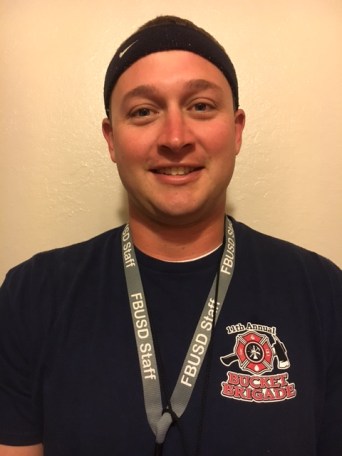
Mark Cimolino

mark1 (2)I’ve known Mark since he was a child, but don’t know him well. He had a good reputation, and I was always warmed by his delightful smile. Five years ago, when I heard he was hired to teach PE at Fort Bragg High School, I thought, “Oh, how nice—local boy goes away to gain education and experience and returns to share with his hometown.” Until I sat down to talk with him, I had no idea the deep level of dedication he brings to the youth of our community.

Mark grew up playing football and baseball, but he loves all sports. This makes him ideally suited to the many hats he wears at Fort Bragg High—PE teacher, athletic director and assistant football coach. “I’m so lucky to work in an environment where I can be myself, teach what I’m passionate about, and have fun.” The sparkle in his eyes grew brighter as he spoke. “I can’t believe I get paid for doing this.”

When this fourth generation Fort Bragg native graduated from high school in 2004, his present life was not on his radar. A star high school running back, Mark was recruited to play for Santa Rosa Junior College. A few years later, a shoulder injury permanently sidelined him. “Byron Craighead, the school’s head athletic trainer, taught me how to work as a student trainer with the baseball teams. I really liked it and started taking classes in kinesiology. I also took a couple of education classes, which sparked my interest in teaching.”

mark5Mark went on to San Diego State and got a degree in kinesiology with an emphasis in physical education. He wanted to stay in San Diego and earn his teaching credential, but it was expensive and he needed a job. Lars Larson, his friend and former counselor at Fort Bragg High, told him about a local long-term substitute position. Mark could live with his parents, save some money, and figure out his next step.

The position was with the Lighthouse School—an alternative education high school. “It was an amazing experience,” Mark said. “Claire Hundley, the teacher on leave, is remarkable. We were in touch every day through email. The classroom was a revolving door of students going in and out of juvie. Claire taught me important lessons—these kids need support, love and a safe environment where they feel a sense of belonging. She helped me find that special something in each kid. I loved the job.”

Mark was not immediately comfortable with the return to his hometown. “I’d been away six years, living in cities and said I’d never come back, but I eventually embraced it. The stillness, calmness, the air feels different here—all of this allows me to breathe. My years away made me appreciate this as a special spot. Community support for our kids is incredible. Students and teachers don’t have to deal with big city problems.” He smiles when he adds, “I can also walk to work.”

mark4In 2011, Mark applied for and got the PE position. During the school year, Mark’s workday begins at six-thirty and often doesn’t end until eight at night. “I was the assistant baseball coach for four years. After that, I began assisting with football. Three years ago, I became the Athletic Director.”

There are 24 sports teams at Fort Bragg High. Over half the student body plays a sport. Mark assists with scheduling games and gym practice times. He helps monitor players’ grades, acts as a liaison between the school and parents, and handles complaints.

Mark also participates in the Assets Program, which offers after school weight training sessions once a week. Six years ago, he started a lunchtime intermural sports program that rotates between dodge ball, tennis, badminton, basketball and indoor soccer.

During the summer, he supervises the high school football players who run football camps for second through eighth graders and their coaches. “The high school kids are in charge and it’s great to watch them interact with the younger kids.”

Mark admits that teaching PE is a challenge. “Most kids view it negatively. It’s my job to find ways to allow them to enjoy it. I believe it’s important to be physically active—it brings about body awareness and builds confidence. I tell kids that the key is to a find form of activity that suits them. I try to make PE fun. I adhere to the basic curriculum, but sometimes I shake it up and we do things like have water balloon fights. Other times we go outside and walk around. I especially like walking the zero period [early morning] class so we can watch the sunrise.”

Mark is grateful to those who mentored him when he was new to the job, especially Becky Walker. “She was the high school principal when I started and is now the district superintendent. She was also one of my sixth grade teachers. Her obvious love of her job inspires me. I appreciate being in a district where the administration has created a safe environment for kids to develop together.”

One student in particular made a lasting impact on Mark. “He graduated in 2015 and was diagnosed with cancer,” Mark said. “It just wasn’t right– he was the most polite, caring, respectful kid. I stayed in touch with him and did what I could to boost his spirits.”

His cancer grew and he became wheelchair bound. Mark sent him a badminton racquet. “I told him to keep fighting and when he beat this we would play badminton just like we used to. Throughout his sickness, he was always positive and cheerful.”

Two years later, out of the hospital and back in Fort Bragg, Mark visited this young man. “As I listened to how he had died twice and his mother saved him, how he almost lost his hand to an infection, about chemotherapy, and physical therapy, I was blown away by the fact he had a smile on his face and was interested in how I was doing.”

During this visit, he handed Mark a bag. “Inside were a San Francisco Giants hat and baseball, both signed by Buster Posey, one of my favorite players. He met a lot of professional athletes during his time in the hospital and remembered I liked the Giants. His selfless act of kindness melted my heart. Here was a kid fighting for his life, and he thought of others. He taught me that we can all make a difference by our positive interactions with one another. Even the smallest gesture can mean so much to a person.”

mark1This past summer, Mark married long-time girlfriend Jessica Alguinaldo. “We dated in high school. When I went away to college, she was starting her junior year, and it was hard to stay together. We broke up in 2005, but started dating again in 2010 when she graduated from Oregon State and moved back to Fort Bragg.” Jessica works as an audiologist for Audiology Associates. She runs their three offices—Mendocino, Santa Rosa and Mill Valley.

The one downside to their return is the lack of entertainment available for young people. “We have to be more proactive in seeking out things to do than when we lived in cities. Jessica and I have created a life that works for us. We hike, kayak, camp and hang out with friends. I don’t see us being as happy anywhere else.”

Our community is fortunate that Mark has brought his energy and passion home where he will have a positive impact on generations to come.

mark3

Serendipity to Soothe the Savage Beast

The day of our family reunion weekend begins two hours earlier than normal. By six o’clock, I’ve packed the car and herded my husband Gary and surrogate child Lucy-dog inside. We’re going to Tahoe for a family reunion. Gary has limited eyesight and mobility. He functions well around the house, but his issues become challenging whenever we take a trip. My mind whirls with logistics—buying supplies, packing the car, plotting stops that need to be made along the way, and helping him navigate unfamiliar territory. My efforts to make sure all goes well leave me exhausted and sometimes a bit cranky.

My goal is to cross the Central Valley before temperatures rise to the fires of hell and melt our delicate coastal bodies. Two hours later, Lucy starts whining. I stop at a gas station in Lake County. After several minutes of sniffing, she fails to go potty. As the temperature continues to rise, I give her water, silently scolding her for wasting our time.

An hour later, we stop in Williams where Lucy has a successful potty. She and Gary are enjoying the journey. I marvel (not in a good way) that it’s only nine o’clock and already 75 degrees. I get breakfast sandwiches and a call from our son Harrison. “Would you mind finding a CVS and picking up sunscreen and a hat for Kasi [our daughter-in-law]?”

Actually, I would mind. Very much. I’m fixated on getting my passengers to our destination with as few stops as possible. Running a spontaneous errand while they sit in a hot car is not on the schedule.

I sigh.

“I’ll text you the address of a CVS along the way.”

When it finally occurs to me to question why he can’t do this himself, I recall last year’s family reunion where the nearest shopping was 20 minutes away. I can possibly save him a 40-minute round trip.

This Mother Teresa moment is fleeting. Resentment reaches in and captures my mood.

As I push past the speed limit along Highway 20, my phone pings with a text. Moments later, Harrison calls. “I sent you the address of a CVS at the turn off you’ll take in Truckee. Could you also stop at the Save Mart there and pick up a red onion?”

“Sure,” I snap. The outside thermostat has climbed to 80 degrees.

“And some ketchup?”

I groan.

“Don’t be such a curmudgeon.”

“I’m worried about leaving Dad and Lucy in the car. It’s hot and going to be hotter by the time we get there.”

“We worked all day yesterday,” he says (having perfected the counter argument as a child), “went grocery shopping and didn’t get here until midnight.”

In the game of Who’s the Most Martyred, it’s a tie.

Three hours later, I pull off the freeway in Truckee, a town that, unlike me, is fond of roundabouts. May I make a recommendation to those who design GPS systems? Instead of programming the voice to say “Take the second exit at the roundabout,” have it say, “HERE! HERE! EXIT HERE, DAMMIT!!!”

After twirling through two traffic circles and failing to exit at the appropriate times, the GPS gives up and guides me through back streets into a small shopping center. It is now 90 degrees. I park in front of CVS and take Lucy for a potty around back among a patch of spindly fir trees near the loading bay. It irritates me that the only trees in the parking lot are where they’re not needed. I reposition the car under their skimpy shade.

Inside the store, sunscreen and cap in hand, I stand at the checkout counter while tourists in front of me engage in conversation with the cashier about how outsiders have driven up real estate prices, forcing most service workers to live in Reno. While I sympathize with cashier’s plight—my own tourist community suffers from the same socioeconomic discrepancies—I want to shout, “Hurry the hell up! A disabled man and dog are roasting to death in my car!”

I notice two additional texts sent by Harrison.

“Please pick up some mustard.”

“And some pickles.”

I want to hurt him.

I exit CVS and debate whether to dash into Save Mart which is only about 100-feet away. I worry a semi-truck might arrive to make a delivery and won’t be able to maneuver around my car. I picture a big rig trucker yelling at me.

I find Gary and Lucy quite content. I move the car to the blazing hot sun in front of Save Mart. My deodorant has failed. Sweat pastes my shirt to my back. I verbally review the shopping list.

“What kind of mustard?” Gary asks.

“I don’t know,” I moan.

“Get Guldens.” He smiles, happy to be helpful. “And Claussen pickles.”

Gary’s mom was an expert canner and made the best pickles around. As a result, he’s quite fussy about them. I, on the other hand, hate the things. I want to yell “What the hell difference does it make?”

I leave Gary and Lucy in the Easy Bake Honda. Entering the store, I recall the game show “Supermarket Sweep.” Filled with sweaty adrenalin, I’m certain I can record a personal best. I imagine emerging to find my car surrounded by an angry mob that has called the police to report elder and animal abuse.

I quickly locate all the items on the list except the pickles. I go to the dairy aisle (where they’re located in my local Safeway). No Claussen’s.

Time is ticking, the temperature rising. The angry mob is growing. I hate everyone and everything. I’ll go back to the condiment aisle and grab the first damned pickle jar I see.

Moving swiftly toward the back of the store, I nearly collide with a teenage employee. Mustering my last ounce of humanity, I politely ask if they carry Claussen pickles. He directs me to the meat department at the opposite end of the store. I turn and encounter the back of a generous head of black curly hair. I take two steps forward to see her profile.

“Elizabeth?” I say.

She looks at me without recognition. If my outside resembles my inside, I look like a thorny hag.

Elizabeth is the daughter of Sue, one of my most beloved clients who, three months shy of her eightieth birthday, died as a result of a tiny hole in her lung. When told she could survive by staying on oxygen and having caregivers, she chose to call her family to her hospital bedside. After an evening of visiting around wine and cheese, she said goodbye. By the next afternoon, she was dead. When we settled her estate, Elizabeth and I spent hours sharing stories of her mother.

I remember Sue’s smile—how it lit her face and made her eyes squint with delight. I felt comforted in her presence. Her life hadn’t been easy, but she graciously accepted whatever came her way.  I remember how much I appreciated her, and how glad I was to spend time with her equally gracious daughter.

“Kate,” I say.

I’m engulfed in a hug. We talk about how bizarre it is that we should encounter one another almost exactly two years after her mother’s death in a place Elizabeth resides but I have never been. I tell her how I think of Sue each time I walk or run the Glass Beach trail where her memorial bench overlooks the ocean.

My mood shifts. Sue would have accepted the flow of this trip, would not have tried to control every minute. Somehow she managed to lead me to this place despite my childish protests. It wasn’t easy, but did what it was intended to do—cause me to calm the hell down.

I leave Elizabeth with another hug and smile as I saunter to the meat department to find the pickles. It’s a joy to fulfill Gary’s gastronomic desire. I breeze through the express checkout line and out the door to the car where Gary and Lucy are panting, but not too uncomfortable. I start the engine, blast the air conditioning, and continue to our destination as I relate my encounter with Elizabeth. My burdens have been lifted. The desire to incite violence has evaporated. I can finally allow myself to feel the blessing of being able to spend three days with our wonderful family.

tahoe