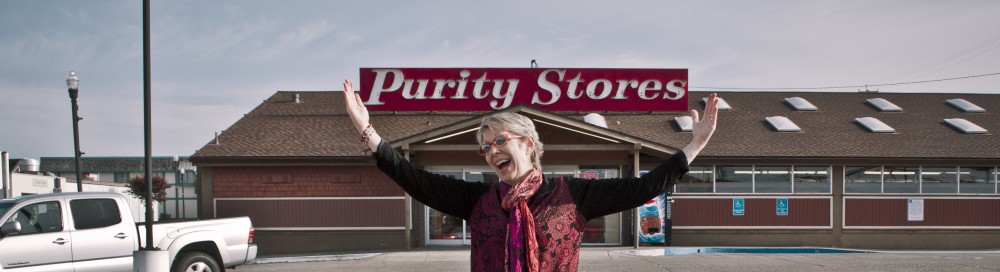

As I drove to interview Aaron Haye—production designer for Bohemian Rhapsody, one of 2018’s hottest movies of the year—I have to admit feeling a bit starstruck and nervous. This soon evaporated after we met at the Cookie Company and I sensed the commonality he shares with the many others I’ve interviewed—the easy openness of someone who grew up in a small town surrounded by a community who loved and nurtured him.
***
Aaron was born in Los Angeles in 1973. Some years before, his grandparents, a few uncles and an aunt had migrated north to Mendocino County. In 1975, Aaron’s parents loaded him and his baby sister into an old Chevy pickup and followed. Soon other friends and family joined them. “Growing up, I remember barn raisings and potlucks, families getting together. It seemed everyone had a baseball diamond or volleyball area on their property. They’d moved here from the city so they could build meaningful lives and land was cheap back then.”
Aaron speaks fondly of his childhood. “My friends and I spent hours in the woods and on the beach. We did what we called ‘schralping,’ where we’d follow a trail for a while and then veer off trail into the woods to explore. When we got older, we’d do the same thing in our cars, exploring back roads all around Northern California.”
He was interested in both art and science. “I loved being in nature and also loved to draw and take pictures.” He credits three teachers in particular for inspiring him in each—Rita Davies (fifth grade), Bill Brazil (high school art) and Robert Jamgochian (high school science) as well as the free-form learning of Bob Evans’ ROP Audio Lab at the Community School.
He graduated from Mendocino High School in 1991, and went to UC Santa Cruz. After two years of general science classes, he discovered a class in field biology where the instructor sent students to the beach to record elephant seal behavior. He loved it and decided to major in marine biology. The summer before his last year of college was spent on a remote island off Alaska where he observed, photographed, and drew Steller Sea Lions before completing his thesis on mating behavior of elephant seals at Año Nuevo Reserve in California.
So how does a kid who grew up on the Mendocino Coast and received a degree in marine biology go on to become the production designer for one of the biggest movies of 2018?

“My dad was a carpenter here on the coast and moved to Marin when I was a junior in high school. There he worked as a model builder for the visual effects company Industrial Light and Magic (Lucasfilm). When I was 16, I was hired to sweep floors in the model shop. After I graduated from college in 1995, I was considering a PhD program when ILM hired me as an assistant in the model shop.” After a year or two assisting in various departments he was promoted to model maker, building miniature sets for visual effect shots.
Those early days working in visual effects gave Aaron an opportunity to contribute to many films, including Star Wars Episode I and II, The Matrix 2 and 3, and Men in Black.
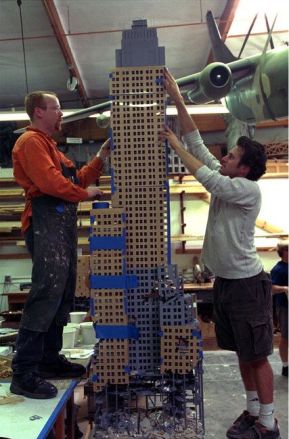
“At ILM I had the chance to learn from many talented people, but I knew I had to find my own path. Through opportunity and circumstance I taught myself how to design and build models on the computer. I had incredible mentors who were all huge innovators in their field and helped me every step of the way. They allowed me to push beyond my comfort zone. I try to pay that forward whenever someone comes to me for help or advice.”
In 2002, he left ILM and moved to Los Angeles. “By that time, I was designing sets on the computer, but had only worked in visual effects. I had no sense of what I was going to do next when an art director I had worked with recommended me to a production designer who was working on a Superman movie in Hollywood. There weren’t many folks working in the type of 3D design I had been doing. I was lucky enough to be hired as a set designer on that film.”
The movie was never made, but Aaron was able to join the set designers union and gained insight into where he wanted to take his career. About five years later, he began work as an art director, and contributed to films such as Dawn of the Planet of the Apes, Man of Steel, and Terminator Genisys. To date he has 45 feature film credits.
“Being a production designer is a very collaborative endeavor. There are hundreds of people who bring their talents and energy to a project. In the end, it’s a team sport.” As a way to explain it in a way people can relate, he describes his job as staging a huge wedding—every single day for months at a time. “There are hundreds of decisions to make each day. For example, if the script calls for a scene in a coffee shop, I have to ask what does the shop look like? How do we want to make the actors and the audience feel? How does the setting best tell the story, inspire it? My job is to be of service to the story.
“Every detail of a set has to be designed to make it realistic—every space, wall, color, piece of furniture, prop, graphic. We try to create a world that the actors can believe in. When they enter, they need to feel like they are their character.”
Aaron has a calm, easy going demeanor and I wondered how he handles the stress. “I’ve learned to ride the waves and not be engulfed by them. I have a high threshold for stress, until I don’t,” he laughed.
He loves his job, mainly because he never has to do the same thing twice. With each project he needs to build a team of dozens from scratch. “It used to be one could have a career in film and live and work in Los Angeles. These days, films are made all over the world. We don’t have the luxury of working with the same folks again and again. This has its advantages and disadvantages. To be successful, I have to be a manager and psychologist, put together large budgets and schedules, know how to collaborate with large construction departments, how paint affects the mood of a setting, and how to play politics with studios and producers.”
In 2006, while in New Orleans working on The Curious Case of Benjamin Button, a film about a man who ages backwards, Aaron met his wife Bridget. “A coworker and I were looking for a specific restaurant and got lost. We decided to walk into the nearest place that looked interesting. While we were eating, I felt a tap on my shoulder. A stranger asked, ‘Excuse me but my friend and I were trying to think the name of Mork and Mindy’s son, the one who was born an old man, because we decided she was born an old soul and is aging backwards. You look like someone who might know.’ I’d never met this woman. She didn’t know the film I was working on.
“Intrigued, I followed her back to their table to meet her friend. It really was one of those magical moments you hear about—love at first sight. We chatted for a while, but I never even got her name. They did tell me she was going to be at the farmer’s market the following day. So the next morning I got on my bike and rode to find this market. I had ridden less than two blocks when I turned a corner ran into her. She walked right up and said ‘Hi, I’m Bridget’. And basically that was that.”
For about ten years they split their time between New Orleans and LA. With her background in public health, Bridget worked for the Annenberg Foundation in Los Angeles, a family foundation that provides funding for an array of environmental stewardship, social justice and animal welfare efforts. In New Orleans, she started an urban land trust to help preserve the city’s remaining green spaces as part of a comprehensive water strategy designed to mitigate land lost to a changing climate.
In 2011 while on working on a film in Vancouver B.C., their son August was born. Five years later, they welcomed son Nathaniel. Aaron also has a daughter, Bela, from a previous marriage who is about to wrap up her third year in college.

A few years ago, after more than a decade of working on films outside of Los Angeles, Aaron and Bridget decided to make the Mendocino Coast their home base. Since that time Bridget’s father has also moved here. Because Aaron’s job requires him to be on location for many months each year, they aren’t home fulltime. “I love being back and reconnecting with family and friends. We gather for potluck dinners whenever we can. My brother Mikael, sister Sarah and I are close. We get together and play music at open mic Mondays at The Golden West.”
He also loves the interconnections of people living in a small community. “Before returning home to the coast this last time, I was working in Turkey and started searching for a piano online at the Mendocino Coast Swap Shop. I found one, and made arrangements to pick it up when I returned. When I told my mom, amazingly she said the piano’s owner had been her boyfriend when they were in high school in Southern California before she met my dad. And that he was married to my step dad’s cousin! Serendipity is everywhere if you know where to look.”
When asked how the area has changed since his youth, Aaron said, “There’s no longer a mill. The noon whistle was such a big part of this town. Where we’re sitting used to be the department store Sea Fair and then Daly’s. Many of our family and friends worked in the mill and the woods. When I was very young, my grandmother worked the main gate at GP and I remember sitting on her lap and pushing the button to let trucks in.
“Of course I’m not saying we need a mill, but it’s difficult to build a robust tourist economy when you are as remote as we are. Our parents’ generation are retirement age. Many of their kids moved away and it’s hard to come back because there’s not much in the way of an economic heart. Maybe new technology will help change that. Maybe the mill land will be put to some fantastic use and help drive us forward. There are some wonderful things happening here. I’m proud of folks like my brother [Mikael] and Jessica [Morsell-Haye] who own the Golden West and are working hard to bring new energy back to town.”
Despite these changes, Aaron is happy to be home. “Coming from here gave me a solid root and a real sense of community. You develop a certain amount of flexibility and resilience when you grow up rural and without much money as many of us did here. Tolerance for others is supported when you’re not surrounded by a culture that points out differences in people.”
After generously giving me over two hours of his time, we stood to part ways. He was going across the street to drop in on his mom who owns Teamwork, a business started by his grandmother in 1978. This touched my heart. Aaron Haye is a lot of things—brilliant, talented, and busy. He’s also a kind and thoughtful homegrown boy who goes to visit his mom.
***
To learn more about Aaron, check out his website—aaronhaye.com—and follow him on Instagram at aelvishaye.
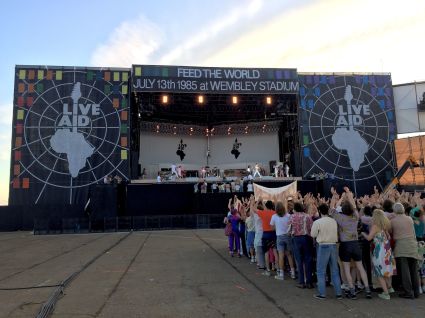
A couple shots from the Live Aid set that Aaron designed for Bohemian Rhapsody:

 Apparently many Scandinavians believe that by the time we die, the sum of our possessions should fit into a satchel. I suppose this makes disposal of our property easy for our kids—simply pick up the bag and toss it in the garbage. Being half Scandinavian, I suspect it’s really designed to make us feel guilty for accumulating stuff that makes us happy and comfortable. I was raised with the concept that it’s best to live a life of misery and deprivation.
 In my armoire, I found:
 The last Sunday of January, giddy that the dismal month was coming to a close, I celebrated by getting rid of two pairs of expensive, yet uncomfortable, shoes. Toward the end of the day I realized I hadn’t completed my seven. I went to my closet—the perfect place for unused crap to hide. I spied an old gym bag—some swag from two decades ago. I debated over and shoveled five pairs of shoes inside it.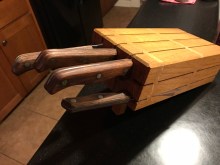
 If you’d asked me how many pairs of sunglasses I own, I’d have said two: a cheap-ass pair bought about 10 years ago and an expensive pair bought two years ago. Imagine my shock to open a cupboard door in my office and find SEVEN PAIRS OF SUNGLASSES!!!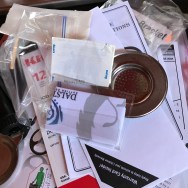

 We moved to Fort Bragg 26 years ago when our children were very young. Our house is across the alley from Chapel by the Sea, the town’s only mortuary. It was the summer between kindergarten and first grade for our older child Harrison. He had no friends and a limited capacity to interact with his three-year old sister (and his parents). At the time, Larry Blair was a partner in the mortuary and lived in the upstairs apartment with his wife Shirley and teenage daughter Charla. Older daughter Charise was married to Nathan who worked for Larry. They lived in the alley apartment.
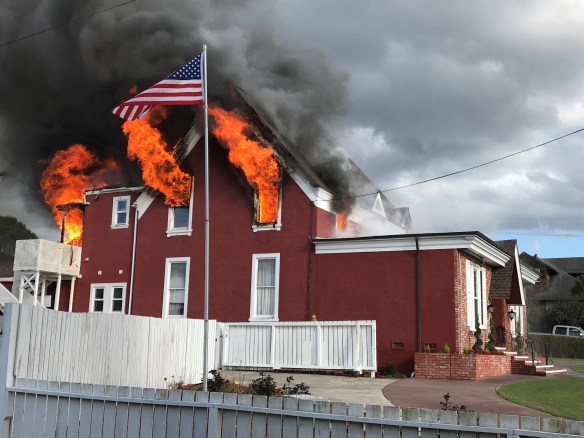 A flurry of law enforcement arrived to cordon off the street. Neighbors gathered, some inside my fence, all of us sharing looks of horror and tears. We watched the smoke grow in volume and black intensity. I cried for it to stop. This stately building stood for over 100 years, the past 26 years as our neighbor. This couldn’t be happening—STOP!
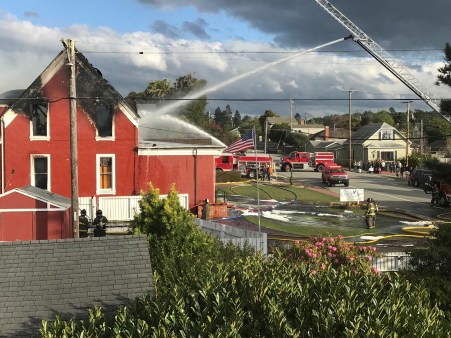 About 4:30pm, the fire department had contained the blaze and began wrapping up. I am in awe at how, despite the chaos of the fire, they maintained their professionalism and focus. Heavy hoses had been dragged about the property, yet they did not damage one plant of the major landscaping project that was completed this past fall.
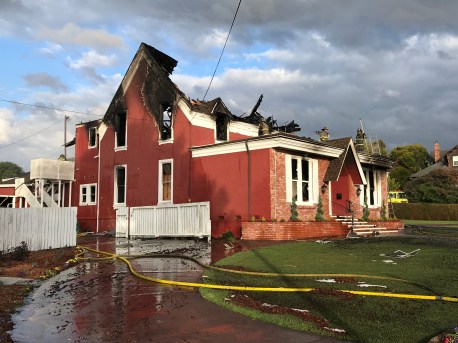 After a fitful night of little sleep, I rose the following morning worried about Julie. I didn’t want to, but couldn’t help, looking out our east windows to a sight I’ve always revered. It was horrible—a burnt out shell of a once stately building. My sadness runs deeper than I could ever have imagined. I can’t fathom how I’ll face this mutilated scar in the coming days and weeks.
 For now, I try to find consolation in the fact that even though the monument is gone, the love it symbolized remains. Charise, Charla, Katelyn, Jacob, Nick, the Blairs and my family share a common grief, but we also share a special bond that will carry us through.
 For over 130 years, the Golden West has stood tall on Redwood Avenue in Fort Bragg. Apartments occupy the top two floors and there’s a retail space at ground level, but the building is most noted for its popular saloon.
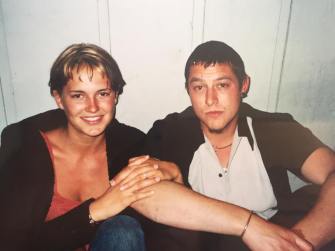 The following summer, she returned to the coast where became friends with Mikael. “We were together for a year and then broke up for a year. After I graduated from college in 2002, I came back and we got together.”
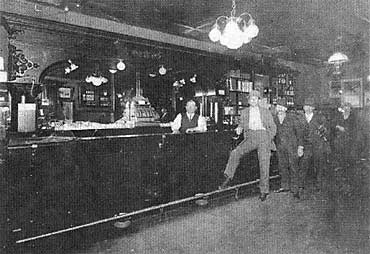 This was when she and Mikael learned that the Golden West was for sale. They lamented they had no money to make their youthful dream of owning it come true. They heard that the Hospitality House was looking to purchase the building to use as a homeless shelter, and felt an urgency to save it and preserve its history.
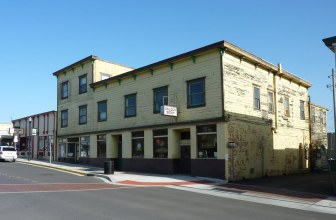 -do attitude, Jessica went to work figuring out how to make it happen. “A financial advisor helped me put together a business plan that turned into a three-inch thick document. After pushing hard, it was clear that traditional financing wasn’t an option. The building had 30 years of deferred maintenance. Private investors also turned us down. We made an offer anyway and went into escrow. At the eleventh hour, the sellers agreed to do owner financing and we got it.”
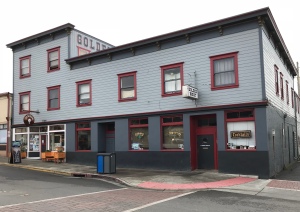 The rooms above the saloon were at different times a hotel, boarding house, and brothel. “There are 26 rooms, some of which are used for storage. We have about 16 tenants. When we took over the building I cleaned out a bunch of rooms. It was fascinating—ancient silk curtains, boudoirs, layers of wall paper telling a chronological history.”
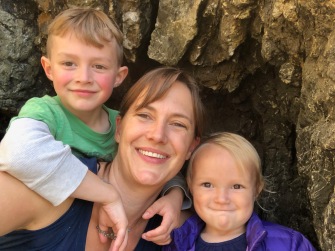 When she was approached with the idea of running for a seat on the city council, it ignited a passion. “The decisions made in the next four years will affect this town for decades. The future of Fort Bragg is critical to me and my family. It’s important that the town’s growth with the mill site and subsequent expansion of infrastructure be done mindfully, in a forward thinking, responsible manner that keeps the soul of our city intact and leverages its natural and historic beauty.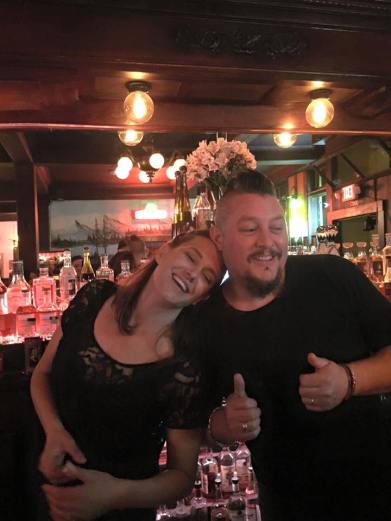

 On the morning of January 20th, I was alerted to a fire at what I called the Hoarder House. I’d never witnessed a fire in real time. It was equally fascinating and disturbing (
 Months went by. Winds and rain caused the waterfall of junk to precariously shift. People started asking me why the City hadn’t torn the place down. I’m flattered they have the impression that I’m privy to the goings on around town. I actually know next to nothing, and often stifle an urge to make things up.
 So what you think Nationstar did?
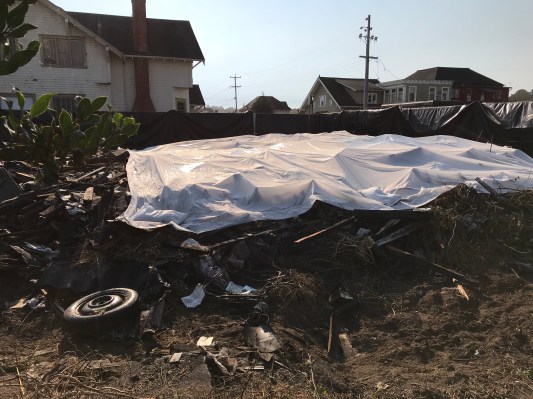
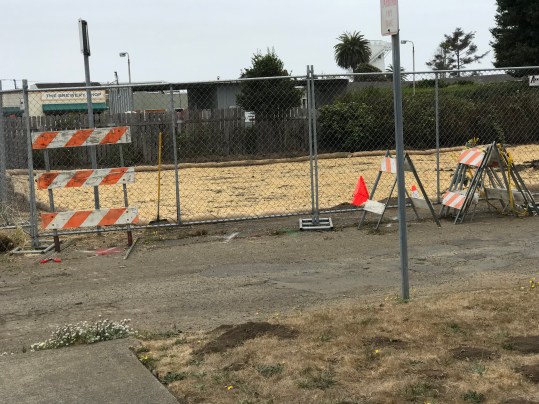
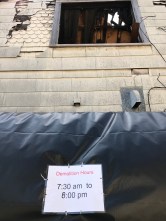 A few weeks ago, black tarps were draped over the chain link fence and the demolition began. Within a couple days, the dumpsters supplied by Waste Management were filled to capacity and work paused until they could be hauled inland and emptied.



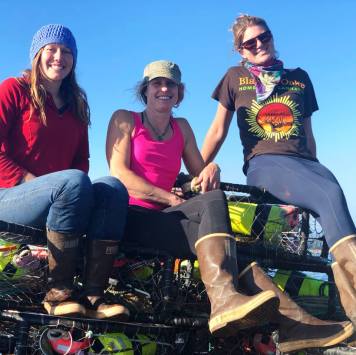
 Heather grew up in Morro Bay where she learned commercial fishing from her dad. “I moved here in 1999, and immediately began a flaming love affair with Mendocino County.” By 2001, she had saved four thousand dollars and bought a small boat, the Julie. “My idea was to have a floating fish market—to sell fish right off the boat.” She admits that running her own boat was a different experience than crewing with her dad.
 Her dad tried to help her, but she was intent on doing things her way. “At one point, he threw his hands up and said, ‘You’re going to kill yourself,’ and went back to Morro Bay. Bless his heart, he must have been so worried. This strained our relationship, but a few years later, we fished together in Alaska.”
 Along the way, she sold the Julie and bought and sold two other boats. In 2009, she purchased a larger vessel with a blast freezer named
 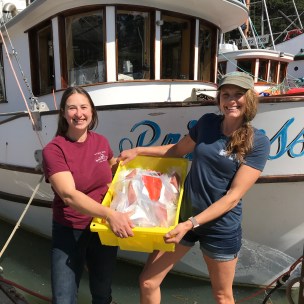 As a woman in this field, Heather is not unique, but rare. “There are a lot more women in Alaska.” She admires her crew which includes Maia and Anna—graduates of Humboldt State. “The salmon season lasts about six months. It requires a great deal of endurance. We get only five to six hours of sleep a night and are away from home so much. I got a crab permit last winter. Catching crab is easier and is a lot more fun.” Maia and Anna also sell the fish at the farmers’ markets.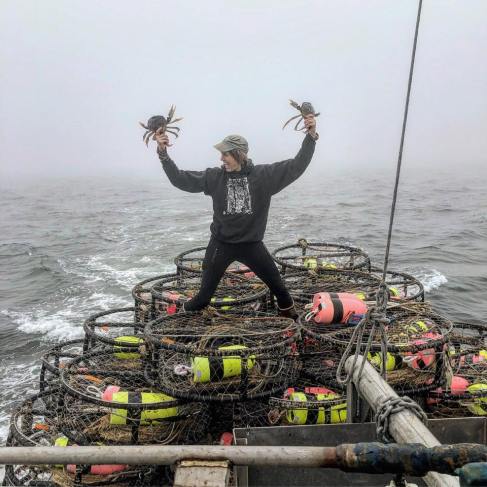


 After college, she moved home to Fort Bragg in 2012 to regroup and figure out her next move. She was 22. “I picked up some shifts at Los Gallitos, worked for Carol Millsap for a year, and took on overnight shifts for Andersson Caregiving, caring for elderly and terminally ill people. This was one of the most significant jobs I ever had, getting to care for people in that way. Each experience taught me something and made me a better person. It reminded me we’re all going to grow old and die. It caused me to be less self-centered.”
 She returned in the fall of 2013 to take a full time position at Project Sanctuary as a client advocate and counselor. When the organization received a sexual assault prevention grant, Karina was hired to conduct community outreach with other agencies—Safe Passage, the Children’s Fund, Gang Awareness and Prevention. “We disseminated information about healthy relationships, especially among teens. I provided in-service to groups like the Catholic church’s youth groups and held lunchtime meetings at the middle school and high school. At Fort Bragg High School, I organized the Youth Leadership Team, a group focused on teen education and awareness, which still exists today.”
 Her first year entailed teaching a World Culture and Language class to sixth graders and a couple of Spanish classes to seventh graders. “This year, I had to add a second level Spanish class for the eighth graders. It’s the equivalent of high school Spanish I.” She teaches separate Spanish classes for native speakers. If all that isn’t enough, she also teaches a seventh grade AVID (Advancement Via Individual Determination) class on critical thinking and study skills.

 Sometimes the inspiration to move back to the place you love arrives in the most random of ways. An email sent by your wife, added to the hundreds you received that day, nearly lost until a couple weeks later when you find it and ask why she sent you a link to a house for sale in Fort Bragg. She knows how your long work days often spill into late nights and take a toll on your personal life. Since leaving the Mendocino Coast over 20 years ago, you’ve always said you’d move back. Maybe now is the time.
 Jason was born in Houston, Texas and moved to Elk with his mom Laurie Graham when he was seven years old. “My mom’s whole life was her children, but she was always willing to open her home to a friend in need. She loved nothing more than spending time with family and friends.”
 Those were the days before cell phones, when a homesick kid had to pay for long distance calls if he wanted to talk to his mom. Jason didn’t have this luxury. He got an on-campus job as the audio visual tech manager at the student union. He eventually became the building manager.
 He bought a condo near San Jose State and rented out a bedroom, usually to a college student. “In 2009, a friend told me her friend Cate—who lived in Willits—was planning to go to San Jose City College and needed a place to stay. I rented her the room.” They began spending time together and slowly became a couple. They married in 2013.
 Dewey Turner considers himself a positive person. If you’re fortunate to spend time with him you’ll agree with that assessment. There’s a twinkle to his eyes that gives away his friendliness, a quickness to his wit that gets you laughing. He possesses a tender heart and a deep love of family.
 “I was horrible at it, but figured if I practiced enough I’d get good.” He played five nights a week until dark and most weekends. He joined a golf tour and entered tournaments around Northern California. In 2012, he qualified for the national championship tournament at TPC Sawgrass in Florida and came in eighth among 150 entrants. That same year, he earned the title of Sacramento Player of the Year. In 2013 and again in 2017, he won the Little River Inn Golf Club Championship.
 Dewey and Jamie’s first date included Ali. They went to Mackerricher State Park beach and Jenny’s Giant Burger. “I knew I wanted them in my life forever. Ali and I have a special relationship. She’s truly my first daughter.”
 Dewey loves Fort Bragg and the life he’s built since his return. “It seems our town needs to find its identity over and over again. So much of our future depends on how the mill site is developed. We need to keep opening our minds to change.”
 It Happened at Purity