Sarena Breed

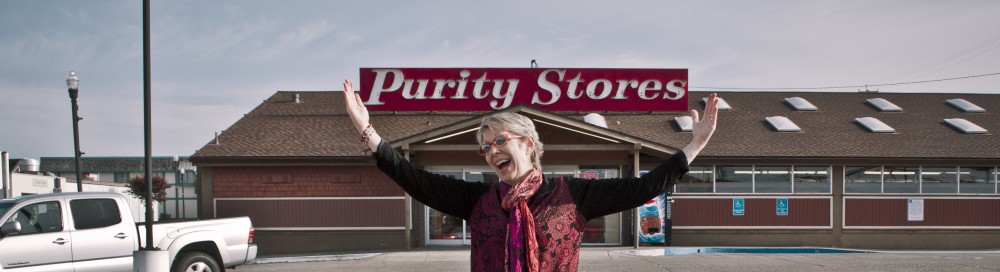
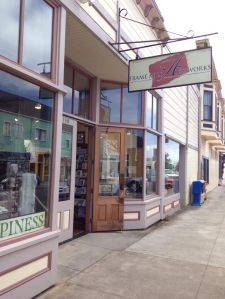
sarena8When Sarena unlocked the doors to the Frame Mill Artworks on the morning of March 22, 2017, she excited and nervous. The previous owner Robyn Koski had helped make the transition as smooth as possible, but there was so much Sarena didn’t know, like the flow of the business or the nuances of her employees. Her nerves were further rattled when a supply truck pulled up to make a big delivery.

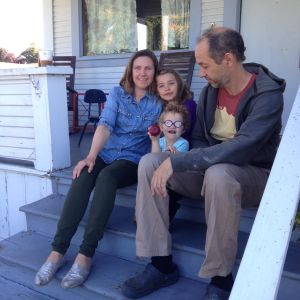
Up to now, Sarena had shied away from taking risks. For 10 years she worked nights at the Stanford Inn while her husband Sean Barrett worked days at Family Tree Service. This schedule made one of them available to care for their daughter Holiday. A few years ago, Sarena began to yearn for more. “I needed to create a different idea for how to do life, to find a career that feeds my soul. A friend asked what kind of role model I wanted to be for my daughter. I realized I want her to see me as a business owner.”

sarena2

Patricia Breed

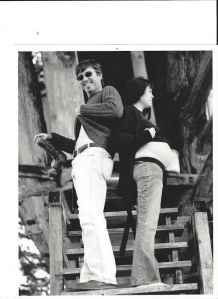
Sarena channeled the courage of her foremothers to fulfill this vision. Her great-grandmother divorced her husband when such a thing was unthinkable and supported her family by running boardinghouses. Her paternal grandmother emigrated from the Philippines, worked at the post office, lived frugally, and put her money into San Francisco rental properties. Her maternal grandmother was a professional photographer and actress who also invested in real estate. Sarena’s mother Patricia Breed managed to become an artist and poet while raising six children over a span of 42 years.

***

In 1985, Sarena’s family moved to Fort Bragg where she entered her senior year of high school. “It was uncommon for new families to come to the area, and I felt like an outsider. Before me, the newest kid in my class arrived in sixth grade. All the other kids had long established friendships. I couldn’t wait to finish high school and get out of here.” She left for college in 1986, and never dreamed she’d move back.

Sarena majored in studio art with a specialty in metal casting. After graduation, she stayed in Chico and spent 10 years working for a custom picture framing business and making her own art.

In 2002, she met future husband Sean at a party in Chico and reconnected with him a few weeks later. “He had no idea I was from Fort Bragg and out of the blue started talking about hosarena3w much he loved the area. I liked him, but wasn’t interested in a serious relationship. I was considering an MFA program at Mills College. Instead, I moved back to Fort Bragg in 2003 to live with my parents. I needed time to think about what I wanted to do with my life. Within six months, Sean also moved here and was hired by Western ACI as an arborist.”
One thing led to another—they got married and had daughter Holiday in 2006. “We lived in a cabin on my parents’ property. Holiday was able to run back and forth between the two houses. It was a very special time for her.” They eventually moved into their own home, but her parents remain a tremendous help with caring for their daughter.

***
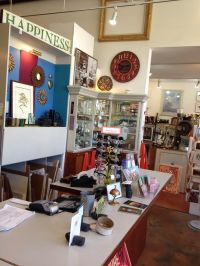
sarena4The Frame Mill had been on the market for a few years. Sarena’s background in framing allowed her to imagine buying it. She spoke to friends who own businesses and they assured her becoming a business owner was one of the best things they’d ever done. She looks back on this now and chuckles. “It’s like talking to parents when you’re considering having a child. They tell you how wonderful it is, but leave out the part about sleepless nights.”

In September 2016, she contacted the realtor. Six months later, she was the owner. “I’ve realized it’s not as easy as it looks from the outside. There’s the bookkeeping, ordering, making employee schedules, banking—I’d underestimated how much time all of this takes. I’m working seven days a week and thinking about it all the time, but slowly finding my rhythm.”

SarenaSarena is pleased to discover her business is part of a little neighborhood hub. “People bring in family photos and art projects. It’s fun to help design a way to display them. I’ve been warmly welcomed by the downtown business community.” She plans to evolve the Frame Mill Artworks into a maker’s space. “So few places make what they sell. I want to eventually create affordable art that people can buy to furnish their walls.” In the meantime, she’s learning how to merchandise the store with items that appeal to locals and tourists. “It’s hard because people have a variety of tastes, some very different from mine.”

***
sarena10Returning to the town where she once felt like an outsider has been a positive experience for Sarena. “It used to be ‘What family are you from?’ Now many people live here who don’t have roots going back generations. New people are moving in and young ones are moving back, some bringing families with them. The more our town can do to be a place people are attracted to—like the opening of the coastline via the coastal trails—the more it will encourage young people to move here.”

Sarena is grateful to be able to use her creative energy to make a living. “In so many ways, this feels like a gift. Robyn spent decades building a great business that I could buy to fulfill the next logical step in my life.

”I’ve been evaluating what kind of business owner I want to be. The word that continues to come up is kindness. There’s a whole ripple effect to the smallest act of kindness. I strive to be the person who starts that ripple.”

sarena7


Myles Anderson

myles1Myles is a fourth generation logger who has loved being in the woods for as far back as he can remember. However, a decision made the year before he was born might have sent his life on a different course.

myles5“In 1975, my grandpa was a silent partner with Bud Eastman and they decided to liquidate part of their logging business and put some equipment up for auction. Grandpa wanted to invest in a hotel and bar, but my dad [Mike] had just graduated from Humboldt State and wanted to start a logging business with him. Dad convinced him to buy a truck and some equipment from that auction.” Thus, Anderson Logging was born.

“I learned how to drive a pickup on logging roads as soon as I was big enough to see over the steering wheel,” Myles said. “When I was about ten years old, my dad picked me up after school and took me to a job site. I got to ride into town in a logging truck. I thought that was the coolest thing.” His face lights up at the memory.

myles6While he was in high school, the guys in the shop taught Myles how to grease and maintain trucks. He did this after school and during summers. When he turned 18, he got to fulfill his dream of working in the woods. “I set a lot of chokers,” he said with a smile. A choker is a small piece of cable used to attach logs to cable systems, allowing trees to be harvested without dragging them along the ground. “I really liked it and would have kept at it, but Dad had me work all the jobs so I could learn what the business entailed.”
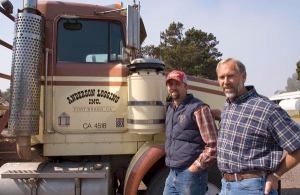
Anderson Logging September 2006Mike didn’t want Myles to jump right into the business. “It would have been easy for me to head straight into it after high school,” Myles said, “but Dad wanted me to see other places and learn other things before deciding how to spend my life. He knew how much work is involved in this and hoped I would find something easier, but every time I was away all I wanted was to get back to logging. I really enjoy being out in the woods working with the guys. However, I’ve learned there’s a lot more behind the scenes to keep the business going, and that part is not as much fun.”

After graduating from Fort Bragg High School in 1994, it was hard for Myles to leave for Cal Poly San Luis Obispo. “I was not only leaving my family, but a larger logging family who had worked for Grandpa and Dad for 20 to 40 years. These were guys who taught me a lot, guys I looked up to.”

myles4Myles enjoyed college where he majored in Ag Engineering. When he was a senior, he and two friends wanted to build a tractor—from the ground up. “Each year, students in the department would build a sled to be used in tractor pulls. All prize money goes to student scholarships. The dean approved the tractor as long as we found sponsors to cover the cost.” Myles and his buddies were often in the machine shop until two or three in the morning. “We got to know all the campus cops. A woman cop sometimes brought us pizza.” Over the past 18 years, the tractor has been driven by 70 different people in 300 pulls.

After graduating from Cal Poly in 1999, Myles attended UC Davis where he earned a Master’s degree in Biological and Agricultural Engineering with an emphasis in Forestry Engineering. He returned to his logging family and went back to the woods.

“Dad let me do the jobs I wanted, but he also had me learn how to run the business. Much of our work is done through competitive bids, but sometimes we negotiate a job. Negotiations are when we work with a company to agree on a price. This is a lot harder than submitting a bid, but my education helped me understand our cost structure and how to do this successfully.”

myles2During the logging season, Myles routinely works 13-hour days. “The season used to be about seven months, but now it’s often eleven. Since the recession, logging capacity has shrunk. In order to fulfill the needs of the mills, our seasons have gotten longer. The ability to work during the winter has always been there, however regulation requires rocked roads. In the past, landowners haven’t wanted the additional cost that brings to the process.”

Road work is done alongside logging in the summer. Yarding (where logs are picked up and stacked) and loading (onto logging trucks) are done in the winter when rocked roads are available.

With 100 employees, Anderson Logging is one of the largest employers in our area. “In the past, we could count on our guys coming back each spring. Sometimes I’d pull up to the office to find strangers suited up in hard hats and boots ready to go to work.” This is no longer the case. “We’ve been shorthanded for the past five years. These are good jobs with benefits. I don’t understand why people don’t want to work.”

myles7Myles isn’t the only one in his family who works hard. He’s married to Stacey, a dynamic young woman who he knew in high school. They reconnected in 2003 when her son Wyatt (by a previous relationship) was two years old. Their son Lane was born in November 2006.
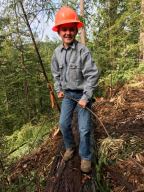
Four years ago, Stacey bought Makela’s Bootworks, a western outfitting store. She changed the name to Haywire and added apparel and accessories. “She loves people, clothing and horse stuff,” Myles said. “It’s worked out well for her.”

Having grown up a 4-H kid, animals are important to Stacey, and she’s passing this passion onto her sons. She’s been the community leader for 4-H over the past 10 years.

myles8

Wyatt

“We call our place the Funny Farm,” Myles said with a chuckle. Stacey has two horses (she’s an accomplished horsewoman) and Lane has a miniature horse named

myles9

Lane

Tinker (short for tinker toy); Wyatt and Lane are raising heifers and a steer for 4-H.; there are ducks, chickens, and lambs. Lane raises pigeons and call ducks that he takes to poultry shows. In addition to their school and sports activities (football, track, basketball and baseball), the boys feed the animals and muck out stalls daily.


In addition to his long work days and farm duties, Myles is on the board of the American Logger’s Council (he was president last year). “We’re a trade association made up of logging company owners from 32 states. Once a year, we go to Washington DC and spend three days meeting with members of congress to educate them on our sustainable logging practices. We’ve grown to the point where people call us to get information on the state of the logging industry.”

Educating people, especially lawmakers, is the one aspect of being in the logging business that Myles doesn’t enjoy. “We have to fight so hard politically. There are many misconceptions about logging practices. People think we’re ruining the environment. If they could see a logging operation and the rules under which we operate, it would change their minds.”

Myles loves his job, especially when he’s out in the woods. “I’m helping manage a renewable resource and it’s the right thing to do. This job, if managed correctly, can be sustained forever.”

***

Shell Rotella did a short documentary on Myles for its” Unsung: Hardworking Series.” You can watch it here: https://www.youtube.com/watch?v=xUOZankXvoc

Josh Morsell

Josh3When Josh’s girlfriend Lia Wilson told me what he does for a living, I simply had to meet him.

He happens to be . . . are you ready . . . ?

A private investigator!

As in Magnum PI—only in his case it’s Morsell PI.

For the past five years, Josh has done his PI work through the San Francisco office of the Mintz Group, a New York-based firm with offices around the world. In April 2016, he chose to return to the Mendocino Coast and work for the Mintz Group remotely. “I feel like I’m part of a group of people who grew up here and seem tied to this area by a rubber band. We go far away into the world and come back to bring energy to the place we love.”

Josh graduated from Mendocino Community High School in 1994 and went to Brown University in Rhode Island where he majored in Art and Semiotics (I had to ask him how to spell this). “Semiotics is the study of signs and symbols, and is really a combination of critical theory, art history, media studies and philosophy, directed toward understanding how meaning is produced in a society. Half my major was making art—experimental video and film—and the other half was exploring how art functions in cultures.” He grew up without a television and wanted to explore a medium he was unfamiliar with in a part of the country he was unfamiliar with. “I wanted a challenge.”

After college ended in 1998, he and longtime friend John Bacon took to the road to find a place to live. “We drove up the coast to Seattle and then to Montana. We turned around and settled in Seattle. It was during the summer and the weather was gorgeous and beguiling. Then, our first winter, it rained 93 straight days.” They established a collective, a house where residents not only shared the rent and utilities, but also the domestic chores. “People took turns cooking dinner and we’d all sit down and share the meal.”

Josh1Josh worked three part-time internships. He monitored the news and developed press kits for Environmental Media Services, a non-profit environmental public relations firm. He worked for filmmaker John de Graaf in coordinating the first Equinox Environmental Film Festival (later named for Hazel Wolf), soliciting in-kind donations and arranging other details. At Grist Magazine, which was just launching for the first time, he recruited cartoonists. Then he took a full-time job as an environmental organizer with Save Our Wild Salmon, advocating for the removal of the Snake River dams.
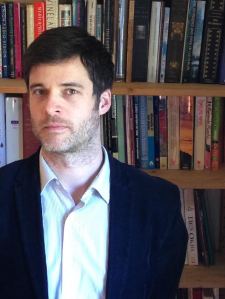
The dismal Seattle weather took its toll and he left in January 2000 to travel with friends for three months through Guatemala and Chiapas, Mexico. He returned to Mendocino in the spring. He planned to stay a short time and work to save money to travel. He ended up staying three years.

“It was really lively in Mendocino. A lot of my friends were living here at that time. It was boisterous and fun.”

Josh learned web design from Tai Leventhal and helped people design websites. He also worked for the filmmaker Oleg Harencar, who had formerly run the Regional Occupational Program (ROP) video program. He helped Harencar make the feature film Bloodlines.

“I had a good time in Mendocino, but by 2004 I needed to expand my horizons.” He moved to the Bay Area where he worked as a researcher and paralegal for Dennis Cunningham, a civil rights attorney who specialized in police misconduct cases. “Dennis was like a superhero—he could bring these righteous cases against very long odds and win.”

Josh loved this job. “It was exciting and interesting. I felt I was helping a vulnerable population. We brought pressure to help the law enforcement system to function better, to be more humane.”

Josh also assisted Cunningham with the case of Judi Bari—an environmental activist from Mendocino County whose car was blown up by a pipe bomb (with her in it). She was accused by the FBI of transporting explosives. Bari hired Cunningham to file a federal civil rights suit claiming the FBI and police officers falsely arrested her and partner Darryl Cherney and attempted to frame them as terrorists. “By the time this went to trial,” he said, “I was writing a book about the case.” He has worked hard on the book ever since, and today has an agent who is shopping the book for publication.

In 2008, Josh enrolled in an MFA Creative Non-Fiction program at the University of Minneapolis Twin Cities. He chose the program because of the quality of the instructors, the length (three years as opposed to two), and receipt of full funding. He loved the writing community he found there, and he enjoyed Minneapolis despite the extreme winter weather. “It’s a very livable city, but I always knew I’d come back to Northern California.”

Josh2In August 2011, he moved to Berkeley and became a private investigator with the Mintz Group, a multinational firm. A friend referred him, but he got the job because of his law office and writing experience. “We conduct a variety of investigations, none having to do with cheating spouses.” He laughs. “We focus mainly on three areas: due diligence, including extensive background checks on candidates for high level corporate jobs, and background checks prior to business deals; disputes, which means uncovering whatever it is lawyers need to know for a given lawsuit; and anticorruption. Under the Foreign Corrupt Practices Act, it is illegal for American companies to pay bribes to win job bids in foreign countries. Sometimes companies will contact us to investigate the practices of their employees abroad. We have offices in Asia, Latin America and Africa, as well as the U.S., Canada and London.”

Josh says, “I like that my job allows me to learn about the world each day.” He feels fortunate to be able to do the job from Fort Bragg. “There’s so much pressure in the Bay Area. I started to feel discontented—like a frog in a pot of water that was slowly rising to a boiling point. Living here is much more affordable. I’m close to family and friends. Instead of spending an hour on BART after work, I can go to the beach or plant a garden.”

Josh sees himself and Lia as the start of a movement of people who, given the opportunity to work remotely, will leave big cities in favor of living in our coastal area. “As high-speed internet becomes more accessible in Mendocino County, people will bring big city incomes with them. Remote workers can be one piece of an experiment to bring prosperity to our entire community in the new economy. We need to plan for smart growth. We have wonderful potential here—the combination of wild remoteness with the ability to build the infrastructure of the future.”

Josh4

Kerry Hagan

kerryAs a teenager, Kerry devoured Vogue magazine. “Fashion is an art form—not just something to cover your body with,” she said. “From runway couture to black yoga pants, it gives you an opportunity to express your inner self in ways large and small, obvious and subtle.”

Growing up, she loved to dress in quirky outfits and experiment with outrageous hairdos. Her parents were tolerant. “My mom’s only rule was that my hair be dyed a single color for school photos and whenever we visited grandma,” Kerry said with a hearty laugh. “I was labeled a weirdo in high school because of the way I dressed. I hated it here and couldn’t wait to get out.”

kerry2Because of her deep love of fashion, it makes sense that Kerry would eventually own a clothing store. But first she would graduate from high school and tear out of town to travel the country before returning to hold two to three jobs at the same time in order to make a living.

After graduating in 1995, she moved to Seattle and attended an art institute for a couple of years before deciding to take several months off to go “road tripping” with a friend. They traveled through the Southwest and Texas to land in their ultimate destination: New Orleans. “We stayed for a month in a kind of flophouse over a dive bar. The plan was to stay longer, but the living conditions were pretty bleak. It was very tragic, dirty and old-timey—and I suppose very romantic to a 21 year old.” She laughs at the memory.

They moved on to Florida, then headed back west via the upper Midwest and Montana. “We stopped again in Seattle and I really wanted to stay, but I was broke and decided to return to Fort Bragg where I’d work for a while, save some money and move away for good.”

In 1999, Kerry moved to Marin where she worked for a florist. A couple of months later, her grandmother’s health deteriorated and she returned to Fort Bragg to take care of her for the next two years. Since that time, she has been an assistant for two business professionals, a clerk and manager of Tangents, a short order breakfast cook at Dolphin Isle, a wait person at Piaci Pizza, and a clerk at Mendocino Vintage. She also scoured yard sales and sold some of her bounty on eBay. She often did two or more of these jobs at the same time.

“As the manager of Tangents, I learned how buy for the store. I went to trade shows and the garment industry in Los Angeles. It was a very busy store and I loved working there.”

kerry5In 2011, Hilary White asked her to work one day a week at If the Shoe Fits—a consignment clothing shop on Franklin Street. “A year later, Hilary took me to dinner and said she was buying Understuff. She added, ‘I want you to buy If the Shoe Fits.’

“It made perfect sense. Hilary didn’t want to see the store close and I didn’t want to go back to restaurant work.” In October 2012, she bought the store. “I really like clothes. I find the rotations and cycles of fashion interesting and fun. I call myself a clothing hunter-gatherer.” She lets out a hearty laugh. “The back room is filled with vintage clothing I’ve collected over the years.”

The store has evolved into a balance of new and consignment clothing. Her customers are fairly evenly divided between locals and tourists. “Even though the store has been here 10 years, I get at least one person every week or two who walks in and says she didn’t know I was here.” She laughs and rolls her eyes.

Kerry has a demonstrated ability to work hard and be successful. She and her partner Dave Simons have joined forces with others to develop Overtime Brewing, a brewery kerry3and taproom with food currently under construction on Elm Street (north of town near the old bowling alley). They hope to open in early summer 2017. When that happens, she’ll work three to four evenings a week in addition to running her store. When I marvel at her ambition, she says, “I’ve never been afraid of having multiple jobs.”
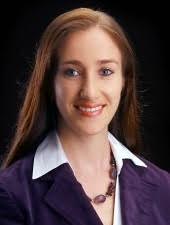
Kerry acknowledges that Fort Bragg has changed in many ways over the years. “One thing that remains the same is that it’s still economically depressed. I’ve attended City Council and Planning Commission meetings over the past year. I’ve learned that I’m woefully uninformed, as are most people. I want to stay involved and help our city. City officials are doing all they can to improve things. It’s not as fast as some people would like, but change takes time.

“I’d like to see us embrace our quirkiness, our small town-ness. It would be great to have more music and art festivals. I’d love to organize a fashion show on First Fridays and help someone put on a Mermaid Parade like the one they do in Brooklyn.”

In the meantime, Kerry will continue to add to our local economy by bringing affordable fashion to the people of Fort Bragg and adding a hip new place for them to enjoy a brewski, good food, live music, and her generous good humor.

kerry4

Justine Lemos

justine1I sat down with Justine Lemos, owner of at One yOga, intending to talk about how she returned home to open a sweet little yoga studio in Fort Bragg. I quickly learned that the studio is merely one of her many pursuits. As she described her involvement in academia, classical Indian dance, and explained such exotic terms as Ayurveda and Jyotish, I found myself mesmerized by her intelligence and drive.

Twenty-one years ago, this fifth-generation Mendocino native ventured into the world to garner a wealth of knowledge. Eventually, a twist of fate brought her home to share what she’d learned.

Justine was Valedictorian of her 1995 class. Along the way, she became an accomplished ballet artist, which led to a curiosity about the relationship between dance and ritual. She found Hampshire College in Amherst, Massachusetts to be a place that would nurture this study.

“Hampshire College allows students to create their own majors, more along the lines of a graduate program. I met my Indian classical dance Guru Ranjanaa Devi there and continue to work with her.”

During her first year of college, Justine met future husband Grady Gauthier. After graduating in 1999, they stayed in Amherst and she worked at the Asian Art and Culture Program at the University of Massachusetts. Two years later, no longer able to tolerate the harsh winters and feeling the need for more education, she was accepted into a Master’s program in Dance Studies at Mills College in Oakland.

justine4Justine was awarded a prestigious Fulbright Scholarship in 2003 which allowed her and Grady to live in India for 10 months while she researched ancient forms of Indian dance. “We lived in remote village in the southwestern part of the country. In order to buy anything refrigerated, we had to travel an hour and a half by local bus.”
Despite the hardships, they loved it. “Grady met a young man who wanted to learn English. In India, children either go to English school or local language school. The former get white collar jobs, the latter blue collar jobs. As a result of Grady’s teaching, Shaheem established the ‘Speak Up Speak Out Academy of English’ and has become very successful.”

After the Fulbright ended, Justine entered the doctoral program in Cultural Anthropology at UC Riverside, and Grady started law school at Whittier College. Her focus was Dance Ethnography, specifically with an emphasis on embodiment in South Asian dance. In 2008, an Institute of India Studies grant paid for both of them to live in India for a year while Justine did research for her dissertation. They returned to Southern California in 2009. She started writing her dissertation and Grady began his last year of law school. During that time, she became pregnant.

“I gave birth to our son Ravel two weeks after I passed my oral exams. Grady had one more year of law school. When Ravel was two weeks old, I strapped him on me and stood in the front of a lecture hall filled with undergraduate students. I taught Introduction to Cultural Anthropology, and World Dance and Cultures.”

Grady worked as a paralegal. When he finished law school and passed the bar, he couldn’t find a job. “This was in 2010, during the economic fallout. No firms were hiring. I had a baby and couldn’t go back on the fulltime job market. I suggested we move to Mendocino temporarily. We could rent a small house on my parents’ property and aggressively apply for jobs.”

justine5Justine taught online classes—Cultural Anthropology, World Dance, Linguistic Anthropology, Anthropology of Art—through colleges in Southern California. She often worked on her laptop at The Company Store. When the flower shop in the building went of business, she thought, “That should be a yoga studio.”

In 2011, with a modest loan from her parents, Justine opened at One yOga. “In yogic subtle anatomy there are two main energy channels termed the ida and pingala—or ‘ha’ and ‘tha’—which are represented by the sun and the moon. We decided to use the two big Os to reflect this yogic principle.”

Grady started an immigration law practice in the back of the yoga studio. “I spent two years working all the time, with very small classes, before the business took off. Today, about 200 students a week pass through the studio. Grady’s business grew to the point where he needed a bigger office, which he found behind Taka’s Grill on Main Street. He’s the only immigration lawyer in Mendocino, Humboldt and Lake Counties.”

The growth of at One yOga allowed Justine to hire instructors to offer more classes. She’s been able to branch out into areas of related interest, such as Ayurveda and Jyotish, private yoga classes, and heart-based meditation. She continues to teach Cultural Anthropology online and write articles in academic journals.

justine3Justine has mixed feelings about being back home. “I was gone for fifteen years and never thought I’d return. But I compared everywhere I lived to here and those places always came up short.” She feels limited career-wise, but grateful to be able to raise her son near her parents. “I had a special relationship with my grandparents, and I’m happy Ravel is having the same experience.”

Justine does, of course, see changes to the Mendocino community. “When I grew up, I knew nearly every person in town. It’s now less a town and more a tourist destination. The people who bought my grandparent’s house live elsewhere and use it as a vacation home.”

On the other hand, Justine sees Fort Bragg at an exciting juncture. “There’s a lot of socioeconomic friction going on. The town doesn’t know what it wants to be. Mendocino is set—it’s a tourist town. What is Fort Bragg? Will we turn it over to corporations or will it be like Healdsburg and Sebastopol, which celebrate local businesses?”

Justine’s business is not tourist dependent. “I found something that fits a local need. I’ve created a community of students who love me and I love them.”

***

For more information on Justine, visit these websites:

at1yoga.com

mendoveda.com

justinelemos.com

natarajdancers.org

justine2

Chicken Soup for My Soul

A year ago, my daughter Jenn suggested I submit a few of my blog posts to Chicken Soup for the Soul. I went to their website and found that they accepted entries in various categories. Without much hope, I submitted three stories about my dog Lucy.

In January, I must have also submitted the post, “The Spirit of Giving,” but truly don’t remember. I blame my lack of memory on the fact that I have a lot going on in January. First of all, I loathe the month: it’s dark, cold, and responsible for the death of the holiday season, which starts with Halloween and ends on New Year’s Day. Second, I’m extremely busy with my day job. The energy it takes to not hate January while fighting melancholy and working long hours leaves me little spare brain power.

Months went by. Spring miraculously returned to the Northern Hemisphere and morphed into summer. Life eased up and my January bitterness disappeared. In late July, I started receiving unsolicited emails from Chicken Soup for the Soul.

Ah ha! So that’s the deal. You submit something to this outfit and they put you on their junk mail list. Well I have a delete button and know how to use it. I deleted the email without reading it. A day or so later, I receive another. Delete! I wasn’t about to fall for their devious ploy.

A week later, my phone rang. I didn’t recognize the caller ID number and didn’t answer it. An hour or so went by and I retrieved my messages.

“This is D’ette Corona from Chicken Soup for the Soul. I’ve been trying to reach you through email. A piece you submitted is a finalist for our Christmas edition.”

I now know what it feels like to be hit with a stun gun.

I called D’ette back and confessed my stupid assumptions. She was sweet and understanding. “When people don’t respond to emails, I always call.”

After I filled out the form, mailed it, and my blood pressure returned to normal, I re-read her email. I was considered a finalist, not a shoe-in. Oh well. I braced myself against disappointment.

A few weeks later, I received notice that “The Spirit of Giving” had been chosen for publication. I would receive $200 plus ten free copies. I had to review and approve their edited version where they took some liberties and changed the title, but hey this is Chicken Soup for the Soul! They sell hundreds of thousands of copies. Rewrite everything for all I care.chickensoup

I was given the chance to buy 20 more books at cost and of course I took it.

On the fourth of October, I opened the front door to let the cat in and found a large box on the porch. Inside were—yes, you know—copies of the book. I flipped through to find my piece listed as number four out of 101 entries. I read it aloud to my husband Gary who was nearly as thrilled as I was.

I now have 30 copies of a book I never thought I’d be published in, from an offer I dismissed as junk mail. I will give them away, then sit back and wait for the requests for movie rights to start pouring in, hopefully in that darkest of months—January.

Grey Whale Inn Haunted Tour

gwinnThis past Friday, my son Harrison, daughter-in-law Kasi and I went on the Grey Whale Inn Haunted Tour. The inn was built in 1915 as the town’s hospital, retains some of the old time hospital ambiance—wide doorways to accommodate gurneys and steep ramps where staircases might otherwise be—and is rumored to have ghostly visitors.

At the suggestion of daughter Jenn (who lives in the Seattle area), I downloaded an app called Ghost Radar on my phone.

gwinn2Our guide Marnie was delightful, dressed in Victorian garb with her hair pulled up in the fashion of the era. She had not heard of Ghost Radar but was happy to let me run it during the visit.

I’m not going to reveal any spoilers—you need to take the tour yourself and learn about the history of this remarkable building—but I will share a bit of our experience.

About a half hour in, while on the second floor, a young blonde boy appeared from around a corner. It was a scene straight out of “The Shining.” He looked about eight years old, and stood stick straight and mute. Marnie smiled, and asked, “Would you like to join us?”

He said, “Yes, but I need to ask my mom,” and disappeared behind the corner.

A few minutes later, the boy, his mother and slightly older sister caught up with us. Marnie cautioned that if anyone became scared and wanted to leave, they could. As we walked along the hallway, the boy stuck his index fingers in his ears and intermittently squeezed his eyes shut. His mother chuckled. His sister rolled her eyes. Marnie asked if he wanted to leave the tour. Fingers still in ears, he shook his head.

Ten minutes later, he’d had enough. His mom allowed her daughter to stay with us and escorted the boy away. Marnie asked the girl her name.

“Hazel,” she said.

“Hazel!” I said. “Whenever I’m asked my name at Starbucks, I say Hazel.” The girl humored me with a giggle.

The tour continued for several minutes before the boy and his mother reappeared. As frightened as he was, he couldn’t seem to help himself—stories of the inn drew him back. He remained until the end and smiled with relief. We congratulated him on being so brave.

Ghost Radar picked up a number of spirits sprinkled throughout the building, making the experience both satisfying and creepy.

Grey Whale Inn Haunted Tours are available through Halloween: Thursday-Saturday 12:00, 2:00, 4:00 and 6:00pm; Sundays 1:00 and 3:00 and 5:00pm. To reserve a spot, send an email to stay@greywhaleinn.com or call 707-964-0640.

I promise you’ll enjoy it.gwinn6

Stevie Drake-Scudder

stevie2Roundman’s Smoke House (motto: “We’ll Smoke Anything”) is the highlight of my weekly shopping routine. The aroma of wood smoke evokes the feel of autumn when fallen tree branches and leaves are raked into piles and reduced to ash before the winter rains. The store is packed with an array of smoked meats, cheeses, all-natural meats, and best of all, their fabulous bacon. (When my son left for college 12 years ago, he claimed the only thing he’d miss about Fort Bragg was Roundman’s bacon.) The employees are friendly, helpful and have great senses of humor. I always enter and leave the shop with a smile.

Roundman’s has been part of Stevie’s life since her father Steve Scudder became co-owner with Steve Rasmussen in 1995. It employed her during high school, college, and in lean times during her film production and massage therapy careers.

stevie4Stevie has lived in Portland, San Francisco, and Vermont. The bonds of family, friends, and the beauty of the Mendocino Coast (along with the family business) have brought her home time and time again.

She was raised on a “commune” in Albion—a collection of her dad and his friends who bought land in the seventies and built houses where they still live nearly forty years later. Throughout her childhood, her parents said, “You can do anything you want, you just gotta do it.”

She worked hard in school and earned a scholarship to Pacific University outside of Portland, Oregon. “It was just far enough away that my parents couldn’t pop in for a weekend visit.” She laughs.

Her dream to become a doctor was squelched when she struggled through organic chemistry and calculus. “In my senior year in high school, I was told I had dyslexia. It’s no wonder I had problems with those courses.” She discovered a love of photography and film. A professor convinced her to major in film production.

With her lovable three-legged dog Sailor.

“After graduation in 2001, I worked as a film editor in Portland for six months before moving to the Bay Area.” She worked for post-production houses in San Francisco before landing a job in the equipment department at the Academy of Arts College. “One of the perks of that job was free use of the film equipment. I worked with others to make short, silly pieces and low budget features. It was a great time, but eventually the combination of the job, film making and the go-go-go of city life stressed me out. I was raised to be more chill. After seven years, I knew it wasn’t for me in the long term, forever way of thinking.

“I did a one-eighty and enrolled in massage therapy school. When I was a kid, I don’t remember going to a doctor very often. Instead, my parents took me to Faith Graham, a gifted, spiritual massage therapist. She was my inspiration.”

Stevie returned to the Mendocino Coast in 2007, worked a bit with Faith and at Roundman’s while building her own massage practice.

stevie6A few years later, she met boyfriend James Todd. “He was born in Mendocino on July 4, 1979. Many people remember the date because it was the only year his parents weren’t at the parade.” When he was two, his family moved to Vermont.

“A friend from high school Josh Tsujimara moved to Vermont and happened to meet James. In 2009, James decided to explore his birthplace (he had not been back since he was a toddler). James wandered into the Tip Top and there was Josh working as a bartender.” A short time later, Josh introduced Stevie to James.

By 2011, James missed his hometown of Middlebury, Vermont, and Stevie agreed to move. “The small town feel is similar to here, but there’s no ocean and the weather can be harsh.” She worked as a massage therapist and an assistant manager at a natural food co-op. “The cost of living was high, but the wages were low. We both had to work two jobs to make ends meet. In August 2014, the family business called us home. After 20 years, Ma was retiring and it was time to come back.

“It was an adjustment. I wondered: What am I doing here? What’s my role? Everyone fully embraced us. I realized how much a part of me this business is—it’s truly my family.”

Her dad still works 12-hour days, James is a butcher, and two friends from Vermont were recently hired. “Roundman’s has an amazing crew, provides a livable wage, and treats everyone like family. We’ve grown from four employees to seventeen. We encourage everyone to create their own flavors—like Jasper’s Famous Bacon Sticks and Jessie’s Famous Corned Beef Bangers—and continue to learn about flavor profiles from our younger employees.”

stevie5What Stevie loves most about her job is working with her dad Steve. “He’s the best man I know. He and Steve Rasmussen found this little gem at the right time in their lives and at the right time for the coast. They’ve created an environment where everyone supports each other and plays on their strengths.”

What she likes least: “Meat is a male dominated business. I sometimes feel a lack of respect from customers who insist on getting their questions answered by one of the guys. I know as much as the guys about most things meat. When I don’t, I ask.”

As the Owner In Training (or OIT as Steve Rasmussen calls her), Stevie carries a lot of responsibility for running the business and has a hard time turning her brain off. A year after her return, she started dabbling in massage again, mostly with friends and family, on a very part-time basis. “I realized how much I missed it. Body work allows me to do something I love while helping people. I feel the same way about bacon.” She laughs.

Stevie imagines a bright future as co-owner of Roundman’s. “The coast has grown and there are a lot of people I don’t know, but nothing compares to waking up to the beauty of our surroundings. I hope the area doesn’t grow too big, that we stay rooted in the small town feel, to honor the way of life that brought a lot of us back.”

Stevie is happy to have returned to the loving arms of family, friends, coworkers, supportive customers, and fellow business owners. She envisions continuing to sign her Roundman’s emails for years to come: “Stevie and the Steves.”

stevie1

Heidi Kraut

ghtheidi1When Heidi left the Mendocino Coast for Texas A&M University in 1996, she envisioned becoming a cowgirl on the open range. Her qualifications included having been a 4H kid most of her life, owning a pair of cowgirl boots, and plans to major in agriculture and political science. It didn’t take her long to realize she was more interested in politics than agriculture. She kept the boots and began stumping for political campaigns. She had no idea that one day she’d return to the place of her birth and run her own campaign.

***

After college, Heidi stayed in Texas and sold real estate for a couple of years. “During that time, I realized College Station was a great place to be a student, but I no longer fit into that category.” In 2003, she moved back to her parents’ home in Caspar to regroup and figure out what to do with her life.

She worked for Sallie Mac and Frankie’s and took art classes at College of the Redwoods. In one of those classes, she met her future husband Todd Sorenson. “He’d graduated from the [College of the Redwoods] woodworking program in 2002 and was asked to return for a semester to teach a class.” They started dating and talked about moving out of the area. “We were never ready to go at the same time. When I was ready, he was involved in something he didn’t want to leave and vice versa.”

heidi2In 2008, they decided to stay and bought a house in Fort Bragg. “Every other year we do something exciting,” Heidi said with a laugh. In 2010, daughter Sadie was born. They married in 2012, and two years later had daughter Mara. This summer, Todd was appointed shop manager of the woodworking school.

Eight years ago, Heidi was hired to manage the Hospice Thrift Store. “I was given the keys to the small a-frame building across from the Botanical Gardens, many bags of clothes, and told to open the store. Thankfully I had a lot of great volunteers who helped.” In 2011, the store relocated to an expansive, bright space in the Boatyard Shopping Center.

“I was pleased by the strong community that formed among the volunteers—most of whom are in their seventies and eighties. Some people work as many hours as I do and others once or twice a week. They’re such an inspiration—living to the fullest every day and giving to others.”

heidi3Heidi strives to discover each volunteer’s passion. “Someone pointed out that our vinyl records weren’t marked with prices. I said, ‘Congratulations, you’re the captain of the Vinyl Department!’ Another said our picture frames were stacking up and looked disorganized. ‘Congratulations, you’re the captain of the Frame Department!’”

In 2013, Heidi ran for and won a seat on the Fort Bragg City Council, serving out the year and a half term vacated by Dan Gjerde. “It took a lot of time away from my family and my job, but it was exciting and important work.” She often took her young daughter Sadie to committee meetings. “One day Sadie placed stuffed animals around a little table in our living room. I asked if she was having a tea party. She said, ‘No, we’re having a meeting!’ I’ve either ruined her or set her up for something great.”

While serving on the council, Heidi witnessed Fort Bragg citizens become increasingly involved in expressing their opinions. “It’s so exciting to see a full house at meetings. People usually attend because they’re stirred up and afraid. They want to say no to a particular issue and that’s important. But it’s also important for people to attend when they want to say yes, they think something is a good idea.”

In 2014, Heidi ran for a second term on the council, but was defeated. She was appointed to the Planning Commission in 2015 and served until January 2017. “A recent example of citizens saying ‘yes’ was when the proposed business Overtime Brewing was on the agenda. Dozens of supporters packed the room and made the commission’s job of approving it easier. It’s vital for public officials to hear the opinions of citizens.”

Heidi acknowledges that the transition to a tourist-based economy has been difficult for those whose lives were affected from the mill closure and decline in fishing. “We’ve gone from being a company town that assured fulltime jobs to a place where fulltime work sometimes has to be pieced together. People make it work, but it’s hard.

“Many people in Fort Bragg are dedicated to building a community to attract visitors who will spend money. The more we improve what our city has to offer, the greater chance we have of growing businesses to employ people and allow them to live here.”

Prime examples of these improvement efforts are the coastal trails that have been a huge hit with locals and tourists. “The Noyo Center for Marine Science is just getting started and doing amazing things. It will eventually attract links to universities. The North Coast Brewing Company has grown to where it’s bursting at the seams and they’re urging people to apply for jobs. Overtime Brewing is in the works, owned by people who grew up here.”

When Heidi returned to the coast in 2003, she was plagued by the mindset suffered by many in her situation—to come back means you’re a failure. “It took me a few years to realize it’s a good thing to come from a small town, a real accomplishment.

“There’s a perception that young people can’t make it here. That’s not true. There’s a great energy going on right now. In the past five years, I’ve seen a number of people return to buy beloved businesses to keep them intact. They’re buying houses and starting families. We’re living in one of the most exciting times I’ve ever seen in Fort Bragg.”

heidi4Heidi is a true gem. I could have talked with her for hours. However, I realize that no interview with a former public official is complete without asking some hard-hitting questions.

How do you explain the rumor that you don’t cook and subsist on a diet of candy bars?

“I do love to cook—and even started eating vegetables a little bit. There were a few years though, in college, when I might have eaten Hershey bars and peanut butter for one or two meals a day. The peanut butter is very nutritious. The fun size Hershey bars can be used to scoop the peanut butter right out of the jar, so there are no spoons or dishes to wash. This saves both time and water.”

Do you still have your cowgirl boots?

“I think the ones I had in high school are gone, but I have a nice pair handed down from a friend that I sometimes wear when neither sneakers nor high heels fit the outfit/occasion.”

And what occasion might that be—running for a seat on the city council?

“Off the record….”

Dang! I can’t reveal the answer (unless enticed with large sums of money).

For now Heidi is content to serve on the board of the Mendocino Coast District Hospital Foundation and happy to be raising two young community members who may have future leadership plans of their own.

Inspecting the bounty on her micro farm.

Inspecting the bounty on her micro farm.

Sheila Struckmeyer

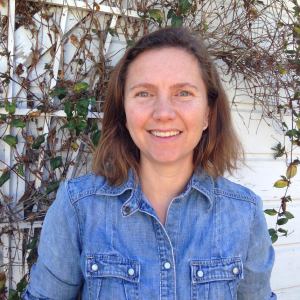
sheila5Sheila was raised on an organic farm in Fort Bragg and learned to make soaps, facial scrubs, and lip balms. She never imagined this knowledge would allow her to earn a living. As so often happens in life, one thing led to another and here she is—the owner of Bella Mia, a petite treasure tucked into the back room of Understuff on Main Street.

***

Born in 1976, Sheila grew up with a large extended family on the same property where her mother was raised. In addition to farming, her dad was a woodworker. “My family was self-sufficient. The attitude was if you want to do something, just do it. There were few limitations.”

Her mother had a passion for growing the unusual—like kohlrabi and currants. “In the early eighties these were novelties. Margaret Fox and Chris Kump (then owners of Café Beaujolais) were on the culinary edge and used uncommon ingredients in their dishes. Whenever I’d go on a delivery with my mom, Margaret would feed us something yummy.”

sheila7

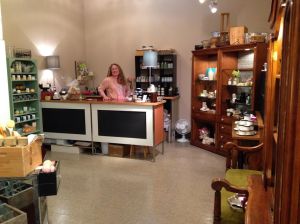
The effervescent Sheila welcomes visitors to her beautiful store.

Sheila’s formal education was a mixture of private, public and home schooling. “For a while I went to a Hippie school where no outdoor shoes were allowed inside. We had to change into Chinese slippers, and call teachers by their first names.” As a teenager in the early nineties, she wanted to go to “normal” school and wear designer jeans. She went to Mendocino High for a year before enrolling herself in Fort Bragg High. “They asked, ‘Where are your parents?’ I said, ‘Why do they need to be here?’” She laughs. “I was taught to take charge of things on my own. I never asked them to come with me.”

After graduating from high school at age 16, Sheila drove to Washington State with a boyfriend and lived in Friday Harbor on San Juan Island.

Sixteen?

She laughs. “My parents felt if that’s what I wanted, I should do it.”

After a year, the boyfriend and island living lost their appeal. She drove back to Fort Bragg.

Alone? At seventeen? Before cell phones?

Sheila employs a local soap maker to create these fabulous bars.

She laughs. “I never felt unsafe. There were plenty of rest stops along Interstate 5 that were clean and well-lit at night. When I got tired, I’d pull into one and sleep in my car. At each stop, there was a group of women volunteers—I think they were nuns— who handed out cookies.”

After a year of waitressing, she worked for the Village Toy Store in Mendocino. “The owners, Bill and Susie Carr, changed my life. They encouraged me to have a career, taught me bookkeeping, and how to run a business. I started saving for retirement at the age of 18. I consider them family and we remain close.”

The toy store job sparked a love of working retail. After the Carr’s sold their business, Sheila worked for a number of stores. A job at Sallie Mac nudged her to open her own business. “She carried an exclusive line of skin care products from a French company that required all sales people to go through extensive training in order to present them properly. I learned a lot about how these are made and why certain ingredients are chosen.”

Sheila combined her knowledge of organic skin care products with that of aromatherapist friend Melanie Knox and made gifts for friends and family. They eventually expanded their operation to sell at craft fairs.

“Our first craft fair was the opening day of the 2008 Whale Festival—the one that had the worst weather ever on that Saturday morning. There was thunder, lightning, hail, and torrential rain. We set up in the Company Store and I worried we wouldn’t sell a thing. But we sold out in five hours and made $1,000. We were so excited.”

sheilaWhile traveling the craft fair circuit and working for her mother (who owned a nursery), Sheila contemplated opening a store. Her husband Michael wasn’t sure it could be successful. They’ve been married 10 years and come from very different backgrounds. “I have a sense of no limitations while he’s more conservative.”

They met at the Tip Top one night when she was the sober driver for a young friend’s twenty-first birthday. He lived in Sacramento, but his family had a house on the coast that he’d been visiting most of his life. “We dated for a year. On the Friday after Thanksgiving, exactly a year after we met, he proposed to me in the place we had our first kiss—his parents’ house on Todd’s Point.” He moved to Fort Bragg and works for North Coast Plumbing.

Drawing on the can-do spirit in which she was raised, Sheila spotted a “For Rent” sign on Laurel Street in 2012 and 15 days later opened Bella Mia.

In 2013 her mom was diagnosed with ALS and died two years later. Helping her mom through her illness and mourning her death took a tremendous emotional toll on Sheila. “Creativity and grieving don’t go hand in hand. I felt like I couldn’t make anything or go to my shop and make chit chat. I had lost my mom, so what else mattered? My lease was coming up in April of this year. I wanted to close the store. Hilary [White] had lost her father six months before my mom died and knew how I felt, but was concerned that I’d regret that decision. She had an empty room in the back of Understuff and convinced me to move in. I’m so grateful to her.”

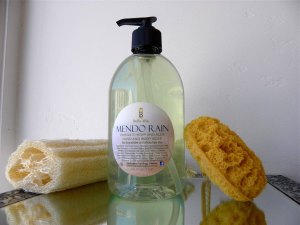
sheila2Like other business owners, Sheila works long hours, but enjoys being her own boss. “If I decide to do something, I do it. I don’t have to discuss it with anybody.” She makes her products daily. My personal favorite is her Mendo Rain soap. Imagine standing on the Mendocino Headlands on a crisp, clear morning after a storm. Take a deep breath. Sheila has captured this pure, clean aroma in her liquid soap. (If you live out of the area and can’t get to the headlands, order it and you’ll see what I mean.)

“I like the creative process of making things. I can be focused and completely present in the task—Zen.” This Zen quality is manifested in her store—it feels harmonious and, even though well stocked, has a minimalist feeling, allowing for a relaxed shopping experience. She’s proud that most of her customers are locals.

Sheila hopes someday Fort Bragg’s economy returns to a balance between business and tourism—where businesses are created to help young people stay here. In the meantime, she continues to do what she can to add to the economy while generously sharing her joyful spirit.sheila3