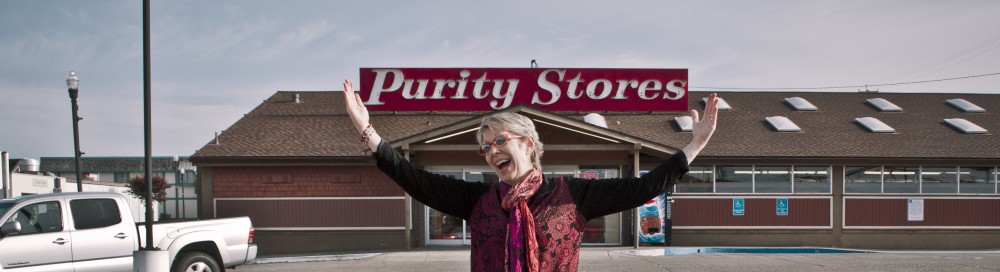
 When Josh’s girlfriend Lia Wilson told me what he does for a living, I simply had to meet him.
He happens to be . . . are you ready . . . ?
A private investigator!
As in Magnum PI—only in his case it’s Morsell PI.
For the past five years, Josh has done his PI work through the San Francisco office of the Mintz Group, a New York-based firm with offices around the world. In April 2016, he chose to return to the Mendocino Coast and work for the Mintz Group remotely. “I feel like I’m part of a group of people who grew up here and seem tied to this area by a rubber band. We go far away into the world and come back to bring energy to the place we love.”
Josh graduated from Mendocino Community High School in 1994 and went to Brown University in Rhode Island where he majored in Art and Semiotics (I had to ask him how to spell this). “Semiotics is the study of signs and symbols, and is really a combination of critical theory, art history, media studies and philosophy, directed toward understanding how meaning is produced in a society. Half my major was making art—experimental video and film—and the other half was exploring how art functions in cultures.” He grew up without a television and wanted to explore a medium he was unfamiliar with in a part of the country he was unfamiliar with. “I wanted a challenge.”
After college ended in 1998, he and longtime friend John Bacon took to the road to find a place to live. “We drove up the coast to Seattle and then to Montana. We turned around and settled in Seattle. It was during the summer and the weather was gorgeous and beguiling. Then, our first winter, it rained 93 straight days.” They established a collective, a house where residents not only shared the rent and utilities, but also the domestic chores. “People took turns cooking dinner and we’d all sit down and share the meal.”
 Josh worked three part-time internships. He monitored the news and developed press kits for Environmental Media Services, a non-profit environmental public relations firm. He worked for filmmaker John de Graaf in coordinating the first Equinox Environmental Film Festival (later named for Hazel Wolf), soliciting in-kind donations and arranging other details. At Grist Magazine, which was just launching for the first time, he recruited cartoonists. Then he took a full-time job as an environmental organizer with Save Our Wild Salmon, advocating for the removal of the Snake River dams.
The dismal Seattle weather took its toll and he left in January 2000 to travel with friends for three months through Guatemala and Chiapas, Mexico. He returned to Mendocino in the spring. He planned to stay a short time and work to save money to travel. He ended up staying three years.
“It was really lively in Mendocino. A lot of my friends were living here at that time. It was boisterous and fun.”
Josh learned web design from Tai Leventhal and helped people design websites. He also worked for the filmmaker Oleg Harencar, who had formerly run the Regional Occupational Program (ROP) video program. He helped Harencar make the feature film Bloodlines.
“I had a good time in Mendocino, but by 2004 I needed to expand my horizons.” He moved to the Bay Area where he worked as a researcher and paralegal for Dennis Cunningham, a civil rights attorney who specialized in police misconduct cases. “Dennis was like a superhero—he could bring these righteous cases against very long odds and win.”
Josh loved this job. “It was exciting and interesting. I felt I was helping a vulnerable population. We brought pressure to help the law enforcement system to function better, to be more humane.”
Josh also assisted Cunningham with the case of Judi Bari—an environmental activist from Mendocino County whose car was blown up by a pipe bomb (with her in it). She was accused by the FBI of transporting explosives. Bari hired Cunningham to file a federal civil rights suit claiming the FBI and police officers falsely arrested her and partner Darryl Cherney and attempted to frame them as terrorists. “By the time this went to trial,” he said, “I was writing a book about the case.” He has worked hard on the book ever since, and today has an agent who is shopping the book for publication.
In 2008, Josh enrolled in an MFA Creative Non-Fiction program at the University of Minneapolis Twin Cities. He chose the program because of the quality of the instructors, the length (three years as opposed to two), and receipt of full funding. He loved the writing community he found there, and he enjoyed Minneapolis despite the extreme winter weather. “It’s a very livable city, but I always knew I’d come back to Northern California.”
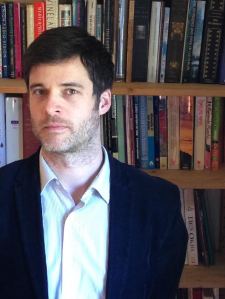 In August 2011, he moved to Berkeley and became a private investigator with the Mintz Group, a multinational firm. A friend referred him, but he got the job because of his law office and writing experience. “We conduct a variety of investigations, none having to do with cheating spouses.” He laughs. “We focus mainly on three areas: due diligence, including extensive background checks on candidates for high level corporate jobs, and background checks prior to business deals; disputes, which means uncovering whatever it is lawyers need to know for a given lawsuit; and anticorruption. Under the Foreign Corrupt Practices Act, it is illegal for American companies to pay bribes to win job bids in foreign countries. Sometimes companies will contact us to investigate the practices of their employees abroad. We have offices in Asia, Latin America and Africa, as well as the U.S., Canada and London.”
Josh says, “I like that my job allows me to learn about the world each day.” He feels fortunate to be able to do the job from Fort Bragg. “There’s so much pressure in the Bay Area. I started to feel discontented—like a frog in a pot of water that was slowly rising to a boiling point. Living here is much more affordable. I’m close to family and friends. Instead of spending an hour on BART after work, I can go to the beach or plant a garden.”
Josh sees himself and Lia as the start of a movement of people who, given the opportunity to work remotely, will leave big cities in favor of living in our coastal area. “As high-speed internet becomes more accessible in Mendocino County, people will bring big city incomes with them. Remote workers can be one piece of an experiment to bring prosperity to our entire community in the new economy. We need to plan for smart growth. We have wonderful potential here—the combination of wild remoteness with the ability to build the infrastructure of the future.”

 As a teenager, Kerry devoured Vogue magazine. “Fashion is an art form—not just something to cover your body with,” she said. “From runway couture to black yoga pants, it gives you an opportunity to express your inner self in ways large and small, obvious and subtle.”
 Because of her deep love of fashion, it makes sense that Kerry would eventually own a clothing store. But first she would graduate from high school and tear out of town to travel the country before returning to hold two to three jobs at the same time in order to make a living.
 In 2011, Hilary White asked her to work one day a week at If the Shoe Fits—a consignment clothing shop on Franklin Street. “A year later, Hilary took me to dinner and said she was buying Understuff. She added, ‘I want you to buy If the Shoe Fits.’
 and taproom with food currently under construction on Elm Street (north of town near the old bowling alley). They hope to open in early summer 2017. When that happens, she’ll work three to four evenings a week in addition to running her store. When I marvel at her ambition, she says, “I’ve never been afraid of having multiple jobs.”
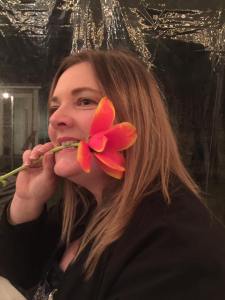 I met Laura Lee 24 years ago when she was 19 years old. I was captivated by her name—one that seems suited to a line of specialty dairy products—perhaps yogurts and cheeses—some type of creamery to reflect her wholesome sweetness. From our very first meeting, I could tell she is a person who leads from the heart.
 Laura is sometimes astonished that she’s worked at Feet First for over 20 years. “It’s given me a chance to build cherished friendships. I’ve met a lot of people in our community and returning visitors. One of my favorite parts is watching the kids grow up. There are kids I’ve known since I helped tie their shoes who now bring their own children into the store.”
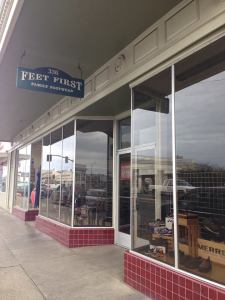 Like most businesses, Feet First has changed over the years. “I remember when athletic shoes were mostly white with a little color pop. Now it’s all about the colors. Right now, leisure shoes are taking on a look inspired by athletic shoes. When the [Georgia Pacific] mill was open, work boot sales were steady. We still sell them, but hiking boots are more popular among men.”
 Recently, she’s started calling friends and arranging gatherings. “You know how it is when you run into people and say ‘We have to get together soon’ and you never do? Well, I’m telling people, ‘Now’s the time.’ When the weather improves, I’m going to invite people to bonfires at the beach after work.”
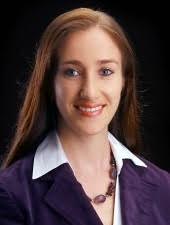 I sat down with Justine Lemos, owner of at
  Justine was awarded a prestigious Fulbright Scholarship in 2003 which allowed her and Grady to live in India for 10 months while she researched ancient forms of Indian dance. “We lived in remote village in the southwestern part of the country. In order to buy anything refrigerated, we had to travel an hour and a half by local bus.”
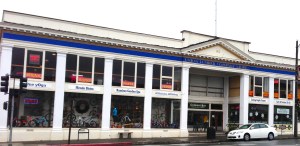 Justine taught online classes—Cultural Anthropology, World Dance, Linguistic Anthropology, Anthropology of Art—through colleges in Southern California. She often worked on her laptop at The Company Store. When the flower shop in the building went of business, she thought, “That should be a yoga studio.”
 Justine has mixed feelings about being back home. “I was gone for fifteen years and never thought I’d return. But I compared everywhere I lived to here and those places always came up short.” She feels limited career-wise, but grateful to be able to raise her son near her parents. “I had a special relationship with my grandparents, and I’m happy Ravel is having the same experience.”



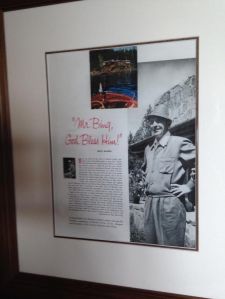












 It Happened at Purity