Justine Lemos

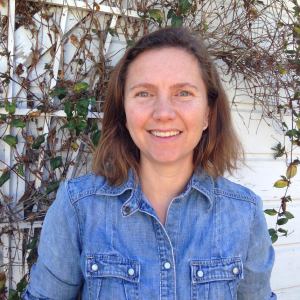
justine1I sat down with Justine Lemos, owner of at One yOga, intending to talk about how she returned home to open a sweet little yoga studio in Fort Bragg. I quickly learned that the studio is merely one of her many pursuits. As she described her involvement in academia, classical Indian dance, and explained such exotic terms as Ayurveda and Jyotish, I found myself mesmerized by her intelligence and drive.

Twenty-one years ago, this fifth-generation Mendocino native ventured into the world to garner a wealth of knowledge. Eventually, a twist of fate brought her home to share what she’d learned.

Justine was Valedictorian of her 1995 class. Along the way, she became an accomplished ballet artist, which led to a curiosity about the relationship between dance and ritual. She found Hampshire College in Amherst, Massachusetts to be a place that would nurture this study.

“Hampshire College allows students to create their own majors, more along the lines of a graduate program. I met my Indian classical dance Guru Ranjanaa Devi there and continue to work with her.”

During her first year of college, Justine met future husband Grady Gauthier. After graduating in 1999, they stayed in Amherst and she worked at the Asian Art and Culture Program at the University of Massachusetts. Two years later, no longer able to tolerate the harsh winters and feeling the need for more education, she was accepted into a Master’s program in Dance Studies at Mills College in Oakland.

justine4Justine was awarded a prestigious Fulbright Scholarship in 2003 which allowed her and Grady to live in India for 10 months while she researched ancient forms of Indian dance. “We lived in remote village in the southwestern part of the country. In order to buy anything refrigerated, we had to travel an hour and a half by local bus.”

Despite the hardships, they loved it. “Grady met a young man who wanted to learn English. In India, children either go to English school or local language school. The former get white collar jobs, the latter blue collar jobs. As a result of Grady’s teaching, Shaheem established the ‘Speak Up Speak Out Academy of English’ and has become very successful.”

After the Fulbright ended, Justine entered the doctoral program in Cultural Anthropology at UC Riverside, and Grady started law school at Whittier College. Her focus was Dance Ethnography, specifically with an emphasis on embodiment in South Asian dance. In 2008, an Institute of India Studies grant paid for both of them to live in India for a year while Justine did research for her dissertation. They returned to Southern California in 2009. She started writing her dissertation and Grady began his last year of law school. During that time, she became pregnant.

“I gave birth to our son Ravel two weeks after I passed my oral exams. Grady had one more year of law school. When Ravel was two weeks old, I strapped him on me and stood in the front of a lecture hall filled with undergraduate students. I taught Introduction to Cultural Anthropology, and World Dance and Cultures.”

Grady worked as a paralegal. When he finished law school and passed the bar, he couldn’t find a job. “This was in 2010, during the economic fallout. No firms were hiring. I had a baby and couldn’t go back on the fulltime job market. I suggested we move to Mendocino temporarily. We could rent a small house on my parents’ property and aggressively apply for jobs.”
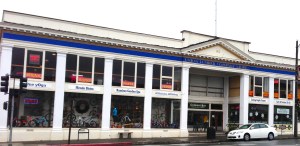
justine5Justine taught online classes—Cultural Anthropology, World Dance, Linguistic Anthropology, Anthropology of Art—through colleges in Southern California. She often worked on her laptop at The Company Store. When the flower shop in the building went of business, she thought, “That should be a yoga studio.”

In 2011, with a modest loan from her parents, Justine opened at One yOga. “In yogic subtle anatomy there are two main energy channels termed the ida and pingala—or ‘ha’ and ‘tha’—which are represented by the sun and the moon. We decided to use the two big Os to reflect this yogic principle.”

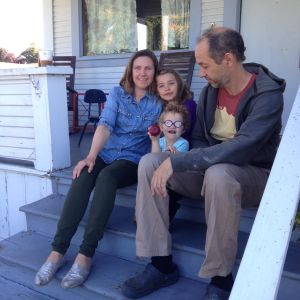
Grady started an immigration law practice in the back of the yoga studio. “I spent two years working all the time, with very small classes, before the business took off. Today, about 200 students a week pass through the studio. Grady’s business grew to the point where he needed a bigger office, which he found behind Taka’s Grill on Main Street. He’s the only immigration lawyer in Mendocino, Humboldt and Lake Counties.”

The growth of at One yOga allowed Justine to hire instructors to offer more classes. She’s been able to branch out into areas of related interest, such as Ayurveda and Jyotish, private yoga classes, and heart-based meditation. She continues to teach Cultural Anthropology online and write articles in academic journals.

justine3Justine has mixed feelings about being back home. “I was gone for fifteen years and never thought I’d return. But I compared everywhere I lived to here and those places always came up short.” She feels limited career-wise, but grateful to be able to raise her son near her parents. “I had a special relationship with my grandparents, and I’m happy Ravel is having the same experience.”

Justine does, of course, see changes to the Mendocino community. “When I grew up, I knew nearly every person in town. It’s now less a town and more a tourist destination. The people who bought my grandparent’s house live elsewhere and use it as a vacation home.”

On the other hand, Justine sees Fort Bragg at an exciting juncture. “There’s a lot of socioeconomic friction going on. The town doesn’t know what it wants to be. Mendocino is set—it’s a tourist town. What is Fort Bragg? Will we turn it over to corporations or will it be like Healdsburg and Sebastopol, which celebrate local businesses?”

Justine’s business is not tourist dependent. “I found something that fits a local need. I’ve created a community of students who love me and I love them.”

***

For more information on Justine, visit these websites:

at1yoga.com

mendoveda.com

justinelemos.com

natarajdancers.org

justine2

Chicken Soup for My Soul

A year ago, my daughter Jenn suggested I submit a few of my blog posts to Chicken Soup for the Soul. I went to their website and found that they accepted entries in various categories. Without much hope, I submitted three stories about my dog Lucy.

In January, I must have also submitted the post, “The Spirit of Giving,” but truly don’t remember. I blame my lack of memory on the fact that I have a lot going on in January. First of all, I loathe the month: it’s dark, cold, and responsible for the death of the holiday season, which starts with Halloween and ends on New Year’s Day. Second, I’m extremely busy with my day job. The energy it takes to not hate January while fighting melancholy and working long hours leaves me little spare brain power.

Months went by. Spring miraculously returned to the Northern Hemisphere and morphed into summer. Life eased up and my January bitterness disappeared. In late July, I started receiving unsolicited emails from Chicken Soup for the Soul.

Ah ha! So that’s the deal. You submit something to this outfit and they put you on their junk mail list. Well I have a delete button and know how to use it. I deleted the email without reading it. A day or so later, I receive another. Delete! I wasn’t about to fall for their devious ploy.

A week later, my phone rang. I didn’t recognize the caller ID number and didn’t answer it. An hour or so went by and I retrieved my messages.

“This is D’ette Corona from Chicken Soup for the Soul. I’ve been trying to reach you through email. A piece you submitted is a finalist for our Christmas edition.”

I now know what it feels like to be hit with a stun gun.

I called D’ette back and confessed my stupid assumptions. She was sweet and understanding. “When people don’t respond to emails, I always call.”

After I filled out the form, mailed it, and my blood pressure returned to normal, I re-read her email. I was considered a finalist, not a shoe-in. Oh well. I braced myself against disappointment.

A few weeks later, I received notice that “The Spirit of Giving” had been chosen for publication. I would receive $200 plus ten free copies. I had to review and approve their edited version where they took some liberties and changed the title, but hey this is Chicken Soup for the Soul! They sell hundreds of thousands of copies. Rewrite everything for all I care.chickensoup

I was given the chance to buy 20 more books at cost and of course I took it.

On the fourth of October, I opened the front door to let the cat in and found a large box on the porch. Inside were—yes, you know—copies of the book. I flipped through to find my piece listed as number four out of 101 entries. I read it aloud to my husband Gary who was nearly as thrilled as I was.

I now have 30 copies of a book I never thought I’d be published in, from an offer I dismissed as junk mail. I will give them away, then sit back and wait for the requests for movie rights to start pouring in, hopefully in that darkest of months—January.

Grey Whale Inn Haunted Tour

gwinnThis past Friday, my son Harrison, daughter-in-law Kasi and I went on the Grey Whale Inn Haunted Tour. The inn was built in 1915 as the town’s hospital, retains some of the old time hospital ambiance—wide doorways to accommodate gurneys and steep ramps where staircases might otherwise be—and is rumored to have ghostly visitors.

At the suggestion of daughter Jenn (who lives in the Seattle area), I downloaded an app called Ghost Radar on my phone.

gwinn2Our guide Marnie was delightful, dressed in Victorian garb with her hair pulled up in the fashion of the era. She had not heard of Ghost Radar but was happy to let me run it during the visit.

I’m not going to reveal any spoilers—you need to take the tour yourself and learn about the history of this remarkable building—but I will share a bit of our experience.

About a half hour in, while on the second floor, a young blonde boy appeared from around a corner. It was a scene straight out of “The Shining.” He looked about eight years old, and stood stick straight and mute. Marnie smiled, and asked, “Would you like to join us?”

He said, “Yes, but I need to ask my mom,” and disappeared behind the corner.

A few minutes later, the boy, his mother and slightly older sister caught up with us. Marnie cautioned that if anyone became scared and wanted to leave, they could. As we walked along the hallway, the boy stuck his index fingers in his ears and intermittently squeezed his eyes shut. His mother chuckled. His sister rolled her eyes. Marnie asked if he wanted to leave the tour. Fingers still in ears, he shook his head.

Ten minutes later, he’d had enough. His mom allowed her daughter to stay with us and escorted the boy away. Marnie asked the girl her name.

“Hazel,” she said.

“Hazel!” I said. “Whenever I’m asked my name at Starbucks, I say Hazel.” The girl humored me with a giggle.

The tour continued for several minutes before the boy and his mother reappeared. As frightened as he was, he couldn’t seem to help himself—stories of the inn drew him back. He remained until the end and smiled with relief. We congratulated him on being so brave.

Ghost Radar picked up a number of spirits sprinkled throughout the building, making the experience both satisfying and creepy.

Grey Whale Inn Haunted Tours are available through Halloween: Thursday-Saturday 12:00, 2:00, 4:00 and 6:00pm; Sundays 1:00 and 3:00 and 5:00pm. To reserve a spot, send an email to stay@greywhaleinn.com or call 707-964-0640.

I promise you’ll enjoy it.gwinn6

Stevie Drake-Scudder

stevie2Roundman’s Smoke House (motto: “We’ll Smoke Anything”) is the highlight of my weekly shopping routine. The aroma of wood smoke evokes the feel of autumn when fallen tree branches and leaves are raked into piles and reduced to ash before the winter rains. The store is packed with an array of smoked meats, cheeses, all-natural meats, and best of all, their fabulous bacon. (When my son left for college 12 years ago, he claimed the only thing he’d miss about Fort Bragg was Roundman’s bacon.) The employees are friendly, helpful and have great senses of humor. I always enter and leave the shop with a smile.

Roundman’s has been part of Stevie’s life since her father Steve Scudder became co-owner with Steve Rasmussen in 1995. It employed her during high school, college, and in lean times during her film production and massage therapy careers.

stevie4Stevie has lived in Portland, San Francisco, and Vermont. The bonds of family, friends, and the beauty of the Mendocino Coast (along with the family business) have brought her home time and time again.

She was raised on a “commune” in Albion—a collection of her dad and his friends who bought land in the seventies and built houses where they still live nearly forty years later. Throughout her childhood, her parents said, “You can do anything you want, you just gotta do it.”

She worked hard in school and earned a scholarship to Pacific University outside of Portland, Oregon. “It was just far enough away that my parents couldn’t pop in for a weekend visit.” She laughs.

Her dream to become a doctor was squelched when she struggled through organic chemistry and calculus. “In my senior year in high school, I was told I had dyslexia. It’s no wonder I had problems with those courses.” She discovered a love of photography and film. A professor convinced her to major in film production.

With her lovable three-legged dog Sailor.

“After graduation in 2001, I worked as a film editor in Portland for six months before moving to the Bay Area.” She worked for post-production houses in San Francisco before landing a job in the equipment department at the Academy of Arts College. “One of the perks of that job was free use of the film equipment. I worked with others to make short, silly pieces and low budget features. It was a great time, but eventually the combination of the job, film making and the go-go-go of city life stressed me out. I was raised to be more chill. After seven years, I knew it wasn’t for me in the long term, forever way of thinking.

“I did a one-eighty and enrolled in massage therapy school. When I was a kid, I don’t remember going to a doctor very often. Instead, my parents took me to Faith Graham, a gifted, spiritual massage therapist. She was my inspiration.”

Stevie returned to the Mendocino Coast in 2007, worked a bit with Faith and at Roundman’s while building her own massage practice.

stevie6A few years later, she met boyfriend James Todd. “He was born in Mendocino on July 4, 1979. Many people remember the date because it was the only year his parents weren’t at the parade.” When he was two, his family moved to Vermont.

“A friend from high school Josh Tsujimara moved to Vermont and happened to meet James. In 2009, James decided to explore his birthplace (he had not been back since he was a toddler). James wandered into the Tip Top and there was Josh working as a bartender.” A short time later, Josh introduced Stevie to James.

By 2011, James missed his hometown of Middlebury, Vermont, and Stevie agreed to move. “The small town feel is similar to here, but there’s no ocean and the weather can be harsh.” She worked as a massage therapist and an assistant manager at a natural food co-op. “The cost of living was high, but the wages were low. We both had to work two jobs to make ends meet. In August 2014, the family business called us home. After 20 years, Ma was retiring and it was time to come back.

“It was an adjustment. I wondered: What am I doing here? What’s my role? Everyone fully embraced us. I realized how much a part of me this business is—it’s truly my family.”

Her dad still works 12-hour days, James is a butcher, and two friends from Vermont were recently hired. “Roundman’s has an amazing crew, provides a livable wage, and treats everyone like family. We’ve grown from four employees to seventeen. We encourage everyone to create their own flavors—like Jasper’s Famous Bacon Sticks and Jessie’s Famous Corned Beef Bangers—and continue to learn about flavor profiles from our younger employees.”

stevie5What Stevie loves most about her job is working with her dad Steve. “He’s the best man I know. He and Steve Rasmussen found this little gem at the right time in their lives and at the right time for the coast. They’ve created an environment where everyone supports each other and plays on their strengths.”

What she likes least: “Meat is a male dominated business. I sometimes feel a lack of respect from customers who insist on getting their questions answered by one of the guys. I know as much as the guys about most things meat. When I don’t, I ask.”

As the Owner In Training (or OIT as Steve Rasmussen calls her), Stevie carries a lot of responsibility for running the business and has a hard time turning her brain off. A year after her return, she started dabbling in massage again, mostly with friends and family, on a very part-time basis. “I realized how much I missed it. Body work allows me to do something I love while helping people. I feel the same way about bacon.” She laughs.

Stevie imagines a bright future as co-owner of Roundman’s. “The coast has grown and there are a lot of people I don’t know, but nothing compares to waking up to the beauty of our surroundings. I hope the area doesn’t grow too big, that we stay rooted in the small town feel, to honor the way of life that brought a lot of us back.”

Stevie is happy to have returned to the loving arms of family, friends, coworkers, supportive customers, and fellow business owners. She envisions continuing to sign her Roundman’s emails for years to come: “Stevie and the Steves.”

stevie1

Heidi Kraut

ghtheidi1When Heidi left the Mendocino Coast for Texas A&M University in 1996, she envisioned becoming a cowgirl on the open range. Her qualifications included having been a 4H kid most of her life, owning a pair of cowgirl boots, and plans to major in agriculture and political science. It didn’t take her long to realize she was more interested in politics than agriculture. She kept the boots and began stumping for political campaigns. She had no idea that one day she’d return to the place of her birth and run her own campaign.

***

After college, Heidi stayed in Texas and sold real estate for a couple of years. “During that time, I realized College Station was a great place to be a student, but I no longer fit into that category.” In 2003, she moved back to her parents’ home in Caspar to regroup and figure out what to do with her life.

She worked for Sallie Mac and Frankie’s and took art classes at College of the Redwoods. In one of those classes, she met her future husband Todd Sorenson. “He’d graduated from the [College of the Redwoods] woodworking program in 2002 and was asked to return for a semester to teach a class.” They started dating and talked about moving out of the area. “We were never ready to go at the same time. When I was ready, he was involved in something he didn’t want to leave and vice versa.”

heidi2In 2008, they decided to stay and bought a house in Fort Bragg. “Every other year we do something exciting,” Heidi said with a laugh. In 2010, daughter Sadie was born. They married in 2012, and two years later had daughter Mara. This summer, Todd was appointed shop manager of the woodworking school.

Eight years ago, Heidi was hired to manage the Hospice Thrift Store. “I was given the keys to the small a-frame building across from the Botanical Gardens, many bags of clothes, and told to open the store. Thankfully I had a lot of great volunteers who helped.” In 2011, the store relocated to an expansive, bright space in the Boatyard Shopping Center.

“I was pleased by the strong community that formed among the volunteers—most of whom are in their seventies and eighties. Some people work as many hours as I do and others once or twice a week. They’re such an inspiration—living to the fullest every day and giving to others.”

heidi3Heidi strives to discover each volunteer’s passion. “Someone pointed out that our vinyl records weren’t marked with prices. I said, ‘Congratulations, you’re the captain of the Vinyl Department!’ Another said our picture frames were stacking up and looked disorganized. ‘Congratulations, you’re the captain of the Frame Department!’”

In 2013, Heidi ran for and won a seat on the Fort Bragg City Council, serving out the year and a half term vacated by Dan Gjerde. “It took a lot of time away from my family and my job, but it was exciting and important work.” She often took her young daughter Sadie to committee meetings. “One day Sadie placed stuffed animals around a little table in our living room. I asked if she was having a tea party. She said, ‘No, we’re having a meeting!’ I’ve either ruined her or set her up for something great.”

While serving on the council, Heidi witnessed Fort Bragg citizens become increasingly involved in expressing their opinions. “It’s so exciting to see a full house at meetings. People usually attend because they’re stirred up and afraid. They want to say no to a particular issue and that’s important. But it’s also important for people to attend when they want to say yes, they think something is a good idea.”

In 2014, Heidi ran for a second term on the council, but was defeated. She was appointed to the Planning Commission in 2015 and served until January 2017. “A recent example of citizens saying ‘yes’ was when the proposed business Overtime Brewing was on the agenda. Dozens of supporters packed the room and made the commission’s job of approving it easier. It’s vital for public officials to hear the opinions of citizens.”

Heidi acknowledges that the transition to a tourist-based economy has been difficult for those whose lives were affected from the mill closure and decline in fishing. “We’ve gone from being a company town that assured fulltime jobs to a place where fulltime work sometimes has to be pieced together. People make it work, but it’s hard.

“Many people in Fort Bragg are dedicated to building a community to attract visitors who will spend money. The more we improve what our city has to offer, the greater chance we have of growing businesses to employ people and allow them to live here.”

Prime examples of these improvement efforts are the coastal trails that have been a huge hit with locals and tourists. “The Noyo Center for Marine Science is just getting started and doing amazing things. It will eventually attract links to universities. The North Coast Brewing Company has grown to where it’s bursting at the seams and they’re urging people to apply for jobs. Overtime Brewing is in the works, owned by people who grew up here.”

When Heidi returned to the coast in 2003, she was plagued by the mindset suffered by many in her situation—to come back means you’re a failure. “It took me a few years to realize it’s a good thing to come from a small town, a real accomplishment.

“There’s a perception that young people can’t make it here. That’s not true. There’s a great energy going on right now. In the past five years, I’ve seen a number of people return to buy beloved businesses to keep them intact. They’re buying houses and starting families. We’re living in one of the most exciting times I’ve ever seen in Fort Bragg.”

heidi4Heidi is a true gem. I could have talked with her for hours. However, I realize that no interview with a former public official is complete without asking some hard-hitting questions.

How do you explain the rumor that you don’t cook and subsist on a diet of candy bars?

“I do love to cook—and even started eating vegetables a little bit. There were a few years though, in college, when I might have eaten Hershey bars and peanut butter for one or two meals a day. The peanut butter is very nutritious. The fun size Hershey bars can be used to scoop the peanut butter right out of the jar, so there are no spoons or dishes to wash. This saves both time and water.”

Do you still have your cowgirl boots?

“I think the ones I had in high school are gone, but I have a nice pair handed down from a friend that I sometimes wear when neither sneakers nor high heels fit the outfit/occasion.”

And what occasion might that be—running for a seat on the city council?

“Off the record….”

Dang! I can’t reveal the answer (unless enticed with large sums of money).

For now Heidi is content to serve on the board of the Mendocino Coast District Hospital Foundation and happy to be raising two young community members who may have future leadership plans of their own.

Inspecting the bounty on her micro farm.

Inspecting the bounty on her micro farm.

The Reluctant Spartan – Part II

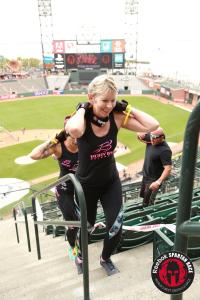
spartan5It was a cool gray morning at Giants Stadium by the Bay. I shivered not from the cold, but from utter terror as I watched Spartan participants run up to the very top deck of seats. I’m terrified of heights to the point where I start to hyperventilate. I could not do this. What was I doing here?

My brain ping-ponged for a solution. I stood behind my teammates, hiding my anxiety. Yvette had the logo “Bald Hill Cattle Company” printed on the back of her shirt. I did something I rarely do—asked for help. She agreed to stay directly in front of me while we traversed the stairs. I would focus on that logo, not on the vast distance between the elevation, the playing field, and the endless stretch of water beyond.

In that moment, I surrendered. I accepted that it was okay to be the laggard of the pack. Others could take the lead. I was content to follow.

spartan2It was time for Team Mendo to queue up. Bethany (who had finished her competitive race in under 40 minutes) announced she would run the course again with us. She had been the key force behind getting us to this place. She was going to see us through to the end. We walked around a corner to encounter our first obstacle—a four-foot fence to scale before we got in line.

I chuckled. Here we go.

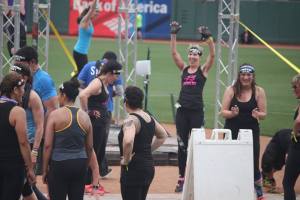
Participants were released every minute or so in sets of 20. As each set waited, an emcee got the group jacked up by yelling, “WHO ARE YOU?” to which the group responded, “WE ARE SPARTANS!” My mind whispered, “I’m a scared little wieny.”

We were off and running down the lower deck of stadium stairs, into the basement to the Giants’ locker room where we were to perform 20 pushups. Halfway through my set I noticed the room smelled like years of embedded sweat. I found it funny that this place belonging to a major league baseball team smelled like any high school boys’ locker room.

The obstacles blur in my memory, but a few stand out. The first wall we encountered was eight feet tall. As I contemplated failure, Bethany rushed up and hunkered down with her fingers laced. “Put your foot in here,” she commanded. She boosted me up and I lurched over. Some obstacles later, we repeated the same move. Near the end was a six-foot wall. I turned to Bethany, like a child to her mother, and said, “Help me.” She said, “You can do it.” And by God I did—with a running leap I was up and over.

It was thrilling to accomplish obstacles I didn’t think I could do—like pick up a 50-pound concrete cylinder, carry it 20 feet, put it down, do five burpees, pick it up, carry it back, and do five more burpees. A shot of adrenaline propelled me onward where I got another shot and another until I was halfway through the race, shouting, “This is fun!” and meaning it.

My fear of heights was put to the test early. I kept my focus on Yvette’s “Bald Hill Cattle Company” logo and used a hand as a blinder to block out the scenery far below. Up to the top deck of seats and over, down and over, up and over again, I refused to let my gaze waiver, concentrating only on taking the next step. I nearly cried with relief when it was over.

spartanraceAbout ten obstacles later, we were told to pick up a 20-pound beanbag and go out to the stands. I’ll be damned if on the other side of the stadium—the side I hadn’t seen earlier—we didn’t have to repeat a mirror trek to the upper deck. By then I was a full on adrenaline junkie. I’d done it before, I could do it again. This time I didn’t have to rely on “Bald Hill Cattle Company.” Instead, it was “Hell yeah, bitch—I got this!”

Spartan rules dictate that when you fail an obstacle you must do 30 burpees. I only missed two—the rope climb and the spear throw. I didn’t even attempt the rope climb—in training for it, I’d hurt my back. I missed the spear throw by an inch.

The last obstacle was the monkey bars. I’d tried it a couple of times in training, barely able to hold myself stationary for more than a few seconds before feeling my arms were going to rip from my shoulder sockets. I headed toward the burpee area when Yvette said, “I’ll help you.” I jumped up and grabbed the first bar. She clutched my legs and literally carried me across. Between her and Bethany, our other two team mates also got across.

spartan8When it was Yvette’s turn, Bethany tried to assist. A Spartan monitor appeared, yelling, “You can’t help her.” Bethany said we were a team and we’d been helping each other all the way. He barked, “You can’t help her on this one.” Bethany countered, “We just helped three of our teammates with this one.” He stood firm.

In retrospect, we should have jumped him and beat the crap out of him. Instead, we watched as poor Yvette struggled halfway through before dropping. Disappointed, she prepared to do her burpees. The team told her to stand aside—we’d each do eight for her.

spartan7I rose from my final burpee and looked into the stands to find my son Harrison, daughter Laine, and her boyfriend Jeff smiling at me. (My husband Gary and daughter-in-law Kasi couldn’t be there.) I raised my arms and jumped up and down. It was one of the happiest moments of my life.

Our team ran through a series of punching bags to the finish line. We linked arms and crossed together. On the other side, our necks were draped with a ribbon holding the heaviest medal we’d ever received. We laughed and hugged and posed for pictures.

We are now part of that crazy cult called Spartans.spartan3

The Reluctant Spartan – Part I

I’ve never considered myself a competitive person—unless you count growing up with four siblings and competing for the attention of my overwhelmed parents. During my first five decades on the planet, I also never considered myself an athlete or remotely fond of physical activity.

earth dayOn Earth Day 1971, I was a junior in high school. My sister (a sophomore) and I decided to honor the day by walking instead of driving the five miles to school. We stopped for three cigarette breaks and once to smoke a joint. At the end of the day, we walked eight blocks, decided the trek home would be too arduous, and stuck out our thumbs to hitch a ride. Our Spanish teacher picked us up and gave a lecture on the dangers of hitchhiking until he deposited us on the curb outside our house. We crept to the backyard to enjoy a smoke before going inside.

I smoked off and on for the next 30 years, entertaining myself during the off years with Dance Aerobics in the eighties and walking my dogs in the nineties. At the age of 50, my teenage son needed me to sign consent for him to join a gym. Before I knew it, I’d also signed up. I’ll admit I fell for the sales pitch of the family discount, but also hoped that exercise classes might help shed the 15 pounds menopause had piled on and make me feel less like a sausage packed into my clothing.

photo(1)My friend Kathleen and I took classes, worked out on our own, and eventually, with a personal trainer. We grew stronger and, I dare say, a little cocky. Six years into this regimen, she suggested we do a triathlon. I agreed before I fully knew what it meant (or how to spell it)—a half-mile swim, 22-mile bike ride, and 5k run. We worked out six days a week, and created a motto: To finish is to win.

We finished.

This race taught me: (1) I’m more physically capable than I think I am; and (2) I will never do it again (the open water swim was terrifying). But the experience was a tipping point—it made me yearn to challenge my body and expand my capabilities.

I started entering local 5k races. The year I turned 60, I won first place in my age category in two races—not because I’m fast, but because I was either the only woman in that category or the few others were a lot older. The year I turned 61, I ran five races, motivated by the fact that my friend Sandy would turn 60 the next year and she’s much faster than I am. That would be my last year to collect ribbons and medals. (I got four.)

spartan1This past January, a group of fellow gym rats—Beth, Yvette, and Jan—invited me to join their Spartan team for the May race at AT&T Park. My personal trainer Bethany had done a number of these and always came back battered and bruised, but high on accomplishment. I watched a YouTube video and told the group, “What kind of crazy would do such a thing? I’m 62 years old for God’s sake. I work out four times a week and run 5k races. Leave me alone.”

They kept me on their email thread. A few weeks later, I asked Bethany if she thought, with proper training, I was capable of the challenge. “You could do it today,” she said.

I signed up.

Fear of failure and letting my teammates down became major motivators. I was two, eight, and thirteen years older than the other three members of my group. I pushed myself—strength training and running six times a week. I won’t lie, training wasn’t easy. For example, I’d never run more than 3.10 miles (5k) in my life. Each quarter mile beyond that was exhausting, but I kept at it until four, four and a half, and five miles wasn’t so bad. Six point two miles (10k) was—and still is—a bitch, but I know I can do it and I’ll do it again.

I grew stronger, but no matter how hard I trained, I was the slowest and weakest of the team. In many areas of my life, I’ve excelled or been at least average. It pissed me off that I’d slipped to the lower end of the bell curve. I tried to avoid bitterness and accept my weaknesses. I succeeded about a quarter of the time. Many days I wanted to quit, but kept going. It felt good to be part of a group working toward a common goal.

Panic-in-Needle-Park-WinnI had four months to obsess on the Spartan Race. Each time I thought about it, a bolt of fear struck my heart, ricochet down to my stomach, and left me feeling nauseated.

This held true until the morning of the race as my team and I watched young hard-bodied competitors rush through the course while we waited for our 9:30 start time. We’d arrived early to watch Bethany run the competitive race. (We weren’t considered competitors—we were “fun” runners.)

TUNE IN NEXT WEEK FOR PART IIspartan4

Bethany Brewer

bethany8Like all Warrior Princesses, Bethany came from humble beginnings. Growing up, she had little supervision, which allowed her to roam free, picking up habits hardly recommended for a child. As a teenager, she delved into a world of drug and alcohol abuse. On the outside, she was a swaggering party girl. On the inside, her soul was dying.

***

bethany7By the time she was a freshman in high school, she was plagued by a sense that she didn’t fit into this life. She left home, lived with a revolving door of friends, and only went to school a couple of hours a day. In her sophomore year, she transferred to Mendocino, hoping to do better.

She continued to fail.

“Teachers tried, but nobody knew what to do with me. By my senior year, I was told I wasn’t going to graduate unless I hustled. I went to Noyo High from eight to noon, took a journalism class at Fort Bragg High in the afternoon, and went to the adult school at night. I was able to graduate with my age group in 1998.”

bethany9Bethany immediately moved to Medford, Oregon to care for her ailing father and grandparents. “My dad died in October, my grandpa three weeks later, and my grandma in February. They were the last of my family on that side.” Those losses were devastating. She dealt with her grief in the only way she knew—using her inheritance to douse her feelings with alcohol, drugs and cavort with people who mooched off her.

Broke by 21, she returned to Fort Bragg and worked at Laurel Deli. By 24, she was married and moved to Yuma, Arizona. “I was a bartender at an Indian Casino and loved it. I learned how to stand up for and defend myself.” The marriage was tumultuous and broke up after four years. “I lived alone for the first time in my life. I really liked being independent and having responsibilities.”

bethany6In 2010, she learned her maternal grandmother had dementia. Bethany moved back to Fort Bragg to help care for her, and worked again at Laurel Deli. “I continued to party and be irresponsible. I eventually left Grandma’s house and isolated myself from my family. At one point, I lived in my truck for three months. I felt like I had a big hole”—she makes a circle with the fingers of both hands and places it over her heart—“that I tried to fill up with drugs, alcohol, and violence.”

Bethany’s mother had moved to Willits and encouraged her to live with her. “On November 3, 2012, I started detoxing on her couch. I was really sick, but managed to go to a twelve-step meeting every day. Everything seemed less, less, less. Little did I know my life would change to more, more, more.”

bethany5Two weeks later, her friend Amie McGee encouraged her to apply for work at the Mendocino Sports Club. Bethany didn’t feel strong enough to hold a job, and was relieved when it took a month before she was invited for an interview. In January 2013, she moved back to Fort Bragg and started working at the club. A trainer approached her and said, “There’s an athlete inside you and if you want to see her, I’ll train you.”

She worked out with him six days a week for six months. The gym owner gave her a personal trainer’s manual and encouraged her to study for the certification exam. On November 2, 2013, she passed the test.

The Warrior Princess was born.bethany1

Two and a half years later, her business has grown from five clients to 140. She continues to study and receive certifications. “I love the process of learning.”

***

Bethany spends a few hours a week at Noyo High School “just chillin’” with the kids. “By the time kids get to Noyo, a lot of people have given up on them. I want them to know they can be there and be someone of worth.” She shares the story of her stormy teenage years, her recovery, and hands out gym passes. It was through this outreach that she met a teenager who would have a major impact on her life.

“She called one night [in February 2015] to say she’d been locked out of her house. I let her spend the night on my sofa. Before I knew it, I had bunkbeds with Ninja Turtle sheets in my spare bedroom. I became the mother of a 15-year old kid.” The girl had quietly struggled with her gender identity most of her life. “I know what’s it’s like to feel alone,” Bethany said. “When she told me she wanted to dress like a boy, I took her to a thrift shop and bought her clothes.”

kellenWith the support of Bethany, the staff at Noyo, and a tribe of fairy Godmothers, the girl continued her journey, embracing her male identity. Her grades improved and in the fall of 2015, she enrolled in Fort Bragg High. By this time, the girly clothes had been discarded and a masculine name chosen. Life was not without its challenges (imagine being a transgender teen in a small town) but he thrived academically and socially.

It was difficult for Bethany to be an instant mother and tough for the kid to refrain from being a mildly rebellious teen. In January 2016, he moved in with his girlfriend’s family. He and Bethany maintain a close, heartwarming bond.

***

Bethany2The hole that once scarred Bethany’s soul has healed. “I’m so lucky to wake up every morning and spend the day doing what I love. My goal is to help people realize their strength. It’s payback for all that’s been given to me.”

Bethany’s most recent project is training people to participate in Spartan Races. Some, like me, start out believing we aren’t capable of such physical demands. Over time, the Warrior Princess shakes that doubt out, turning it around until, before we know it, we’re crossing the finish line and accepting medals.

Thank you, Warrior Princess for your willingness to grab hold of life, seek challenges and share your experiences. The lives you touch are forever changed for the better.bethany4bethany11

Maureen Leahy Koller—the bookstore & vinyl café

maureen3As a teenager, Maureen was beset by restlessness. She wanted to get out of Fort Bragg, experience the world, and seek adventure. After graduating from high school, she seized the opportunity to go to Venezuela. The problem was that this ticket out of town meant becoming an exchange student—a uniform-wearing Catholic school student.

“It wasn’t the freedom I expected,” she said. “I lived in Valencia, a dangerous city, and couldn’t go anywhere unchaperoned.” (I imagine schoolgirls in two straight lines, ala “Madeline,” under the watchful eyes of a nun as they walk from place to place.)

After that lackluster adventure, she returned to California in 1997, and attended Mills College in Oakland. This wasn’t enough to satisfy her restlessness. “My boyfriend and I wrote the names of cities on scraps of paper and put them in a hat. We pulled out Madison, Wisconsin. At the end of the school year, we packed up and moved.”

In Madison, she started what would become a career in book selling. “I worked for Canterbury Books, a sweet little independent.” After a year, she and the boyfriend split and she “decided to get in my car and drive around the country until I found somewhere to live.” She landed in North Hampton, Massachusetts, taking another bookstore job. “It felt like home. I loved the beauty of the East Coast and all of the culture Northampton manages to smash into one little town. After a while it felt too far away from home and family.”

maureen1In 2002, Maureen moved to the Bay Area where she worked in bookstores in Berkeley. At Half Price Books she meet fellow co-worker Tony Koller, who would eventually become her husband. They enjoyed living in Oakland for nearly a decade. During this time, she returned to Mills and finished a degree in English Literature.

Her love of the Berkeley/Oakland area shifted when she became pregnant. “I could deal with the high crime rate—the muggings and burglaries—but I couldn’t stand the thought of bringing up a child in that environment.” She was drawn back to her place of birth, to the hub of family.

Like Tom and Karl of Re-Find, Maureen and Tony didn’t have a plan for what they would do once they landed in Fort Bragg.

Maureen6Shortly after baby Carolyn was born in late 2010, they learned that Jennifer Wolfman, the owner of a used bookstore on Redwood Avenue, wanted to retire. “She had liquidated inventory, and by the time we bought it, there wasn’t much left. We scouted estate and library sales to build it back up.”

Six months later, they relocated the store to Franklin Street. In May 2016, they moved to their current location on Laurel. “Fifteen volunteers helped us on a Sunday and we were open for business on Monday.”

Tony works for Thanksgiving Coffee during the day, but enjoys late afternoons and Saturdays at the store. “It’s his passion,” Maureen said. “He loves being surrounded by books and touching everything. It’s his time to relax and ‘play.’ He also likes cleaning, which is good because I’m a slob.”

maureen4

Mom, Patty Leahy Carvet, enjoys reading by the sunlit window.

Maureen doesn’t have any employees, but allows selected people to work in exchange for store credit. “After Margot was born [eight months ago], my mother started mysteriously showing up every day. She works on Sundays so Tony and I can have a family day.”

Maureen has been a voracious reader all her life, reading two to three books a week. Owning the bookstore is a perfect fit. “I tend to be autocratic, and like not having to answer to a boss. I can control what comes in and what goes out. There’s a certain amount of pride that comes with owning a store—it reflects who I am.”

Now that she has two children, she doesn’t have time to scout estate and library sales for inventory and must depend upon what people bring to her. “I’m very picky about the condition of what I buy. I feel bad whenever I have to tell someone I won’t take their books because of poor condition or a musty smell. I try to stock the store with the best that can fit into the space I have.”

After Maureen says this, I notice a lack of basement storage room odor that I associate with used bookstores. The aroma of freshly-brewed coffee entices people to pour a cup and browse the store.

maureen5Some of her inventory is new, like North Coast guide books and children’s books. She makes special orders for people who don’t have internet access. Her clientele is mostly tourists, many of whom visit year after year. However, a handful of locals visit the store often.

“I came back to Fort Bragg because I no longer cared about living a glamorous life. I didn’t want to raise my kids in a big city. We could buy a house here—something we couldn’t do in Oakland—and be near family.” A bonus was being able to buy the bookstore and make a go of it. “At the time, Kindle was growing in popularity. Because of this, I thought the store would fail after two or three years. But I’ve never experienced a decline in sales—things just keep getting better.”

Maureen’s youthful restlessness is reminiscent of Dorothy in The Wizard of Oz. She left this small town and had her adventures. Substitute the ruby slippers with a new baby, supportive family and a slower pace of life, and you’ll understand how she came to realize “There’s no place like home.”Maureen7

Soul Mate

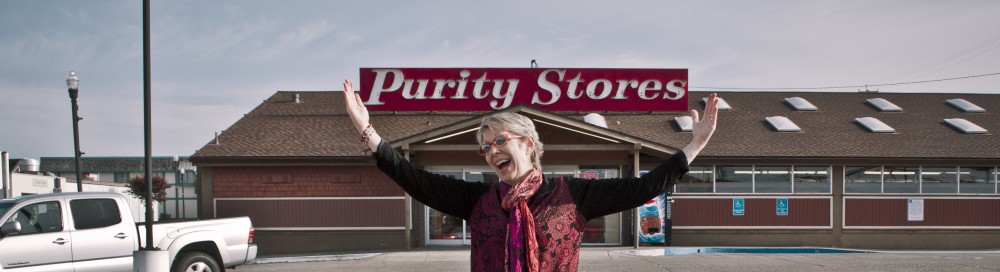
I guide my grocery cart away from the checkout stand at The Purity. I greet a friend standing at the onion bins. A middle aged woman with dark auburn hair, stylish makeup and a Guatemalan shoulder bag enters the store and collects a cart.

As she passes, she gives me a shining smile and direct eye contact. I smile back, thinking I might know her, but realize I do not. She takes a few steps toward the first aisle before whipping a U-turn and nearly colliding her cart with mine.

She’s excited, like a racehorse anxious to be released from the starting gate. I suspect something interesting is about to happen.

“We were meant to meet,” she says in a conspiratorial tone, her face beaming.

“Really?” I say.

“Yes.” She’s nearly breathless. “I saw you walking your dog yesterday. Then today, my husband drove me to the store and we pulled up next to a car and I saw your dog and I said to him, ‘There’s that woman’s dog! She must be in the store!’ And here you are!”

“Wow.” I feel like a celebrity.

celestine_prophecy_B_ARTWORK.qxd:Layout 1She leans in closer, a little too close. “Have you ever read The Celestine Prophecy?”

I’ve read a lot of stuff over the years. I search my memory banks. “No.”

“It says that if two people continue to encounter one another, they either share a past life or have something in this life they are destined to learn from each other.”

“Wow.”

“Don’t you see? I saw you yesterday and then again today. We were meant to meet.”

No one has ever been so excited to see me. “May I ask your name?”

“Lauren Conroy [not her real name]. I live on the corner of Lincoln and Whipple [not her real address].”

I hold out my hand. “Nice to meet you.”

She shakes my hand. “And what’s your name?”

“Kate.” I deliberately skip my last name and Google Map location.

She looks astonished. “Kate is the name I give when I make orders to go! You know like when you place a sandwich order at a deli counter?”

I nod.

“I give the name Kate!” Her dark brown eyes glisten.

As farfetched as I find this encounter, the fake name for take-out orders doesn’t faze me. For years, my Starbucks name has been Hazel. I receive many compliments on it.

“It’s so nice to meet you, Lauren. Thank you for stopping to introduce yourself.” I walk away, but not before noticing her expression drop into disappointment.

“Hopefully we’ll see each other again,” she calls after me.

I assume she’s a recent transplant. We live in a small town. She hasn’t learned that the chances of repeated people sightings are approximately 99.9%.

Lucy and I will have to start wearing hats and dark glasses on our daily walks.

Despite the potential danger of being stalked, Lucy cannot be talked into wearing a hat and sunglasses.