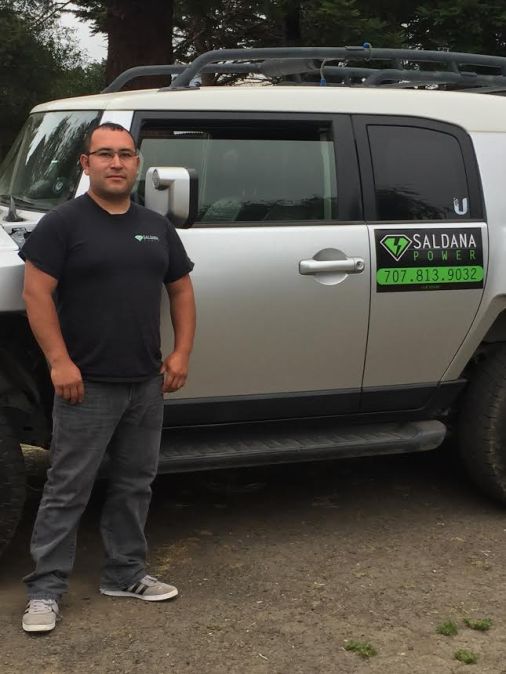
 At the age of 27, Gus is like a man from another era. He is extraordinarily polite, respectful, quietly self-confident, and a hard worker. In high school, he entertained the idea of going to college and majoring in marine biology. By his senior year, he realized this wasn’t his passion, and he didn’t want to waste money on an education he might never use. At the age of 18, he went to work for a building contractor. After two months, he was recruited by Williams Electric in Mendocino where he remained for nine years. “I learned to wire anything from a small shed to a smart home that can be controlled with a cell phone.” Through this experience, he discovered his true passion—electricity.
Late last year, his boss Rick Williams encouraged Gus to get his electrical contractor’s license. Rick was scaling back his business and wanted to refer his overflow to someone he could trust. Gus got his license and opened Saldana Power in January 2017.
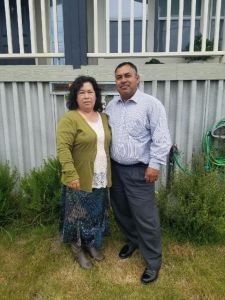 Gus’s work ethic is inherited from his parents. When he was a year old, they moved to Fort Bragg from Mexico to work in the fish processing industry. “This was in 1990 when fishing was booming,” he said. “My parents made minimum wage, but sometimes worked 40 to 50 hours of overtime a week. For a number of years, we lived in an apartment with another family while my parents saved enough money to buy a house.”
His father also spent weekends painting houses. “When I was in seventh grade, he hired me to help. I earned $400 that summer, and spent half of it on a drum set. My mom was furious with me.”
As I mother, I don’t blame her—a kid banging on drums is not a pleasant sound.
“It wasn’t that,” he laughed. “I played in the garage so it wouldn’t bother her. She was mad because she felt it was a waste of money.” He added with a grin, “I still have that drum set.”
Gus loves the freedom of owning a business. “Each day is different. I engage with clients, find out what they want, and give it to them. Some need a simple electrical repair, others need their entire house wired. I strive to do the best job I can. My reputation is all I have. From 2008, I’ve seen guys move here from cities and start businesses. One painting contractor managed to stay a couple of years before his poor reputation caught up with him and he had to leave. Word of shoddy work gets around in a small town and eventually nobody will hire you.”
Gus doesn’t regret not going to college. He’s managed to make a good living and buy a house. In addition, he’s been exposed to a wide variety of people that he would never otherwise have met.
“I’ve wired multi-million dollar homes. Some of them are peoples’ second or third homes. Over the last couple of years, one couple has invited my wife and me to dinner in San Francisco. Whenever they’re in Fort Bragg, they take us out to dinner. I’m grateful to be able to know these kinds of people.”
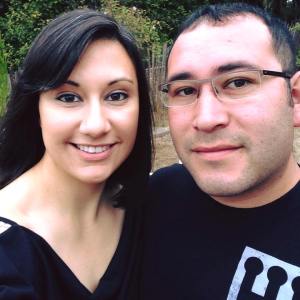 Gus’s wife Sierra works for Harvest Market. They’ve been married five years. “I met her in 2011 when our local Jehovah’s Witness Kingdom Hall needed a major renovation. Three hundred volunteers from throughout the state showed up and over the course of two weekends, we gutted the place and rebuilt it.” Sierra, who lived in Chico at the time, was one of those volunteers.
Gus was immediately attracted to her, but courting her presented a logistical problem—Chico is nearly four hours from Fort Bragg. “Shortly after we finished the Kingdom Hall, a couple of friends asked if I wanted to visit the Sierra Nevada Brewing Company in Chico. I called Sierra and asked her to lunch.” They started meeting once a month in Chico. “A couple months later, I told my dad I was going to marry this girl.” Almost exactly a year after meeting her—on September 15, 2012—they were married.
In 2015, they bought a house. Two years after that, he started his business. “I had to quickly learn of the financial aspects about owning a business.” He’s also trying to figure out how to hire employees. He’s considering his 20-year-old brother. “Before I do that, I have to learn how to treat him as an employee, not a sibling.”
Gus laments, “I’m looking for good employees and can’t find them. We’re living in an age where nobody wants to work.” While it may seem that Gus has a pretty sweet deal—owning a successful electrical contracting business at such a young age—he’s paid his dues over the past nine years. “I’ve crawled through mud under many houses. I used to be afraid of spiders, but I’ve had so many on my face that they don’t bother me anymore. I’ve run into skunks and raccoons, even found dead animals.” He was often the one called upon to go out in the middle of the night to fix a problem.
Helping customers design lighting for their homes is Gus’s favorite part of his job. “Lighting can affect someone’s mood. Sometimes an architect will design a house, but the lighting plans are vague. I love when that happens because I can sit down with a client and ask about their habits, what styles they like. When I shop for fixtures, I try to find the best deals.”
Gus notes both negative and positive changes in Fort Bragg over the years. “It used to be safer—more people lock their doors now. It’s also louder—there are more tourists. I don’t drive on Main Street during the summer. I try to shop local as much as possible, but there are fewer shops now.” On the positive side, “There are people moving here who want to build or remodel a home. I have clients who work for large companies that allow them to work remotely. They can live anywhere in the world and choose to live here.”
Gus is grateful to have found a career he enjoys. Given his work ethic and passion for what he does, there is no doubt his business will continue to grow and prosper. He is a true asset to our local community.
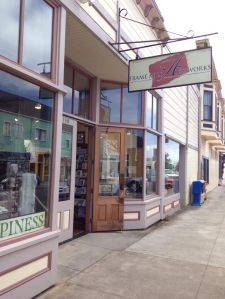
 When Sarena unlocked the doors to the Frame Mill Artworks on the morning of March 22, 2017, she excited and nervous. The previous owner Robyn Koski had helped make the transition as smooth as possible, but there was so much Sarena didn’t know, like the flow of the business or the nuances of her employees. Her nerves were further rattled when a supply truck pulled up to make a big delivery.
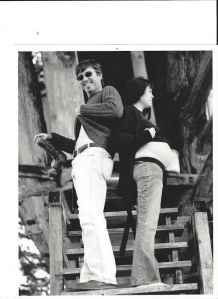 w much he loved the area. I liked him, but wasn’t interested in a serious relationship. I was considering an MFA program at Mills College. Instead, I moved back to Fort Bragg in 2003 to live with my parents. I needed time to think about what I wanted to do with my life. Within six months, Sean also moved here and was hired by Western ACI as an arborist.”
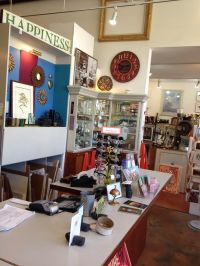 The Frame Mill had been on the market for a few years. Sarena’s background in framing allowed her to imagine buying it. She spoke to friends who own businesses and they assured her becoming a business owner was one of the best things they’d ever done. She looks back on this now and chuckles. “It’s like talking to parents when you’re considering having a child. They tell you how wonderful it is, but leave out the part about sleepless nights.”
 Sarena is pleased to discover her business is part of a little neighborhood hub. “People bring in family photos and art projects. It’s fun to help design a way to display them. I’ve been warmly welcomed by the downtown business community.” She plans to evolve the Frame Mill Artworks into a maker’s space. “So few places make what they sell. I want to eventually create affordable art that people can buy to furnish their walls.” In the meantime, she’s learning how to merchandise the store with items that appeal to locals and tourists. “It’s hard because people have a variety of tastes, some very different from mine.”
 Returning to the town where she once felt like an outsider has been a positive experience for Sarena. “It used to be ‘What family are you from?’ Now many people live here who don’t have roots going back generations. New people are moving in and young ones are moving back, some bringing families with them. The more our town can do to be a place people are attracted to—like the opening of the coastline via the coastal trails—the more it will encourage young people to move here.”
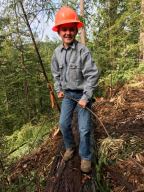
 Myles is a fourth generation logger who has loved being in the woods for as far back as he can remember. However, a decision made the year before he was born might have sent his life on a different course.
 “In 1975, my grandpa was a silent partner with Bud Eastman and they decided to liquidate part of their logging business and put some equipment up for auction. Grandpa wanted to invest in a hotel and bar, but my dad [Mike] had just graduated from Humboldt State and wanted to start a logging business with him. Dad convinced him to buy a truck and some equipment from that auction.” Thus, Anderson Logging was born.
 While he was in high school, the guys in the shop taught Myles how to grease and maintain trucks. He did this after school and during summers. When he turned 18, he got to fulfill his dream of working in the woods. “I set a lot of chokers,” he said with a smile. A choker is a small piece of cable used to attach logs to cable systems, allowing trees to be harvested without dragging them along the ground. “I really liked it and would have kept at it, but Dad had me work all the jobs so I could learn what the business entailed.”
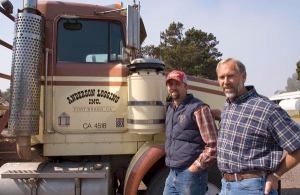 Mike didn’t want Myles to jump right into the business. “It would have been easy for me to head straight into it after high school,” Myles said, “but Dad wanted me to see other places and learn other things before deciding how to spend my life. He knew how much work is involved in this and hoped I would find something easier, but every time I was away all I wanted was to get back to logging. I really enjoy being out in the woods working with the guys. However, I’ve learned there’s a lot more behind the scenes to keep the business going, and that part is not as much fun.”
 Myles enjoyed college where he majored in Ag Engineering. When he was a senior, he and two friends wanted to build a tractor—from the ground up. “Each year, students in the department would build a sled to be used in tractor pulls. All prize money goes to student scholarships. The dean approved the tractor as long as we found sponsors to cover the cost.” Myles and his buddies were often in the machine shop until two or three in the morning. “We got to know all the campus cops. A woman cop sometimes brought us pizza.” Over the past 18 years, the tractor has been driven by 70 different people in 300 pulls.
 During the logging season, Myles routinely works 13-hour days. “The season used to be about seven months, but now it’s often eleven. Since the recession, logging capacity has shrunk. In order to fulfill the needs of the mills, our seasons have gotten longer. The ability to work during the winter has always been there, however regulation requires rocked roads. In the past, landowners haven’t wanted the additional cost that brings to the process.”
 Myles isn’t the only one in his family who works hard. He’s married to Stacey, a dynamic young woman who he knew in high school. They reconnected in 2003 when her son Wyatt (by a previous relationship) was two years old. Their son Lane was born in November 2006.
 When Josh’s girlfriend Lia Wilson told me what he does for a living, I simply had to meet him.
 Josh worked three part-time internships. He monitored the news and developed press kits for Environmental Media Services, a non-profit environmental public relations firm. He worked for filmmaker John de Graaf in coordinating the first Equinox Environmental Film Festival (later named for Hazel Wolf), soliciting in-kind donations and arranging other details. At
 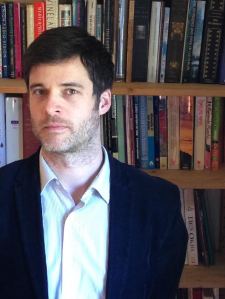 In August 2011, he moved to Berkeley and became a private investigator with the Mintz Group, a multinational firm. A friend referred him, but he got the job because of his law office and writing experience. “We conduct a variety of investigations, none having to do with cheating spouses.” He laughs. “We focus mainly on three areas: due diligence, including extensive background checks on candidates for high level corporate jobs, and background checks prior to business deals; disputes, which means uncovering whatever it is lawyers need to know for a given lawsuit; and anticorruption. Under the Foreign Corrupt Practices Act, it is illegal for American companies to pay bribes to win job bids in foreign countries. Sometimes companies will contact us to investigate the practices of their employees abroad. We have offices in Asia, Latin America and Africa, as well as the U.S., Canada and London.”
 As a teenager, Kerry devoured Vogue magazine. “Fashion is an art form—not just something to cover your body with,” she said. “From runway couture to black yoga pants, it gives you an opportunity to express your inner self in ways large and small, obvious and subtle.”
 Because of her deep love of fashion, it makes sense that Kerry would eventually own a clothing store. But first she would graduate from high school and tear out of town to travel the country before returning to hold two to three jobs at the same time in order to make a living.
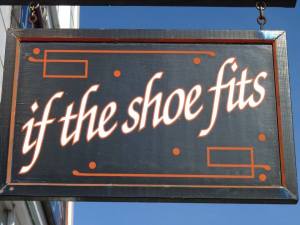 In 2011, Hilary White asked her to work one day a week at If the Shoe Fits—a consignment clothing shop on Franklin Street. “A year later, Hilary took me to dinner and said she was buying Understuff. She added, ‘I want you to buy If the Shoe Fits.’
 and taproom with food currently under construction on Elm Street (north of town near the old bowling alley). They hope to open in early summer 2017. When that happens, she’ll work three to four evenings a week in addition to running her store. When I marvel at her ambition, she says, “I’ve never been afraid of having multiple jobs.”
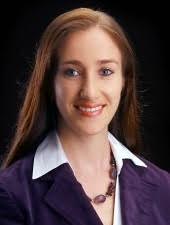 I sat down with Justine Lemos, owner of at
  Justine was awarded a prestigious Fulbright Scholarship in 2003 which allowed her and Grady to live in India for 10 months while she researched ancient forms of Indian dance. “We lived in remote village in the southwestern part of the country. In order to buy anything refrigerated, we had to travel an hour and a half by local bus.”
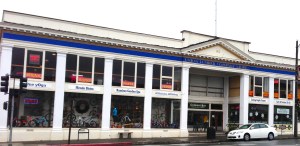 Justine taught online classes—Cultural Anthropology, World Dance, Linguistic Anthropology, Anthropology of Art—through colleges in Southern California. She often worked on her laptop at The Company Store. When the flower shop in the building went of business, she thought, “That should be a yoga studio.”
 Justine has mixed feelings about being back home. “I was gone for fifteen years and never thought I’d return. But I compared everywhere I lived to here and those places always came up short.” She feels limited career-wise, but grateful to be able to raise her son near her parents. “I had a special relationship with my grandparents, and I’m happy Ravel is having the same experience.”








 It Happened at Purity