 Over the past couple of years, I’ve delighted in the murals popping up on buildings around town.
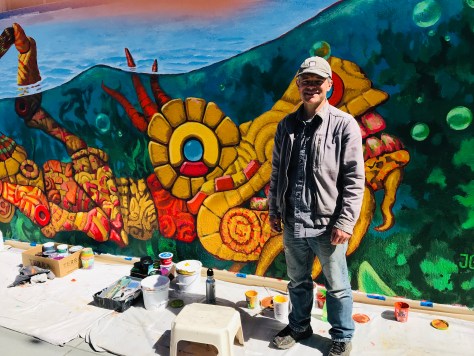
They enrich our area by giving it a sense of playfulness and showcasing the talents of amazing artists. This past summer, I saw a terrific one being painted on a building across from Bainbridge Park. I stopped to admire it and chat with the artist, Jason Godeke. His friendliness and warmth, coupled with the enjoyment he seemed to be having, prompted me to invite him for an interview.
Jason was born in St. Louis, Missouri in 1967. In the early seventies, his parents abandoned their teaching careers and moved to Mendocino. His dad became a lawyer and his mom was the director of the Mendocino Art Center for many years.
As a youngster, Jason didn’t consider himself an artist, even though he did a lot of doodling. An exchange student experience in 1984 changed that perception.
“When I was a sophomore, I heard an exchange student speak at Cotton Auditorium and it sparked my desire to go to another country. It was during a time when I felt I’d become too complacent and needed to shake things up. The following school year, I went to Holland.”
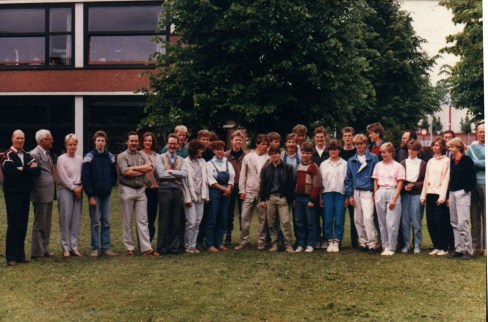 Jason was unprepared to be thrust into a different culture. “It was hard at first—dark and hard.” This was back in a day where communication systems were archaic compared to what they are now. International telephone calls were prohibitively expensive and it took a month to receive a letter, all adding to his feelings of isolation.
“While learning the language, I spoke like a five-year old until I got proficient. This gave me humility and permission to be silly, to take myself less seriously. One way I tried to express myself was through drawing. I learned a lot about art, which is highly celebrated in that county. In addition to all the other museums, the Dutch have two Van Gogh museums. The experience turned out to be great and changed my life.”
Back home for his senior year in high school, his mom suggested he consider going to college in the East. “Without my experience in Holland, I might not have considered going so far away from home.” In the fall of 1986, he entered Yale where he majored in art. While there, he volunteered in a high school art class. “That’s where the teaching bug got me. I knew I didn’t want to try to make a living as an artist.”
After college, Jason moved to San Francisco where he was hired by the de Young Museum to teach art in the schools. “I felt lucky to get this job right out of college.” He also became the Arts Administrator for the Marin Arts Council, a job he held for seven years. All the while he continued to make his own art.
During this time, he married Cristina Mathews. “I’d met her twice while we were in college. A friend brought her to my New Haven apartment to watch a Yale student singing group sing the National Anthem at an Oakland A’s ballgame on my four-inch black and white television set.” He laughed at the memory. They met again in 1994 in Oakland, when a mutual friend, Lisa Allen (who Jason knew from high school), asked him to give Cristina a ride to a party. Cristina was living in the East Bay, tutoring and working at a pizza restaurant.
 By 1997, Jason and Cristina were off to Long Island, New York with their baby boy so Jason could attend Stony Brook University’s MFA program. Cristina eventually entered and completed a PhD program in comparative literature.
After graduation in 2003, they moved to Bloomsburg, Pennsylvania, where Cristina had accepted an English professorship at the university. A year later, Jason was hired as an art professor. “We liked the small town life. Cristina became very involved in the community, especially with the Shade Tree Commission where she helped plant about 170 trees.”
A little over a decade later, they began thinking about the next chapter in their lives. “Cristina was tapped out on college teaching, and our son had moved to Mendocino County. I’d become a little too comfortable as a college teacher and was also ready for a change.”
Cristina applied to and got accepted to law school at UC Berkeley. Jason began teaching art at Fort Bragg Middle School. Cristina graduated in May of this year, and took the bar exam in July. He recently began his third year at the middle school.
Jason empathizes with the emotional struggles of this age group. It takes him back to his time as an exchange student where he felt alone and isolated. Middle school kids are forging new territory and he feels an obligation to help guide them.
“Teaching middle school students has revived teaching for me. It’s demanding of my resources and is making me a better teacher. It’s a daily challenge to make sure they’re learning and to find ways to cultivate their creativity.

Murals created by Fort Bragg Middle School students
“I strive to get students to engage in serious play, to let their minds wander, yet have discipline. Some may be struggling with other subjects and art offers them an opportunity to expressive themselves, to experience real accomplishments. I tell them, and show them, that there are many different ways to succeed with art. Part of that success is in finding surprises. I ask them to surprise me.”
At the end of weekdays that begin with being at school by 6:30-7:00, Jason doesn’t have much time or energy to devote to his own artistic expression. He finds this time during school breaks. In 2018, he learned of the Alleyway Art Project and submitted a portfolio to Lia Wilson. Later in the year, Jason decided to create four possible mural designs that would work with another existing mural on the side of a building at 400 E. Laurel Street across from Bainbridge Park. Lia took Jason’s designs to the building’s owners—Les Cizek and Clay Craig—who had commissioned the other mural in 2017. They agreed to a second. Lia and Flockworks—the local arts organization that sponsors the Alleway Art Project—found funding for it, and got approval from the City of Fort Bragg.
Over the three weeks of creating the mural, Jason had many onlookers. “A van load of folks would show up to eat lunch in the park and they’d sometimes watch the painting. Artists, families going to the library, and some of my students stopped by. The process let people feel involved and allowed me to be a viewer of the project. Some people showed up every day. It felt like performing art where I got to interact with an audience.” The result is a fantastical creature Jason calls “Sub Rosa”—an Aztec Teotihuacan-inspired design that incorporates the richness of the Dutch painters.
 Jason feels lucky to have been able to return to the Mendocino Coast. He loves being near the ocean and the abundance of trees. He enjoys the opportunity to interact with kids on a daily basis. He likes living in the town where his dad has worked for decades as an attorney and to be able to drop by his office for a visit. He gave a warm, contented smile as he said, “When I was growing up in Mendocino, I rarely spent time in Fort Bragg. Now I rarely leave.”
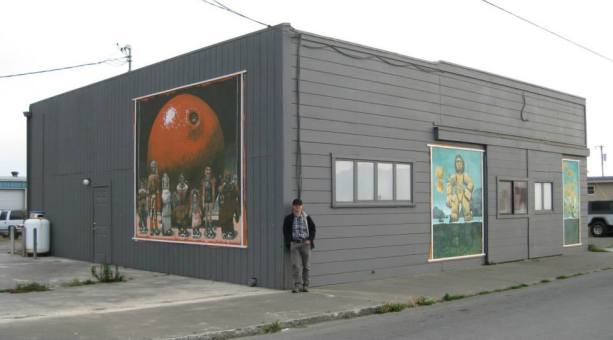
Murals painted by Jason in 2013-2014 for Lost Coast Culture Machine (now the site of Overtime Brewing)
 Haley was born with an adventurous spirit nurtured by her parents Christine Samas and Curt Berry. They encouraged her to explore the avant garde over opting for convention. She loved to dance and became an accomplished local performer, often featured in the annual Second Story Studio Spring Dance Concert. “Growing up, my parents taught me to be happy and interested in the world,” she said. In 2006, her junior year, she dropped of school and spent four months in India.
 In 2008, they moved to Portland, Oregon. It was there that she met Nathan Cann, her future husband. “He’s incredibly intelligent, a deep thinker, and funny. I felt he and his friends were my people.” In 2009, Nathan, who had grown up on the East Coast, moved to New York City to pursue a career in film and art. In 2010, Haley broke up with her boyfriend and followed.
 “In researching the history of snake oil, I learned that the bitters in these concoctions have their origins in medicine. This sparked my interest in cocktails and I started bartending. Cocktails are a totally American invention.” Their stay in the Big Easy lasted a year. During this time, Erica also moved to New Orleans where she added to her knowledge of Southern cooking.
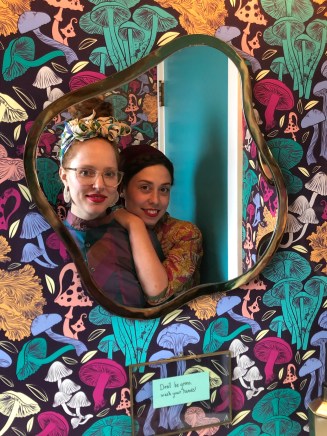 In the summer of 2017, they showcased their culinary talents in a series of pop-up restaurants at the Nye Ranch, Fortunate Farms, and Ellie’s Farmhouse. “We offered cocktail pairings with each course. For example, a carrot cocktail with carrot salad, huckleberry cocktail with huckleberry cobbler. Every drink had one common ingredient from the dish it was paired with.”
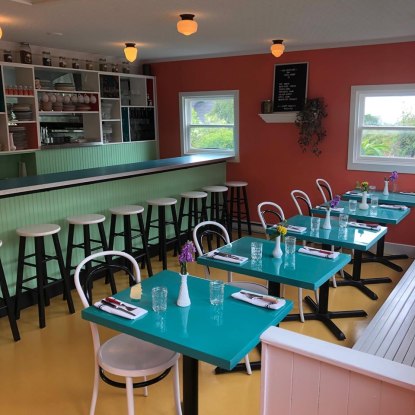 Haley loves being able to once again call Fort Bragg home. “It’s going through a renaissance and attracting new, amazingly talented people. Places like the Larry Spring Museum are being revitalized. The Noyo Center for Marine Science, CV Starr Center, the coastal trail—all of these things are great. There’s support and space for people to be creative, carve out a niche for themselves and open businesses. It’s an exciting time to live here.”





 We moved to Fort Bragg 26 years ago when our children were very young. Our house is across the alley from Chapel by the Sea, the town’s only mortuary. It was the summer between kindergarten and first grade for our older child Harrison. He had no friends and a limited capacity to interact with his three-year old sister (and his parents). At the time, Larry Blair was a partner in the mortuary and lived in the upstairs apartment with his wife Shirley and teenage daughter Charla. Older daughter Charise was married to Nathan who worked for Larry. They lived in the alley apartment.
 A flurry of law enforcement arrived to cordon off the street. Neighbors gathered, some inside my fence, all of us sharing looks of horror and tears. We watched the smoke grow in volume and black intensity. I cried for it to stop. This stately building stood for over 100 years, the past 26 years as our neighbor. This couldn’t be happening—STOP!
 About 4:30pm, the fire department had contained the blaze and began wrapping up. I am in awe at how, despite the chaos of the fire, they maintained their professionalism and focus. Heavy hoses had been dragged about the property, yet they did not damage one plant of the major landscaping project that was completed this past fall.
 After a fitful night of little sleep, I rose the following morning worried about Julie. I didn’t want to, but couldn’t help, looking out our east windows to a sight I’ve always revered. It was horrible—a burnt out shell of a once stately building. My sadness runs deeper than I could ever have imagined. I can’t fathom how I’ll face this mutilated scar in the coming days and weeks.
 For now, I try to find consolation in the fact that even though the monument is gone, the love it symbolized remains. Charise, Charla, Katelyn, Jacob, Nick, the Blairs and my family share a common grief, but we also share a special bond that will carry us through.
 Heather grew up in Morro Bay where she learned commercial fishing from her dad. “I moved here in 1999, and immediately began a flaming love affair with Mendocino County.” By 2001, she had saved four thousand dollars and bought a small boat, the Julie. “My idea was to have a floating fish market—to sell fish right off the boat.” She admits that running her own boat was a different experience than crewing with her dad.
 Her dad tried to help her, but she was intent on doing things her way. “At one point, he threw his hands up and said, ‘You’re going to kill yourself,’ and went back to Morro Bay. Bless his heart, he must have been so worried. This strained our relationship, but a few years later, we fished together in Alaska.”
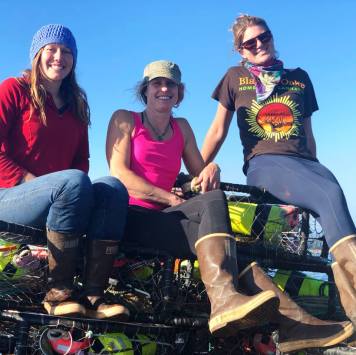 Along the way, she sold the Julie and bought and sold two other boats. In 2009, she purchased a larger vessel with a blast freezer named
 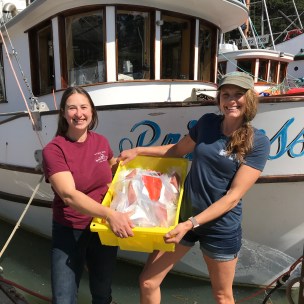 As a woman in this field, Heather is not unique, but rare. “There are a lot more women in Alaska.” She admires her crew which includes Maia and Anna—graduates of Humboldt State. “The salmon season lasts about six months. It requires a great deal of endurance. We get only five to six hours of sleep a night and are away from home so much. I got a crab permit last winter. Catching crab is easier and is a lot more fun.” Maia and Anna also sell the fish at the farmers’ markets.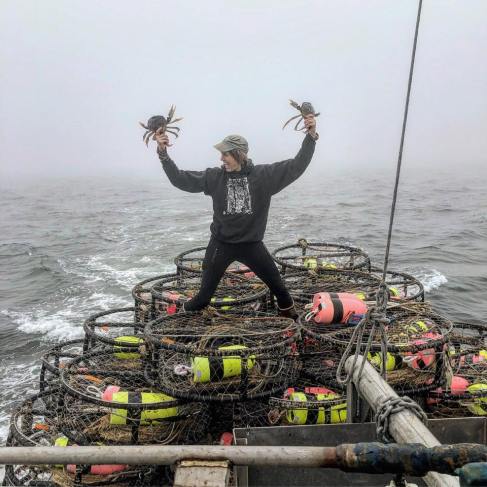


 After college, she moved home to Fort Bragg in 2012 to regroup and figure out her next move. She was 22. “I picked up some shifts at Los Gallitos, worked for Carol Millsap for a year, and took on overnight shifts for Andersson Caregiving, caring for elderly and terminally ill people. This was one of the most significant jobs I ever had, getting to care for people in that way. Each experience taught me something and made me a better person. It reminded me we’re all going to grow old and die. It caused me to be less self-centered.”
 She returned in the fall of 2013 to take a full time position at Project Sanctuary as a client advocate and counselor. When the organization received a sexual assault prevention grant, Karina was hired to conduct community outreach with other agencies—Safe Passage, the Children’s Fund, Gang Awareness and Prevention. “We disseminated information about healthy relationships, especially among teens. I provided in-service to groups like the Catholic church’s youth groups and held lunchtime meetings at the middle school and high school. At Fort Bragg High School, I organized the Youth Leadership Team, a group focused on teen education and awareness, which still exists today.”
 Her first year entailed teaching a World Culture and Language class to sixth graders and a couple of Spanish classes to seventh graders. “This year, I had to add a second level Spanish class for the eighth graders. It’s the equivalent of high school Spanish I.” She teaches separate Spanish classes for native speakers. If all that isn’t enough, she also teaches a seventh grade AVID (Advancement Via Individual Determination) class on critical thinking and study skills.





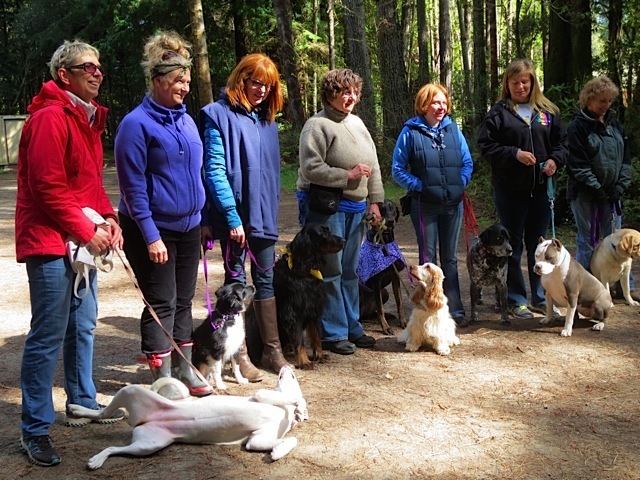
 Dewey Turner considers himself a positive person. If you’re fortunate to spend time with him you’ll agree with that assessment. There’s a twinkle to his eyes that gives away his friendliness, a quickness to his wit that gets you laughing. He possesses a tender heart and a deep love of family.
 “I was horrible at it, but figured if I practiced enough I’d get good.” He played five nights a week until dark and most weekends. He joined a golf tour and entered tournaments around Northern California. In 2012, he qualified for the national championship tournament at TPC Sawgrass in Florida and came in eighth among 150 entrants. That same year, he earned the title of Sacramento Player of the Year. In 2013 and again in 2017, he won the Little River Inn Golf Club Championship.
 Dewey and Jamie’s first date included Ali. They went to Mackerricher State Park beach and Jenny’s Giant Burger. “I knew I wanted them in my life forever. Ali and I have a special relationship. She’s truly my first daughter.”
 Dewey loves Fort Bragg and the life he’s built since his return. “It seems our town needs to find its identity over and over again. So much of our future depends on how the mill site is developed. We need to keep opening our minds to change.”

 After graduating in 2002, she entered an 11-month AmeriCorps program. “I wanted to start paying off my loans, and AmeriCorps offered money towards that. I also thought it would be a fun break from life—which it was. It gave me time to decide what I really wanted to do.” She became part of a team of ten people in Denver. “We traveled to a number of states where we did jobs like state park trail maintenance and renovating a playroom for a summer program that offered homeless children a place to learn, play and socialize.”
 She once again worked as a waitress while studying for her California boards, which she passed in March 2010. Shortly afterward, she opened her business in the office complex behind Taka’s Grill. For the first few years, she supplemented her income by working three to four days a week at Lee’s Chinese. “Word of mouth has been a big factor in my growth. When I started accepting health insurance and Medi-Cal, my clientele also grew tremendously. I still work one day a week at Piaci’s. I love my profession, but like getting out and socializing. Waitressing does that for me.”
 She lives on the same property as her parents and shares a home with her partner Garrett Barker and his two children. “Garrett was born in Southern California, but lived in Fort Bragg off and on while he was growing up. He came back in his twenties and has been here ever since. He’s an amazing artist and also works for a machine shop in Comptche.”
 She’s sad that Fort Bragg doesn’t offer the same sense of community as when she was growing up. “I don’t see a lot kids riding bikes. I no longer know nearly everyone. I used to know the names of our homeless people. I don’t anymore. It’s especially hard for single people to live here—there aren’t many places to mingle.” However, she does admit that the Golden West Saloon—purchased a few years ago by a couple in her age group—has helped provide a social outlet for the younger crowd.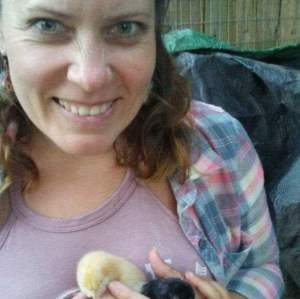

 If you’ve never had a colonoscopy, you may not understand why the term torture is associated with it. This applies to the day before. The patient is allowed to ingest only clear liquids, which by mid-morning sets off a primal alarm in the brain—the process of starving to death has begun. By mid-afternoon the brain partially shuts down and the patient wanders zombie-like through the rest of the day. She occasionally snaps into reality and tries to keep the whining under control by reviewing all the things she should be (but truly isn’t at that moment) grateful for: family, friends, shelter, blah-blah-blah, and good health insurance.
 After a fitful sleep, the following morning begins at four o’clock with another round of the cocktail. Kate wants to cry, but remembers there are a bunch of people in the world suffering a great deal more than her. She tries once again to concoct a gratitude list, but cannot think of a single thing.
 It Happened at Purity